
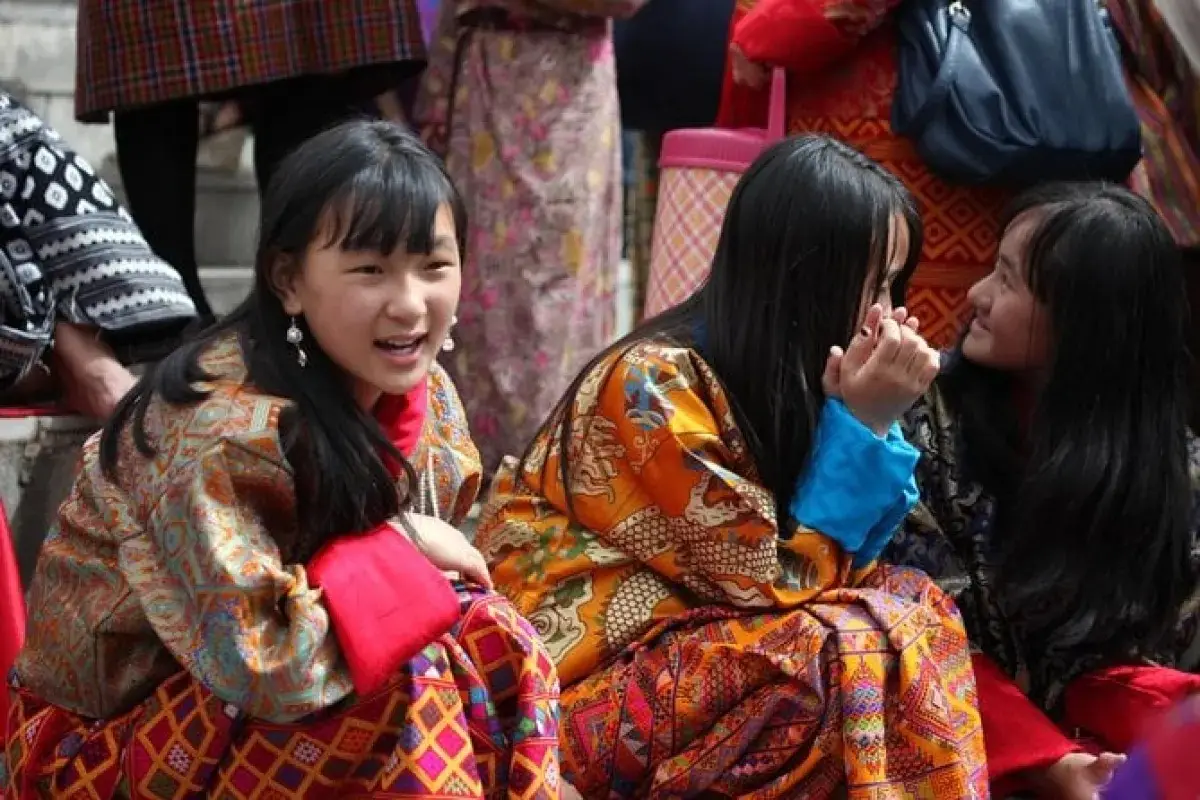
Most travelers picture Bhutanese festivals as grand tsechus in Paro or Thimphu. Those events draw thousands of visitors and rows of tour buses. Ura Yakchoe offers something entirely different. Held in a small stone village in Bumthang, it remains one of the most personal festivals in Bhutan. There is no stage separating performer from spectator. Instead there is a tight cluster of farmhouses, a sacred relic, and villagers who have organized this event for generations. For travelers seeking authentic Bhutanese culture rather than a tourist spectacle, Ura Yakchoe delivers a rare and unfiltered experience. Few places in the kingdom preserve tradition with this level of everyday sincerity.
Where Ura Village Sits in the Highlands of Bumthang
Ura Valley lies about 48 kilometers east of Jakar, the main town of Bumthang district. The drive takes roughly ninety minutes and crosses a pass near 3,600 meters. Along the way, travelers often catch views of Gangkhar Puensum, one of the highest unclimbed peaks in the world. Ura village itself sits at around 3,100 meters, making it one of the highest settlements in central Bhutan.
Locals describe Ura as one of the oldest inhabited valleys in the country. About fifty traditional stone houses cluster tightly together, their roofs covered in wooden shingles. Narrow stone paths connect the homes, and the layout has barely changed for centuries. Surrounded by pine, juniper, spruce and rhododendron forests, the valley feels closer to a medieval hamlet than a modern village. Potatoes remain the main crop here, and the region is also known for wild matsutake mushrooms. Some residents still work at hand looms, weaving cloth in patterns unique to the valley. Local dress here differs slightly from clothing seen in other parts of Bhutan.
The Ancient Legends Behind Ura Yakchoe
Every Bhutanese festival carries a story, and Ura Yakchoe has more than one. The most common legend links the valley directly to Guru Rinpoche, also called Padmasambhava. He is credited with bringing Buddhism to Bhutan in the eighth century. According to local tradition, he passed through this valley on his way to Chagkhar. Villagers once called the area Urbay, meaning the hidden land of Guru Rinpoche.
A second legend explains why the festival is celebrated every year. Local accounts describe a severe epidemic that struck the community long ago. The villagers of Ura prayed to Guru Rinpoche to free them from the sickness. What followed became the origin story for Yakchoe, marking the promised return of the guru to bless the valley again.
A third and closely related tale gives the festival its central relic. According to this legend, a wandering lama once visited a woman living in Ura. He asked her for a simple glass of water. When she returned, the lama had vanished, leaving behind a sack containing a statue. Inside was an image of Chana Dorje, also known as Vajrapani, a protector figure in Buddhist tradition. That statue is treated as a sacred gift from Guru Rinpoche himself. It has been passed down as a family heirloom for generations and remains the spiritual centerpiece of the festival today. Vajrapani represents the power to overcome obstacles and protect the Buddhist teachings.
Some scholars trace an even older layer beneath these Buddhist stories. Before Buddhism reached Bhutan, communities across the region practiced Bon rituals. One theory suggests Yakchoe began as a Bon-era ceremony to honor the spirit of the yak. Over time, this older practice may have merged with the newer Buddhist legends. Whatever the true origin, the festival today blends devotion, memory and mystery into a single living tradition.
Five Days of Ritual: What Happens During the Festival
Ura Yakchoe typically unfolds over about five days each spring. The exact dates shift yearly because they follow the Bhutanese lunar calendar. Public performances form the heart of the celebration and usually run across the middle days. These include sacred masked dances known as cham, along with folk dances performed by local men and women. Bhutanese Buddhists believe these dances drive away negative spirits and teach lessons about impermanence.
A highlight for many visitors is the thongdrol display, a giant appliqued religious scroll. It is unfurled briefly to bless everyone who sees it. Monks lead formal religious ceremonies alongside these performances, grounding the event in prayer as much as spectacle. The most sacred moment of the festival remains the appearance of the statue of Chana Dorje.
The relic normally rests at Gaden Lhakhang, a temple near the village. During the festival, it is carried in procession down to the main Ura Lhakhang. Villagers and visitors gather along the route to receive blessings as it passes. Inside the temple, the statue remains on display so pilgrims can approach it directly.
Alongside the formal rituals runs a warmer, more social tradition. Groups make rounds from house to house across the village. At each home, residents share food and pour a local spirit called ara or sinchhang. This drink is distilled from millet, wheat or rice depending on the household. These visits turn the festival into a genuine community gathering rather than a scheduled show.
A Village That Organizes Its Own Sacred Calendar
What makes Ura Yakchoe unusual is not only the ritual itself but who runs it. The village is traditionally divided into four units, each containing twelve to eighteen households. Each unit selects one household, called the letshan, to lead that year on rotation. Two supporting households, known as taza, assist the letshan household throughout the year.
Together, these twelve families take on the full responsibility of organizing Yakchoe. Planning meetings happen inside the letshan homes rather than in any official building. The village even maintains its own breweries to support the shared drinking traditions of the event. This system has survived for generations without outside management or formal institutions. This grassroots system offers a rare example of community-run heritage management still functioning today.
For visitors, this detail matters more than it might first seem. Ura Yakchoe is not staged for tourism and never depended on outside funding. It survives because families still volunteer their homes, labor and resources every year. Watching the festival means watching real civic life, not a performance built for cameras.
Why Ura Yakchoe Feels More Personal Than Other Bhutan Festivals
Compare Ura Yakchoe to the tsechus held in Paro or Thimphu, and the contrast is immediate. Those festivals attract large international crowds and unfold in wide dzong courtyards. Ura Yakchoe happens in a village of roughly fifty households, most of them related by generations of shared history. There is simply no room for anonymity here.
Visitors often find themselves standing beside villagers rather than behind a rope line. Because homes open their doors during the house visits, outsiders sometimes get invited in as well. Sharing a cup of ara with a farming family is common during Yakchoe season. That kind of direct contact rarely happens at larger, more famous festivals.
Remoteness plays a role too. Bumthang receives only a fraction of the visitors who travel to Paro or Thimphu each year. Mobile coverage becomes patchy once travelers reach Ura, and many farmhouses have no internet at all. That isolation is not a marketing gimmick. It is simply what life still looks like in this high valley. That is exactly what makes the festival feel so intimate.
When to Go and How to Reach Ura Valley
Ura Yakchoe generally takes place in April or May, though dates vary each year. Because the festival follows the lunar calendar, exact dates should always be confirmed with a licensed operator. Spring in Ura brings clear mountain air along with cool nights at high altitude.
Most travelers begin their journey by flying into Paro International Airport. From there, a domestic flight to Bumthang takes around thirty five to forty five minutes. Overland travel from Thimphu to Bumthang usually takes eight to ten hours by road. Either way, the final stretch from Jakar to Ura adds roughly ninety minutes of driving.
All travel inside Bhutan requires a licensed local guide and pre-arranged permits. This applies to remote regions like Ura just as it does to Paro or Thimphu. A trusted operator will handle route permits well before your travel dates. Because Ura sits above 3,100 meters, gradual acclimatization is recommended before arrival if possible. A daily sustainable development fee applies to most visitors and helps fund conservation efforts.
Practical Tips for Visiting Ura Yakchoe
Pack warm layers even in spring, since nights at this altitude stay cold. Sturdy, comfortable shoes help on the uneven stone paths that wind through the village. Bring cash, since Ura has no ATM and card payments are rarely accepted. Download maps, translation tools and any offline content before leaving Jakar, since signal disappears quickly.
Accommodation in Ura is simple and centers on traditional farmhouse homestays. These stays offer basic rooms but genuine access to local family life. Meals typically feature potatoes, buckwheat and seasonal vegetables grown in the valley itself. During matsutake season, visitors may also get to try the prized local mushrooms.
Because Yakchoe draws villagers from across the valley, accommodation can fill quickly during festival week. Booking well ahead through a licensed tour operator is strongly recommended. If farmhouse space is limited, nearby lodges in Jakar can serve as a base instead.
Respectful Travel: Festival Etiquette in Ura
For the people of Ura, Yakchoe is worship long before it is entertainment. Visitors should treat masked dances and rituals with the same respect shown inside a temple. Loud conversation, flash photography and casual selfies during sacred moments are best avoided. Always check with your guide before photographing monks, dancers or the relic itself.
If invited into a home during the house visits, accept food and drink graciously. Small sips are enough if you prefer not to finish a full serving. Dress modestly, remove shoes before entering temples, and follow your guide inside religious spaces. Smoking is banned at religious sites and in public spaces across Bhutan.
Because Ura remains a small, aging farming community, tourism income makes a real difference. Choosing local guides, homestays and drivers helps support the very families keeping this tradition alive.
A Festival Worth Protecting
Ura Yakchoe survives today because a handful of families still choose to carry it forward. Younger generations increasingly move to larger towns in search of work. That quiet shift places real pressure on traditions that depend on local participation. Every festival held in Ura is, in a sense, an act of preservation.
For travelers, this adds a layer of meaning beyond sightseeing. Combining Ura Yakchoe with a wider Bumthang itinerary rewards travelers with deeper context. Watching Ura Yakchoe means witnessing a fragile, living piece of Bhutanese heritage. Pair a visit with other Bumthang sights, such as Jambay Lhakhang or Membartsho gorge, for a fuller picture. Few experiences in Bhutan offer this level of closeness, history and quiet devotion in one small mountain village.
FAQs
1. What makes Ura Yakchoe different from larger tsechus in Paro or Thimphu?
Unlike massive festivals held in wide dzong courtyards for large international crowds, Ura Yakchoe takes place in a tiny, remote village of about fifty traditional stone houses in Bumthang. There are no stages separating performers from spectators, and the event is entirely organized by local families rather than commercial event planners, offering an unfiltered and personal cultural experience.
2. What is the spiritual centerpiece of the festival?
The festival's spiritual heart is a sacred statue of Chana Dorje (Vajrapani), a protector figure in Buddhism. According to local legend, it was left behind as a sacred gift by a wandering lama centuries ago and has since been passed down as a family heirloom. It is carried in a special procession from Gaden Lhakhang to the village temple for public blessings.
3. How is the festival organized by the local community?
Ura Yakchoe is managed through a unique grassroots system. The village is divided into four units, and twelve rotating families take full responsibility each year—acting as the letshan (lead household) and taza (supporting households) to handle planning, logistics, and traditional brewing without outside institutional funding.
4. When does Ura Yakchoe take place, and how do travelers get there?
The festival usually unfolds over five days in April or May, with exact dates shifting annually based on the Bhutanese lunar calendar. Travelers typically fly into Paro, take a domestic flight or overland journey to Jakar in Bumthang, and then drive roughly ninety minutes across a high mountain pass to reach the Ura Valley.
5. What practical tips and etiquette should visitors keep in mind?
Because Ura sits at over 3,100 meters, nights are cold, requiring warm layers and sturdy shoes for uneven stone paths. Visitors should bring plenty of cash (there are no ATMs in Ura), book farmhouse homestays well in advance through a licensed tour operator, and show deep respect by avoiding flash photography during sacred dances and accepting local hospitality graciously.