
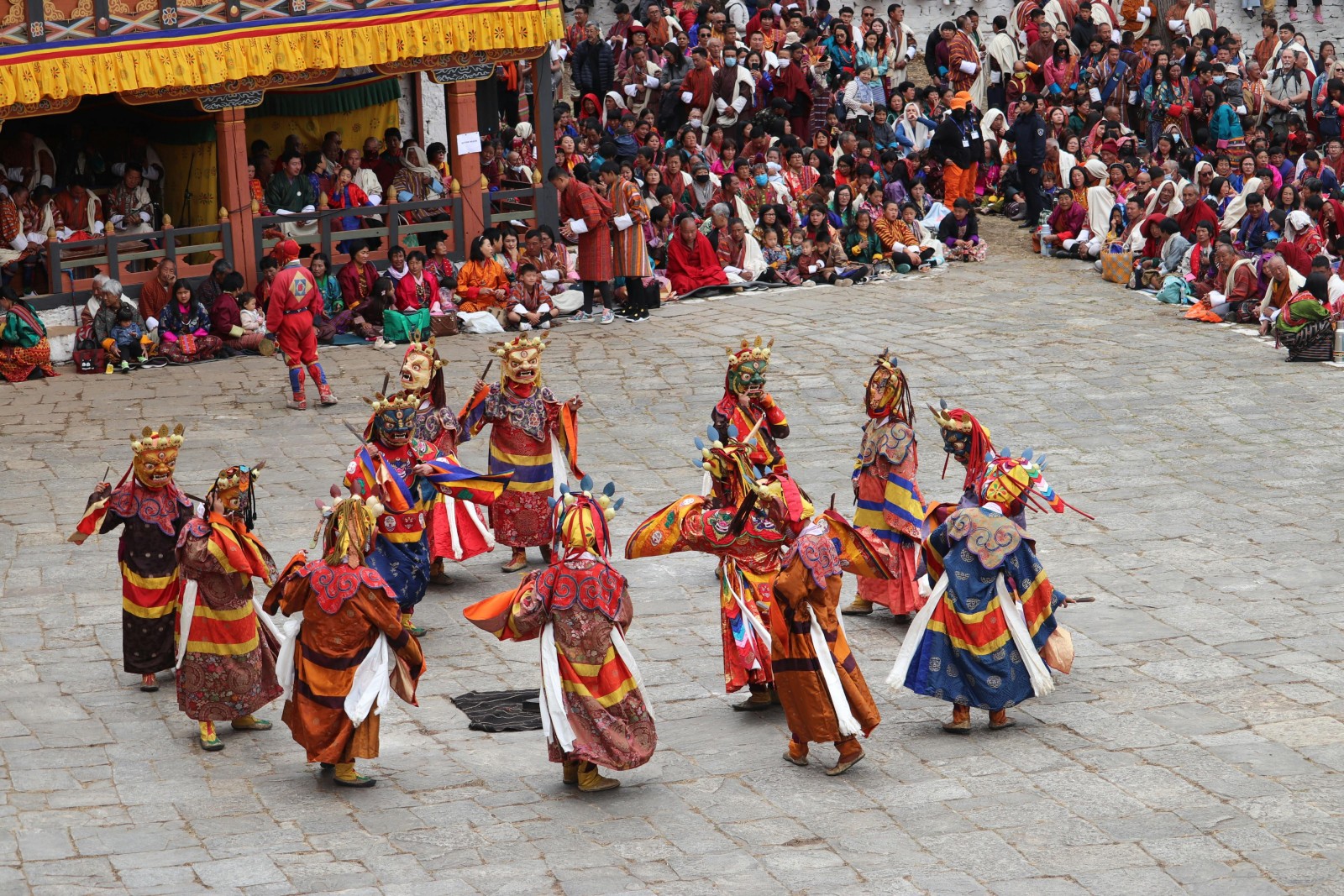
Bhutan often surprises female travelers with how visible and empowered women appear in daily life. Unlike some neighboring cultures, Bhutanese women have long held property rights and social standing. This guide explores that history and what it means for visitors today.
Understanding these dynamics adds depth to any trip through Bhutan. It also helps female travelers navigate social situations with better cultural context. Here is what shapes the role of women across Bhutanese society.
A Tradition Rooted in Matrilineal Inheritance
Bhutan carries strong matrilineal traditions, particularly in rural and central regions. Historically, daughters inherited family land and property rather than sons. In some communities, women have controlled up to sixty percent of land.
This pattern differs sharply from many neighboring South Asian cultures. Studies note that Bhutan has reported no significant gender discrimination in land distribution. The Land Act of 1979 formally guarantees equal inheritance rights for all children.
In many rural households, an eldest daughter becomes the primary property holder. She often takes responsibility for the family home and caring for elderly parents. This role carries both economic weight and social respect within the community.
Modern trends show gradual movement toward equal inheritance regardless of birth order or gender. Even so, the underlying cultural value around female land ownership remains strong. For many Bhutanese women, this financial foundation supports real independence.
Marriage and Family Structure
Traditional Bhutanese marriage customs often center the household around the woman. In many rural areas, husbands move into their wife's family home after marriage. Property and household leadership typically remain with the woman.
In parts of eastern Bhutan, older courtship customs reflected this dynamic clearly. Women held the decision making role in choosing and welcoming partners. This tradition, though less common today, shaped long standing gender norms.
Women in Bhutan traditionally keep their own names after marriage. Children are not automatically given the fathers surname either. Family structure tends to center around maternal lineage rather than paternal inheritance.
This does not mean gender roles are entirely equal in every household. Domestic responsibilities and childcare still fall disproportionately on women in many families. Even so, female authority within the home remains culturally significant.
The Kira: Bhutan's National Dress for Women
The kira is the traditional dress worn by Bhutanese women nationwide. It consists of a long rectangular woven cloth wrapped around the body. Silver brooches called koma secure it at the shoulders.
Women typically wear a long sleeved blouse underneath, along with a short jacket on top. A decorative sash called a rachu is often draped over one shoulder. This complete outfit is worn for formal occasions, work, and daily life alike.
Bhutan's queen, Jetsun Pema, is frequently seen wearing the kira at public and international events. Her presence has helped keep the garment visible on a global stage. For visitors, seeing the kira in daily use reflects living tradition, not costume.
Female travelers are welcome to admire or even try a kira through cultural experiences. Many tour operators arrange dress up sessions at textile centers or museums. This offers a respectful way to engage with Bhutanese fashion traditions.
Education and Workforce Participation
Bhutan has made significant progress toward gender parity in education. At the primary school level, girls now enroll at rates equal to or higher than boys. This shift reflects decades of deliberate government policy.
Female labor force participation in Bhutan also ranks among the highest in the region. Many women work in agriculture, education, healthcare, and small business ownership. It is common for married women to earn income alongside their husbands.
Despite these gains, disparities remain at higher levels of employment and leadership. Women make up a notable share of the civil service overall. However, senior leadership positions still remain disproportionately held by men.
Female representation in fields like medicine and teaching has grown steadily. Many Bhutanese women serve as doctors, nurses, and school administrators nationwide. Economic development has expanded these professional opportunities considerably in recent decades.
Women in Bhutanese Politics
Political representation tells a more complicated story than land or education. Bhutan appointed its first female cabinet minister in 2013. The country also welcomed its first female district governor, or Dzongda, in 2012.
Even so, women remain underrepresented in elected office overall. Local government leadership positions are still held predominantly by men. National level political bodies show similarly limited female representation.
Government policy has aimed to close this gap through structured initiatives. The National Commission for Women and Children leads efforts around gender equality nationwide. Programs supporting women candidates have expanded ahead of recent local elections.
For visitors, this contrast between economic and political representation is worth understanding. Bhutanese women hold significant social and financial standing at home. Formal political power, however, is still catching up to that reality.
Cultural Tips for Female Visitors
Dress modestly when visiting monasteries, dzongs, and other religious or government sites. This respect applies to all travelers, though it is especially noted for women. Guides can advise on appropriate clothing for specific locations.
Engaging respectfully with local women often leads to meaningful conversations during your trip. Many are proud to share stories about their families, land, and traditions. Genuine curiosity is usually welcomed warmly by Bhutanese hosts.
Consider visiting a textile center or weaving workshop during your stay. These spaces are often run by women and reflect a living craft tradition. It offers a natural opportunity to see female led enterprise firsthand.
Approach gender dynamics in Bhutan with openness rather than direct comparison to your home culture. Traditions here developed differently and carry their own internal logic. Understanding this context deepens appreciation rather than judgment.
Bhutan offers a distinctive lens on gender roles shaped by centuries of unique tradition. For female travelers, learning this history adds meaningful context to the journey. It also highlights a society still actively working toward fuller equality.
Frequently Asked Questions
1. How do property and land inheritance traditions work for women in Bhutan?
Bhutan carries strong matrilineal traditions, particularly in rural and central regions, where daughters traditionally inherited family land and property rather than sons. The Land Act of 1979 formally guarantees equal inheritance rights, and in many households, the eldest daughter becomes the primary property holder and caretaker of the family home, providing a strong foundation for financial independence.
2. How do marriage customs and family structures impact gender roles?
Traditional marriage customs often center the household around the woman. In many rural areas, husbands move into their wife's family home after marriage, and property leadership typically remains with the woman. Furthermore, women traditionally keep their own names after marriage, and family structures trace maternal lineage rather than paternal inheritance.
3. What is the kira, and what role does it play in daily life?
The kira is the national traditional dress worn by Bhutanese women nationwide. It consists of a long rectangular woven cloth secured at the shoulders by silver brooches (koma), worn with a long-sleeved blouse, a short jacket, and a decorative sash (rachu). Worn for work, formal occasions, and daily life, it reflects a living tradition rather than a costume.
4. What are the trends regarding women in education and the workforce?
Bhutan has achieved significant progress toward gender parity, with girls enrolling in primary school at rates equal to or higher than boys. Female labor force participation is among the highest in the region, with women widely represented in agriculture, education, healthcare, and small business ownership, though senior leadership roles remain male-dominated.
5. How is women's representation structured in Bhutanese politics?
While Bhutan appointed its first female cabinet minister in 2013 and its first female district governor in 2012, women remain underrepresented in elected office and local government leadership. Government initiatives, led by the National Commission for Women and Children, are actively working to close this gap and support women candidates.
6. What cultural tips should female visitors keep in mind when traveling in Bhutan?
Female travelers should dress modestly when visiting monasteries, dzongs, and other religious or government sites. Engaging respectfully with local women—such as visiting women-run textile centers or weaving workshops—offers a natural way to connect with local culture, and visitors are encouraged to approach Bhutanese gender dynamics with openness rather than direct comparison to their home cultures.
7. Why does Bhutan often surprise female travelers regarding gender roles?
Unlike some neighboring South Asian cultures, Bhutanese women have long enjoyed high visibility, property rights, strong social standing, and financial independence within the home. This unique cultural lens offers visitors a fascinating look at a society balancing traditional matrilineal roots with modern development.