
Bhutan has an unusual claim that makes it genuinely different from almost every other "digital detox" destination marketed today: it wasn't forced to unplug by remoteness or poverty. It chose to stay offline, deliberately and for decades, long after the rest of the world had already gone digital. That history, combined with the country's remote mountain geography and its national philosophy built around wellbeing rather than growth, makes Bhutan a genuinely different kind of place to disconnect, not just another retreat destination with a no-wifi policy bolted on for marketing purposes.
This guide looks at why Bhutan's relationship with disconnection runs deeper than most digital detox destinations, what that actually means for travelers today, and how to plan a trip that genuinely lets you unplug rather than just relocating your screen time to a nicer backdrop.
Bhutan's Unusual History With Technology
Most countries adopted television gradually from the 1950s onward. Bhutan didn't. It became the last country in the world to legalize television and introduce the internet to its citizens, holding off until June 2, 1999, when both arrived simultaneously as part of the Fourth King's Silver Jubilee celebrations. He described the moment as the "Light of the Cyber Age," a phrase that captured both the significance of the change and the deliberate, careful way Bhutan approached it.
This wasn't a case of a country simply lacking the infrastructure or resources to modernize sooner. It was a considered policy choice, rooted in concern that unfiltered foreign media could erode Bhutanese language, dress, family structures, and Buddhist values before the country had built its own cultural and institutional foundations to withstand that influence. Bhutan waited until local content production and Bhutanese-language broadcasting were ready, so that when television and the internet did arrive, they arrived on the country's own terms rather than overwhelming it.
What followed is almost the opposite of what you might expect. Rather than staying permanently disconnected, Bhutan modernized its telecommunications rapidly once it decided to, and today ranks among the more digitally connected countries in the region relative to its size. The lesson here isn't that Bhutan is trapped in the past. It's that Bhutan has always treated connectivity, digital and otherwise, as something to be managed deliberately rather than adopted automatically, and that same instinct still shapes how the country approaches tourism and wellbeing today.
Gross National Happiness: A Different National Priority
Bhutan is the only country in the world that formally measures its progress through Gross National Happiness rather than Gross Domestic Product, a framework that explicitly weighs cultural preservation, environmental protection, and psychological wellbeing alongside economic growth. This isn't just a slogan used in tourism marketing. It's a governing philosophy that has shaped real policy decisions for decades, including the country's cautious approach to introducing disruptive technology.
For travelers, this matters because it explains why disconnection in Bhutan doesn't feel like deprivation the way it might elsewhere. A country that has built its entire development philosophy around wellbeing rather than consumption naturally produces an environment where slowing down feels supported rather than imposed. The absence of constant notifications and digital noise isn't an inconvenience to work around here. It's closer to the default state the country has spent decades deliberately protecting.
Why the Terrain Itself Encourages Disconnection
Beyond policy and philosophy, Bhutan's geography does much of the practical work of disconnecting visitors, often before they've made any conscious decision to do so. Large stretches of the country's trekking routes, particularly once you move beyond Thimphu and Paro into higher, more remote terrain, simply don't have reliable mobile signal or internet access. Treks like the demanding Snowman Trek, which spends weeks moving through some of the most remote high-altitude terrain in the Himalayas, put trekkers genuinely beyond the reach of connectivity for extended stretches, not as a designed feature of the trip, but simply because of how isolated the route is.
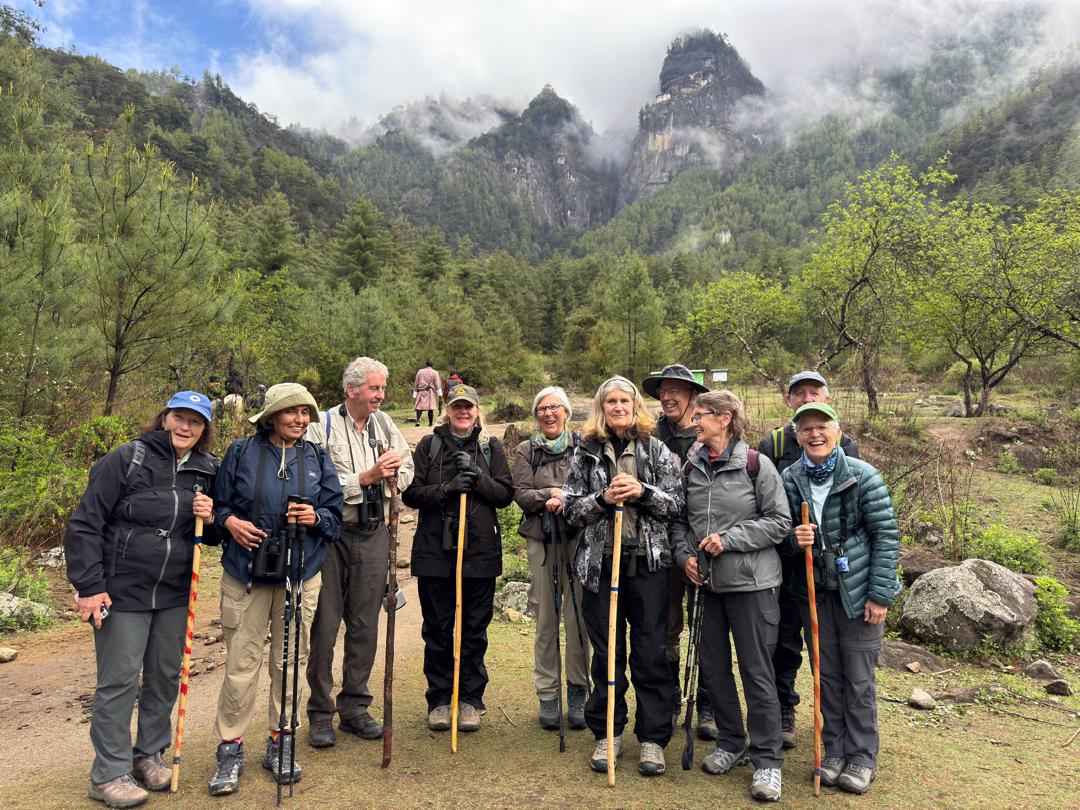
Even shorter, more accessible hikes create this effect on a smaller scale. A walk through pine forest to a centuries-old monastery, sitting quietly by a mountain lake, or trekking through terraced valleys where farming still follows the seasons rather than a screen, all place you in an environment where checking your phone feels genuinely out of step with your surroundings, rather than an active restriction you have to fight against.
Managed Tourism as an Unintentional Detox Tool
Bhutan's tourism policy adds another layer to this effect, even though it wasn't designed specifically around digital wellness. The country's Sustainable Development Fee and controlled visitor numbers mean destinations rarely feel overcrowded, and the absence of dense tourist infrastructure, souvenir stalls, selfie-stick crowds, and constant prompts to document every moment for social media, changes the texture of travel itself. Because Bhutan actively limits how much tourism reshapes its towns and landscapes, visitors experience something closer to how these places actually function day to day, rather than a version curated for maximum photo opportunities.
This matters for digital detox specifically because so much of modern travel anxiety around technology isn't really about the internet itself. It's about the pressure to document, share, and perform a trip in real time rather than simply experiencing it. A destination genuinely too remote or too quiet to easily support that kind of constant documentation naturally reduces that pressure, even for travelers who didn't consciously set out to disconnect.
What a Genuine Digital Detox in Bhutan Actually Looks Like
For travelers specifically seeking to unplug, the most effective approach in Bhutan combines its natural remoteness with a deliberate, structured mindset rather than assuming disconnection will simply happen on its own. Spending time in monasteries known for meditation and quiet reflection, such as those covered in a guide to Bhutan's monasteries that accept retreat visitors, gives structure to the disconnection, replacing scrolling with genuinely restorative alternatives like guided sitting, quiet walking, or simply observing your surroundings without narrating them for an audience.
Longer treks amplify this effect considerably, since multi-day routes remove the option of checking in digitally even if you wanted to, forcing a kind of disconnection that shorter day trips can't fully replicate. Building physical readiness for this kind of trip matters too, and a guide to training for Bhutan's trekking routes is worth reading before committing to a longer, more remote itinerary, since arriving under-prepared physically can undercut the mental benefits of disconnection if discomfort and fatigue become the dominant experience instead.
Combining Digital Detox With Bhutan's Wellness Traditions
Disconnection pairs naturally with several of Bhutan's existing wellness traditions, many of which were never designed around screens in the first place and offer genuine alternatives to reaching for a phone during quiet moments. A traditional hot stone bath, explained in detail in a guide to Bhutan's Dotsho tradition, demands the kind of unhurried, present attention that's almost impossible to replicate while simultaneously checking notifications. The same is true of Bhutan's traditional medicine system, Sowa Rigpa, covered in a dedicated guide to what travelers should know, which treats wellbeing as something built through sustained attention to the body rather than a quick fix.
Yoga and meditation can also make the transition away from constant connectivity easier, particularly when they are practiced in quiet surroundings where there is little reason to reach for a phone. A Bhutan Wellness and Yoga Retreat brings these quieter moments into the rhythm of the trip, alongside time for reflection, movement, and simply being present. None of these experiences require a phone to be meaningful, and several are actively better without one nearby. The result is a form of digital detox that feels less like deliberately avoiding technology and more like having something worthwhile to focus on instead.
Practical Tips for Unplugging During Your Trip
Genuine disconnection in Bhutan works best with a bit of intention rather than assuming it will happen automatically the moment you land. Letting close contacts know in advance that you'll be difficult to reach for stretches of your trip removes the anxiety of feeling like you need to check in constantly, and it's worth being honest with yourself about whether you actually want to disconnect before committing to it, since forcing it against your own wishes tends to backfire.
Choosing an itinerary that includes at least a few days in genuinely remote terrain, rather than staying entirely within Thimphu and Paro's more connected areas, makes a real difference in how deep the disconnection actually goes. And perhaps most usefully, treating moments without signal as an opportunity rather than an inconvenience, using that time to actually notice your surroundings, talk with your guide, or simply sit with your own thoughts, tends to produce a far more genuine sense of reset than white-knuckling your way through withdrawal from your phone.
Frequently Asked Questions
Why is Bhutan considered good for a digital detox?
Bhutan's remote mountain terrain, deliberate historical relationship with technology, and its national philosophy of Gross National Happiness combine to create an environment where disconnection feels natural rather than forced.
When did Bhutan get internet and television?
Bhutan legalized television and introduced the internet simultaneously on June 2, 1999, making it the last country in the world to do so, as part of the Fourth King's Silver Jubilee celebrations.
Is there internet access on Bhutan's trekking routes?
Access varies significantly. Areas around Thimphu and Paro have reliable connectivity, while more remote trekking routes, particularly multi-week treks like the Snowman Trek, often have little to no signal for extended stretches.
Do I need to plan a specific "digital detox retreat" to disconnect in Bhutan?
Not necessarily. While some retreats are specifically marketed around digital detox, simply choosing an itinerary with genuine time in remote terrain or at meditation-focused monasteries can produce a similar effect.
What is Gross National Happiness, and how does it relate to disconnection?
Gross National Happiness is Bhutan's official development philosophy, prioritizing wellbeing and cultural preservation alongside economic growth. It reflects the same deliberate, considered approach that shaped Bhutan's historically cautious relationship with technology.
What should I tell people at home if I'm planning to disconnect in Bhutan?
It's worth letting close contacts know in advance that you may be unreachable for stretches of your trip, particularly if you're trekking in remote areas, so you can disconnect without worrying about missed messages.
Final Thoughts
Bhutan's suitability for a digital detox isn't a coincidence or a clever piece of tourism marketing. It's the product of a genuinely unusual national history, a country that chose disconnection deliberately for decades before ever choosing connection, paired with mountain terrain remote enough to make that disconnection practical for travelers today. Combined with a national philosophy that treats wellbeing as a measurable priority rather than an afterthought, Bhutan offers something increasingly rare: a place where putting your phone away doesn't feel like a sacrifice, but simply the natural way to experience what's actually in front of you.
Whether that means a multi-day trek through terrain with no signal at all, a quiet afternoon at a centuries-old monastery, or simply a few days spent more present than usual, Bhutan makes disconnecting feel less like a wellness trend and more like returning to how travel used to work before screens came along.