
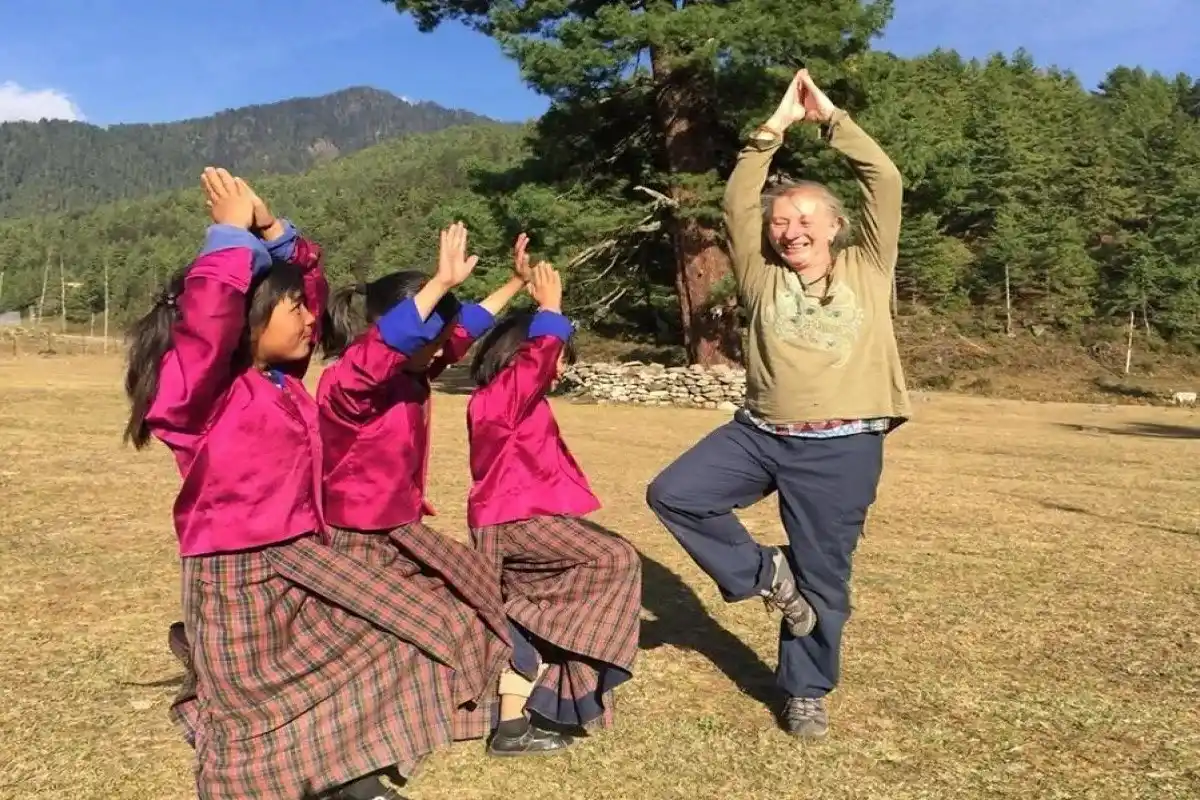
Mindfulness has become something of a buzzword in the West, often reduced to a ten-minute app session squeezed between meetings. In Bhutan, many of the same underlying ideas, present-moment awareness, compassion, acceptance of impermanence, have been embedded in daily life for centuries, not as a wellness trend but as an ordinary part of Vajrayana Buddhist practice. Walking clockwise around a stupa, sharing a slow cup of butter tea, or sitting with the sound of a bell are all mindfulness practices in their own right, even though nobody in Bhutan would necessarily use that word to describe them.
This guide looks at five genuine Bhutanese and Himalayan Buddhist practices, explains where they come from, and offers a respectful way to adapt each one into a simple home routine, without pretending a backyard walk is the same as a pilgrimage to a sacred stupa, or that a kitchen cup of tea carries the same weight as one shared at a mountain monastery. The value here isn't a perfect recreation of Bhutanese ritual. It's borrowing the underlying practice, with real understanding of where it comes from.
Walking Meditation Inspired by Kora
Kora, the practice of walking clockwise around a sacred site such as a chorten or monastery, is one of the most common and visible forms of everyday devotion across Bhutan and the wider Himalayan Buddhist world. At Thimphu's National Memorial Chorten, built in 1974, elderly residents circle the monument daily, spinning prayer wheels and reciting mantras as they walk, treating the act itself, not just the destination, as the spiritual practice. The clockwise direction is considered symbolically significant, aligning the walker's movement with the natural order of the cosmos, and each circuit is understood to accumulate merit rather than simply covering distance.
What makes kora genuinely useful as a mindfulness model, beyond its religious context, is how it reframes walking itself as the point of the exercise rather than a means of getting somewhere. There's no destination to rush toward, no distance to optimize, just a steady, repeated movement paired with quiet attention. This idea of making movement part of the wellness experience also fits naturally with a Bhutan Active Wellness Immersion Tour, where active exploration can be balanced with quieter moments of reflection.
To adapt this respectfully at home, without claiming religious significance you're not entitled to:
- Choose a small, fixed loop, a path around your garden, a block near your home, or even a route around a room, and walk it slowly and repeatedly for ten to fifteen minutes.
- Match your breathing to your steps rather than your steps to a destination, letting the walk itself be the entire purpose of the exercise.
- Leave your phone behind or on silent, treating the walk the way kora treats a chorten: as something deserving your full, undistracted attention.
- Notice, rather than suppress, the urge to check the time or hurry, and simply return your attention to your feet and breath each time it happens.
Tonglen: Breathing In Suffering, Breathing Out Compassion
Tonglen, meaning "giving and taking," is one of the most distinctive meditation practices within Tibetan Buddhism, the tradition that shapes Bhutanese Vajrayana Buddhism as well. In tonglen, the practitioner visualizes breathing in the suffering, fear, or confusion of others as a form of dark smoke, and breathing out happiness, peace, and clarity as brilliant light, deliberately inverting the instinct most people have to avoid discomfort and only wish for pleasant things. It's considered one of the more transformative practices for developing genuine compassion, precisely because it asks the practitioner to move toward difficulty rather than away from it.
This practice translates to a home setting more directly than most, since it requires nothing beyond your own breath and attention.
- Sit comfortably, close your eyes, and bring to mind someone you know who is struggling, or simply the general suffering present in the world if a specific person doesn't come to mind.
- On the in-breath, visualize breathing in their difficulty as a dark, heavy smoke, holding it briefly rather than flinching away from it.
- On the out-breath, visualize sending back light, relief, and calm in its place, genuinely wishing for their wellbeing.
- Repeat this breathing cycle for five to ten minutes, allowing the practice to soften any instinct to distance yourself from other people's pain.
Suja: The Mindful Ritual of Butter Tea
Suja, Bhutan's traditional butter tea, is far more than a beverage. Sharing tea with a guest is described by Bhutanese communities as an expression of compassion and hospitality that blesses and honors the person receiving it, and the preparation itself, tea churned with butter and salt, is typically done slowly and by hand, without shortcuts. Travelers who visit remote villages often describe being served butter tea alongside saffron rice, sometimes accompanied by traditional songs, turning what could be a quick refreshment into an unhurried social and spiritual moment.
What makes this practice valuable as a mindfulness exercise is its insistence on slowness and presence during an activity, drinking tea, that most people now do on autopilot, often while scrolling a phone or working at a desk.
- Prepare your tea, any tea, by hand rather than using the fastest available method, paying attention to each step rather than treating it as a background task.
- Hold the cup with both hands before drinking, noticing its warmth, and take a moment to genuinely acknowledge whoever you're sharing the moment with, even if that's simply yourself.
- Drink slowly and without any other activity competing for your attention- no phone, no screen, no multitasking- treating the tea itself as the entire activity rather than an accompaniment to something else.
- If you're sharing tea with someone else, use the moment as Bhutanese hospitality intends it, as a small act of care and attention toward another person, not simply a beverage served in passing.
Sound Meditation With Bells or Singing Bowls
Sound plays a distinctive role in Himalayan Buddhist practice, from monks chanting mantras inside temple halls to the ritual use of bells and singing bowls to mark the beginning and end of meditation sessions. This tradition has also found its way into Bhutan's more recently developed wellness retreat scene, where several high-end lodges now open guided meditation and yoga sessions with singing bowl sound, borrowing directly from this older monastic practice to help participants settle into a more focused, present state of mind before beginning.
The appeal of sound as a mindfulness tool is that it gives the mind something specific and simple to follow, an alternative to either forcing thoughts away or getting lost in them entirely.
- Use a singing bowl, a meditation bell, or even a simple recording of one, and strike or play it once at the start of a quiet sitting period.
- Follow the sound for as long as you can hear it, letting your attention rest entirely on the fading tone rather than on your thoughts.
- Once the sound fades completely, sit in the resulting silence for several minutes, returning your attention gently to your breath whenever your mind wanders.
- Ring the bell again at the end of your sitting period as a clear, deliberate signal that the practice is complete, rather than simply standing up mid-thought.
Reflecting on Impermanence Through Prayer Flags
Prayer flags are one of the most visible symbols of Bhutanese Buddhism, strung across mountain passes, bridges, and rooftops throughout the country. Each flag carries printed mantras, and the wind is believed to carry their blessings outward across the landscape as it passes over them. Just as significant as the blessing itself is what happens to the flags over time: they're left to fade, fray, and eventually disintegrate in the sun and wind rather than being replaced immediately, a deliberate reflection of Buddhism's central teaching on impermanence, the idea that all things, including suffering, are temporary and constantly changing.
This is a practice best approached at home as a reflection rather than a direct recreation, since prayer flags carry specific religious and cultural meaning that isn't appropriate to imitate casually. The underlying lesson, however, translates well into a simple, secular reflection practice.
- Set aside a few minutes at the end of each day to consciously name one difficulty you experienced and remind yourself, deliberately, that it is temporary and already changing, just as a prayer flag fades gradually rather than disappearing all at once.
- If you'd like to display genuine prayer flags at home, consider purchasing them through a reputable source connected to Bhutanese artisans, and let them fade naturally outdoors over time rather than treating them as a permanent decorative object, which is closer to their intended meaning.
- Avoid stepping on or discarding prayer flags carelessly if you do choose to display them, since they carry real religious significance for the people whose tradition they come from, not simply an aesthetic one.
Where These Practices Come From: Bhutan's Broader Mindfulness Culture
These five practices aren't isolated techniques picked at random. They sit within a much broader Bhutanese cultural framework that treats mindfulness, compassion, and psychological wellbeing as genuinely national priorities, most visibly reflected in the country's Gross National Happiness philosophy, a governing framework explored in more depth in a guide to Bhutan's approach to disconnection and digital detox. Understanding that broader context helps explain why these individual practices carry the weight they do in Bhutan, rather than functioning as isolated wellness techniques the way they might elsewhere.
For travelers who want to experience these practices in their original setting rather than only at home, several of Bhutan's monasteries genuinely welcome visitors for guided meditation. The same emphasis on reflection and mindful activity can also become part of a wider travel experience through a Bhutan Active Wellness & Meditation Journey, where time for meditation can be balanced with cultural experiences and time outdoors. A guide to Bhutanese monasteries that accept retreat visitors covers where these experiences are available, while the broader distinction between Bhutan's own contemplative tradition and more modern imported yoga practices is explored in a comparison of traditional Buddhist practice and modern yoga retreats.
Frequently Asked Questions
What is kora, and can I practice it outside Bhutan?
Kora is the Buddhist practice of walking clockwise around a sacred site, believed to accumulate spiritual merit. While the religious version is specific to consecrated sites, the underlying idea, slow, repeated, undistracted walking, can be adapted as a secular walking meditation anywhere.
What is tonglen meditation?
Tonglen, meaning "giving and taking," is a Tibetan Buddhist compassion practice where practitioners visualize breathing in others' suffering and breathing out peace and relief, deliberately reversing the instinct to avoid discomfort.
Is it disrespectful to adapt Bhutanese practices at home?
It depends on how it's done. Practicing walking meditation or mindful tea drinking as general wellness techniques is generally considered respectful, provided you understand and acknowledge their origins. Directly imitating specific religious rituals, such as treating prayer flags as generic decor, is worth approaching with more care and genuine understanding of their meaning.
Do I need a real singing bowl for sound meditation?
No, while an authentic Himalayan singing bowl offers a genuine connection to the tradition, a meditation bell or even a recording can serve the same practical function of giving your mind a simple sound to follow during meditation.
How is Bhutanese mindfulness different from Western mindfulness apps?
Bhutanese mindfulness practices are embedded in daily religious and cultural life rather than treated as a standalone wellness activity, and they're typically connected to broader Buddhist concepts like compassion, impermanence, and merit rather than stress reduction alone.
Can I experience these practices directly during a trip to Bhutan?
Yes, Several monasteries and structured retreat programs allow visitors to experience guided versions of these practices firsthand, offering a much deeper version of what's described here as a home adaptation.
Final Thoughts
None of these five practices require a trip to the Himalayas to offer real value, but understanding where they come from makes them considerably more meaningful than treating them as generic wellness hacks. Walking meditation borrows its structure from centuries of pilgrimage around sacred chortens. Tonglen offers one of Buddhism's most direct methods for building genuine compassion. A slow cup of tea, approached the way Bhutanese hospitality intends it, becomes a small act of presence rather than a background habit. Sound gives the mind something simple to follow. And reflecting on impermanence, whether through prayer flags or simply an honest evening reflection, offers a gentler way of holding life's difficulties.
Practiced with genuine respect for their origins, these five habits offer a real, if modest, bridge between Bhutan's centuries-old approach to mindfulness and the busy, distracted rhythm of daily life almost everywhere else in the world.