
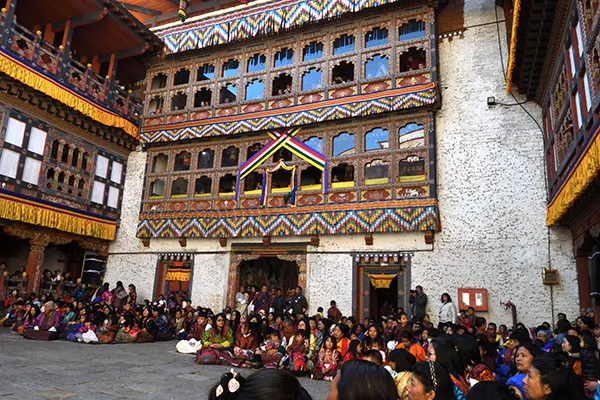
Stepping into the Kingdom of Bhutan feels like entering a living masterpiece where ancient traditions remain perfectly preserved, and nowhere is this more vivid than during a traditional religious festival.
The valley of Punakha comes alive during early spring with an explosion of color, music, and profound devotion. While Bhutan hosts several regional celebrations throughout the year, this specific 9-day journey stands out because it combines deep cultural celebrations with essential mountain landscapes, fortress exploration, and authentic community interactions. By traveling with a premier local specialist, you gain seamless access to hidden temple rituals, expert guiding, and a stress-free travel experience across the iconic valleys of Paro, Thimphu, and Punakha.
The Majestic Setting of Punakha Dzong
No festival in the world enjoys a more breathtaking backdrop than the Punakha Tsechu. Known formally as Pungthang Dewa Chenpoi Phodrang, which translates to the Palace of Great Bliss, the Punakha Dzong is widely considered the most beautiful fortress in Bhutan. Built in 1637 by Zhabdrung Ngawang Namgyal, the unifier of the nation, this architectural masterpiece rests strategically at the confluence of two major glacial rivers: the Pho Chhu (the male river) and the Mo Chhu (the female river).
During spring, the massive white-washed walls of the fortress contrast beautifully with the purple jacaranda trees blooming along the riverbanks. To enter the festival, you cross a traditional wooden cantilever bridge, instantly leaving the modern world behind. The festival events unfold inside the grand stone courtyards of the dzong, where towering wooden galleries, intricate painted beams, and sacred shrines create an atmosphere heavy with the scent of burning juniper incense and the low resonance of monastic horns.
Understanding the Spiritual Essence of the Tsechu
To fully appreciate the festival, it helps to understand its deep spiritual purpose.
The festival is not merely a performance or a theatrical show for entertainment. For the local people, it is a grand religious ceremony where every movement, chant, and costume carries deep spiritual weight.
The Phenomenon of Cham Dances: Ancient Prayers in Motion
The absolute highlights of the celebration are the Cham dances, which are highly choreographed sacred mask dances performed exclusively by ordained monks and selected laymen.
Each specific dance retells a complex story from Buddhist mythology, depicts historical battles, or visualizes the transition of human consciousness after death.
The Playful Wisdom of the Atsaras
While the religious dances maintain a solemn, intense energy, the mood is balanced by the Atsaras.
Beyond making the local crowds laugh, the Atsaras serve a spiritual purpose. Their lighthearted presence reminds everyone that joy and humor are essential parts of spiritual life, and their antics effectively ward off negative energy while keeping the long outdoor ceremonies highly engaging for people of all ages.
The Dramatic Reenactment of History: Punakha Drubchen
What truly sets the Punakha celebrations apart from any other festival tour in Bhutan is its close connection with the Punakha Drubchen. This unique historical festival takes place right around the same period and features a dramatic, large-scale theatrical reenactment of a famous 17th-century battle.
In the 1630s, powerful Tibetan forces invaded the valley to seize Bhutan’s most sacred relic, the Rangjung Kharsapani.
During the festival tour, you will watch hundreds of local men dress up as authentic Pazaps.
Unveiling the Sacred Thongdrol at Dawn
The ultimate emotional and spiritual climax of the 9-day journey occurs in the stillness of the final morning before the sun rises over the mountain peaks. This is the historic unfurling of the sacred Guru Rinpoche Thongdrol.
Because of its extreme age and sacred nature, the Thongdrol is kept safely rolled up in the deepest shrines of the fortress and is unveiled to the public for only a few short hours at dawn on the final day of the festival.
As the massive fabric is lowered down the high walls of the inner courtyard, a hush falls over the thousands of gathered onlookers. Monks line up to play ceremonial instruments, and a sea of local devotees bow their heads in silent prayer, holding out white silk offering scarves. Witnessing this profound moment of collective faith, surrounded by the shadows of the ancient Himalayas, is an experience that stays with travelers forever.
Day-by-Day Journey Overview
This curated cultural exploration is designed to provide a smooth, immersive, and balanced travel experience across western Bhutan.
Day 1: Arrival in Paro and Journey to Thimphu
Your journey begins with a spectacular flight into Paro International Airport, offering dramatic aerial views of Mount Everest and the high peaks of the Himalayas. After clearing customs, you meet your expert local guide and driver, who will assist you throughout the tour. A scenic road journey follows the path of the river to Thimphu, the capital city. The afternoon is spent resting to adjust to the mountain altitude, followed by a short walk around the city center to see the local markets.
Day 2: Exploring the Cultural Landmarks of Thimphu
Spend a full day discovering the unique blend of ancient tradition and modern life in Bhutan's capital. Key visits include the National Memorial Chorten, where local elders walk in prayer throughout the day, and the traditional handmade paper factory. You will also visit the oldest fortress in the kingdom, Simtokha Dzong, and explore the Centenary Farmers Market to see the local agricultural life.
Day 3: Scenic Mountain Crossing via Dochula Pass to Punakha
The route to the warm, subtropical valley of Punakha takes you over the famous Dochula Pass, located at an elevation of 3,150 meters.
Day 4 to Day 6: Immersion in the Punakha Tsechu Festivities
These days are entirely dedicated to experiencing the vibrant festivities inside the spectacular Punakha Dzong. Guided by your expert local specialist, you will secure excellent vantage points in the courtyard to witness the Cham mask dances, watch the historical battle reenactments of the Pazaps, and observe the beautiful folk dances performed by local women. You will have ample time to interact with local families, learn the deep stories behind each performance, and absorb the incredible festival energy.
Day 7: The Dawn Blessing and Return to Paro
Wake up before dawn to witness the deeply moving unveiling of the giant silk Thongdrol tapestry at the dzong.
Day 8: The Ultimate Pilgrimage to Taktsang Monastery (Tiger’s Nest)
No trip to Bhutan is complete without visiting its most iconic landmark. Today you embark on a rewarding morning hike up through the pine forests to the spectacular Taktsang Monastery, commonly known as the Tiger’s Nest. Perched precariously on the sheer face of a granite cliff 900 meters above the valley floor, this sacred site is where Guru Rinpoche meditated in the 8th century. The stunning mountain views and the deep spiritual quietude inside the cliffside shrines make this the perfect finale to your cultural holiday.
Day 9: Final Departure from Paro
After an early breakfast, your guide and driver will accompany you to Paro International Airport to assist with your departure flight, bringing your unforgettable Himalayan journey to a close.
Essential Travel Tips for Attending a Bhutanese Festival
To make the absolute most of your festival tour, keeping a few practical cultural guidelines in mind will ensure a respectful and rewarding experience.
Dress Code Requirements: The festival is a deeply sacred religious event.
Photography Etiquette: Photography is generally permitted in the open festival courtyards, but you must avoid using camera flash as it can distract the dancers.
Be Prepared for the Weather: Early spring weather in the mountains can vary significantly. While the daytime sun in Punakha can be warm and pleasant, early mornings and late evenings can turn quite cold. Wearing layers of comfortable clothing and bringing a good jacket is the best approach.
Secure Bookings Well in Advance: Because the Punakha Tsechu is one of the most sought-after cultural events in Asia, flight seats into Paro and quality hotel accommodations in the valley fill up many months ahead. Planning your journey at least six to eight months in advance is highly recommended.
Why Choose Orrog for Your Bhutan Travel Experience?
When traveling to a destination as culturally intricate as Bhutan, the depth of your experience depends entirely on the expertise of your tour organizer. As a leading bhutan tour and travel company, we take pride in offering highly personalized, safe, and deeply immersive journeys that connect you directly with the living heart of our country.
We handle every single detail of your journey, from processing your mandatory sustainable development fee permits and royal visas to securing top-rated local accommodations, premium transport vehicles, and the most knowledgeable certified guides. Our deep roots in the local communities allow us to provide insider access that standard tour agencies simply cannot match.
Plan Your Unforgettable Journey Today
The mesmerizing sounds of the ceremonial drums, the swirling colors of the sacred silk robes, and the timeless beauty of the fortress are waiting for you in the dragon kingdom. Let us turn your travel dreams into reality with a flawless, soul-stirring cultural holiday.
To learn more about this exclusive itinerary, customize your travel dates, or book your space for the next festival season, please get in touch with our expert travel planning team.
Visit our main platform:
Call our local specialists: +975 17160228
Send us an email: [email protected]
Frequently Asked Questions About Bhutan Festival Tours
What are the exact dates of the Punakha Tsechu Festival?
The festival dates change every year because they are calculated based on the traditional Bhutanese lunar calendar.
Is a visa required for international travelers visiting Bhutan?
Yes, all international tourists, except for citizens of India, Bangladesh, and the Maldives, must obtain an official tourist visa before boarding their flight to Bhutan.
What is the Sustainable Development Fee?
The Sustainable Development Fee is a mandatory daily tax collected by the Royal Government of Bhutan from all international visitors. These funds are directly reinvested into the nation's free healthcare system, free education, environmental conservation projects, and the preservation of historic cultural monuments like the Punakha Dzong.
How physically difficult is the hike to the Tiger's Nest?
The hike to the Tiger's Nest Monastery is a moderate uphill trek that takes roughly four to five hours round-trip, depending on your walking pace. The trail is well-maintained but steep in certain sections. For travelers who prefer a more relaxed pace, horses are available to rent for the first half of the ascent up to the viewpoint cafeteria.
What kind of food can I expect on the tour?
Traditional Bhutanese cuisine is famous for its use of local cheese and chili peppers, with Ema Datshi being the most famous national dish. However, all tourist-rated hotels and restaurants serve a wide array of delicious, non-spicy buffet options including continental, Indian, and Chinese dishes tailored perfectly to international palates. Why the 9-Day Punakha Tsechu Festival Tour Is Bhutan's Most Unforgettable Cultural Experience.