
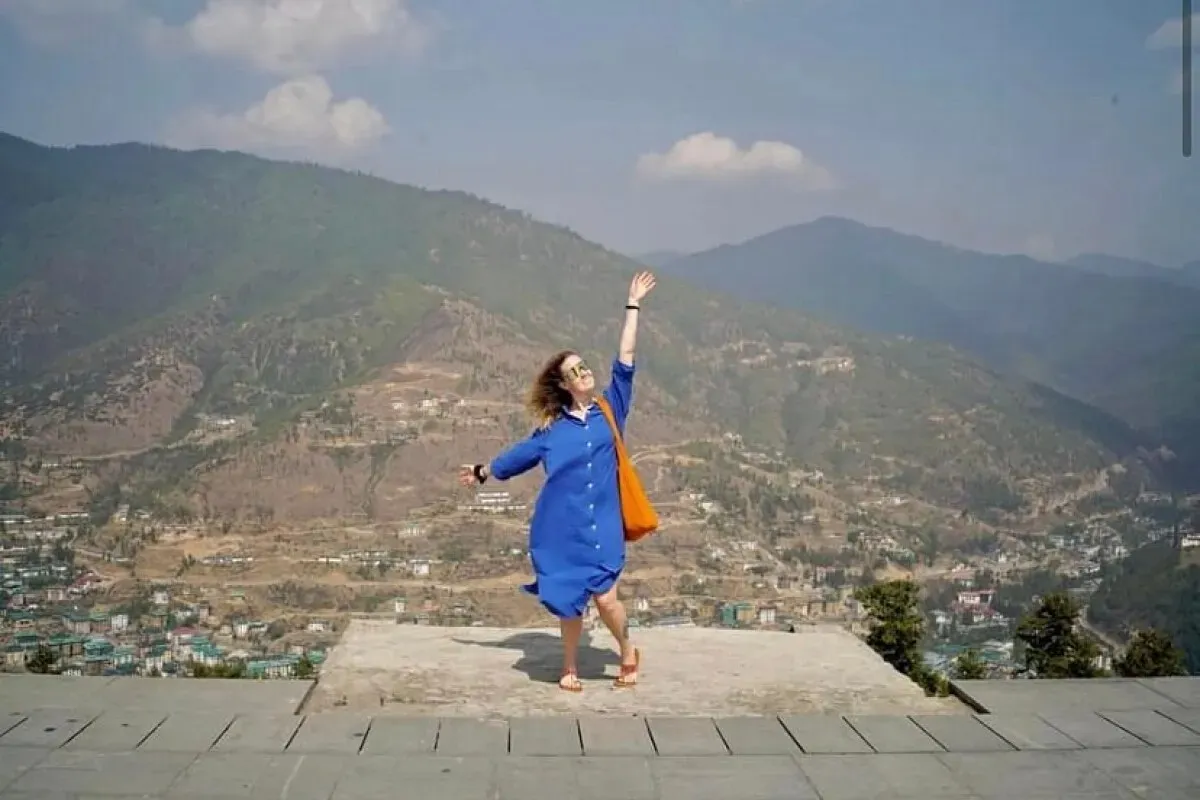
Bhutanese guides field the same handful of questions from women planning a trip almost every season, whether the traveler is coming alone, with a sister or friend, or as part of an organized women's group. Some of it is practical, what to wear, how connectivity works, whether altitude will be an issue. Some of it is more personal, whether it's really safe to come alone, whether the culture will feel welcoming. Drawing on how Bhutan's own guides and tour operators consistently answer these questions, here are fifteen of the most common ones, covered honestly rather than with a marketing gloss.
1. Is Bhutan actually safe for a woman traveling alone?
By almost every account, yes, genuinely so. Bhutan has one of the lowest crime rates in Asia, and solo female travelers consistently describe feeling safer here than in many other countries they've visited. Part of this comes down to a cultural saying often repeated by Bhutanese hosts, that guests are treated like gods, and part of it comes down to Bhutan's mandatory guide policy, which means no visitor, male or female, ever navigates the country entirely alone. Family-run hotels and homestays are used to hosting solo women, and many guests describe being looked after the way a relative would look after them, rather than as an anonymous customer passing through.
2. Do I need a travel companion, or can I really go by myself?
You can genuinely go alone. Because every foreign visitor to Bhutan is required to travel with a licensed local guide, a solo woman is never actually navigating unfamiliar roads, transport, or logistics without support. This requirement, which can feel restrictive in other countries, functions almost like a built-in safety net in Bhutan, and many solo travelers say it's precisely what made them comfortable going it alone in the first place.
3. What should I actually wear, especially around monasteries?
Day-to-day, casual clothing like jeans, leggings, and t-shirts is perfectly fine in towns and on trails. The dress code becomes genuinely important at religious sites: shoulders and knees should be covered, shoes come off before entering temple sanctuaries, and a light scarf or shawl is worth carrying everywhere, since it doubles as a shoulder cover, a head cover, or simply a layer against mountain wind. Bhutanese women themselves wear the kira, their national dress, when entering sacred spaces, so covering up isn't a rule imposed on visitors specifically, it's simply what respect looks like at these sites for everyone.
4. Are there tours specifically designed for women, and how are they different from a standard itinerary?
Yes, and they've become a genuinely popular way for women to experience Bhutan, whether traveling solo or in a small group. A women-only cultural journey through Bhutan typically pairs the country's usual highlights- dzongs, monasteries, valley walks- with a deliberately unhurried pace and space for reflection, journaling, or simply quiet time in the evening rather than a packed sightseeing schedule. What sets these apart isn't just who's on the trip; it's that the itinerary itself is built around a slower, more personal rhythm from the start.
5. What does it actually mean to travel with an all-female crew?
On tours built specifically this way, your guide, and in some cases drivers and trekking support staff, are Bhutanese women themselves, often sharing stories and cultural context that a mixed or male-led group wouldn't necessarily hear. A women's hiking and cultural discovery itinerary built around this model combines genuine trekking days with visits to places like Trongsa Dzong and Bumthang valley, led throughout by women who know the terrain and the culture from the inside. For many travelers, this changes the texture of the trip in a way that's hard to describe until you've experienced it, conversations open up differently, and questions you might hesitate to ask a male guide come up naturally instead.
6. Is Bhutan's culture actually respectful toward women, or is that just tourism marketing?
It holds up under scrutiny. Bhutan has meaningful matriarchal influences in daily life, particularly around property and land, where inheritance customs in many communities pass through the female line rather than the male one, which is unusual in the wider region. Social conduct in Bhutan is also shaped by a formal etiquette system called Driglam Namzha, which governs respectful behavior broadly, not specifically toward women, but its emphasis on courtesy and decorum extends naturally to how locals interact with female visitors.
7. Is nighttime safety something I should actually worry about?
Not to an alarming degree, but ordinary caution still applies. Bhutan's low crime rate doesn't mean zero risk, and guides commonly advise avoiding isolated areas after dark and using the same common sense you'd apply anywhere unfamiliar. In practice, this is rarely a significant issue for organized tours, since evenings are typically spent at your hotel or guesthouse with your group, but it's worth keeping in mind if you're out exploring a town independently after your guide has finished for the day.
8. What about periods and menstrual products while traveling, especially on a trek?
This is a genuinely practical concern that doesn't get discussed enough. Pharmacies and shops in Thimphu and Paro carry basic menstrual products, but selection narrows considerably once you're in smaller towns or trekking through remote terrain, so it's worth packing what you'll need for the full trip rather than assuming you can restock along the way. On multi-day treks specifically, mentioning any particular needs to your guide in advance, most of whom are experienced with exactly this kind of practical planning, makes it easier to build in the right stops or timing without any awkwardness.
9. Should I be more worried about altitude sickness as a woman?
Altitude affects people based on individual physiology, fitness, and acclimatization pace, not gender specifically, so the general precautions apply to everyone equally: ascend gradually, stay hydrated, and communicate honestly with your guide about how you're feeling. If your itinerary includes genuine trekking days, it's worth reading a fuller guide to training for Bhutan's treks beforehand, since arriving reasonably prepared matters more for how the altitude affects you than anything specific to being a woman on the trail.
10. Can women take part in monastery visits and meditation practice, or are some spaces restricted?
Bhutan's monasteries generally welcome women as visitors, though as with any traveler, access to certain inner sanctums or ongoing monastic retreats is restricted regardless of gender. An 8-day spiritual journey designed specifically for women builds time at sacred sites like Tiger's Nest directly into the itinerary, framed around personal reflection and empowerment rather than sightseeing alone. For a broader look at which monasteries offer structured meditation access to any visitor, a guide to Bhutan's meditation-friendly monasteries covers the specifics in more depth.
11. What should I pack that I might not think of on my own?
Beyond the obvious layers for changing mountain weather, a scarf or shawl earns its place in almost every packing list for exactly the reasons covered above around temple etiquette. A portable phone charger, a small flashlight, and photocopies of your important documents are commonly recommended, simple precautions rather than signs of any specific danger. Sun protection matters more than most people expect at Bhutan's higher elevations, where thinner air offers less natural UV filtering than travelers are used to at home.
12. How do I stay in touch with family back home while I'm there?
Most hotels in Paro and Thimphu offer WiFi, though speeds can vary, and a local SIM card, available at the airport, gives you mobile data for the rest of your trip. In more remote valleys and on longer treks, connectivity genuinely drops off, so it's worth letting people at home know in advance that you may be offline for stretches, rather than causing unnecessary worry over a missed message.
13. Is photography something I need to be careful about?
Yes, and this applies to any traveler, not just women. Always ask before photographing people directly, particularly monks, elderly residents, or anyone in traditional dress, and most Bhutanese are genuinely happy to be photographed once asked properly. Military installations and the royal family are off-limits for photography without explicit permission, a rule worth knowing before you instinctively raise your camera.
14. Will I feel out of place if I don't know anything about Buddhism or Bhutanese customs going in?
Not at all, and guides expect this. A few basic gestures go a long way regardless of how much you know beforehand: walking clockwise around stupas and mani walls, a universal practice at any sacred structure, and learning a couple of simple Dzongkha phrases, like kuzu zangpo la for hello, tend to be appreciated far more than they're expected. Bhutanese people are often described as warm but initially reserved, and conversation tends to open up naturally over a shared meal or cup of tea rather than through forced small talk.
15. What does a realistic first itinerary actually look like for a woman traveling to Bhutan for the first time?
Most guides recommend starting in the western valleys, Thimphu, Paro, and Punakha, since these areas offer the easiest introduction to the country's culture and landscape before venturing further east into more remote, adventurous territory. A route touching Paro, Thimphu, Punakha, and back, over roughly a week, gives a genuinely well-rounded first experience without overextending a first-time visitor, and it's the same general shape followed by most of the women-specific itineraries described above, whether the focus leans more toward hiking, spiritual reflection, or general cultural immersion.
Whatever combination of these questions brought you here, the consistent theme across Bhutan's own guides is the same: come with reasonable preparation and respect for local customs, and the country tends to take care of the rest.