
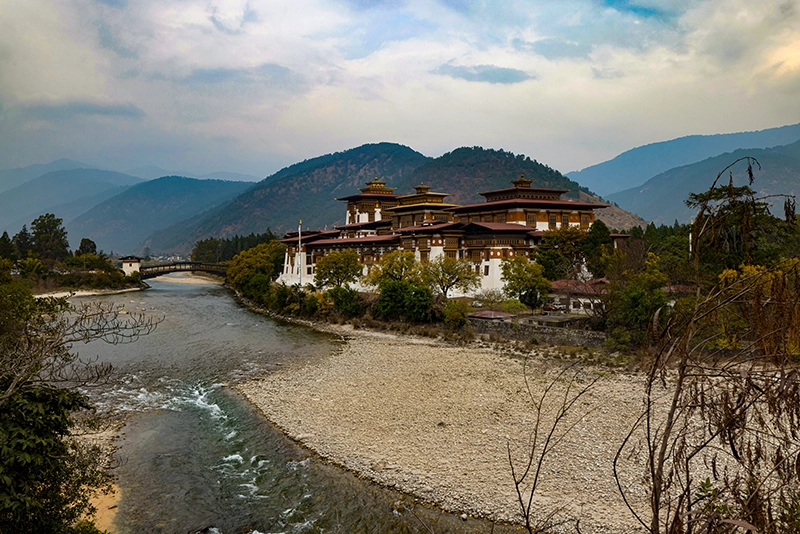
Bhutan does not feel like anywhere else on earth. The mountains rise sharply against the horizon, prayer flags snap rhythmically in the crisp alpine wind, and the quality of the mountain light shifts dramatically from hour to hour. A cultural journey through Western and Central Bhutan offers one of the most immersive ways to experience this Himalayan kingdom. You encounter centuries-old fortress dzongs, deep river valleys, high mountain passes, and vibrant community celebrations all in a single loop.
Understanding how to structure your travel budget, navigate national fees, and time your journey around Bhutan’s famous masked dance festivals ensures a seamless, deeply rewarding adventure.
Decoding Bhutan’s Tourism Policy and the SDF
Cultural tours in Bhutan combine dzong visits, monastery walks, and festival viewings under a distinct national tourism framework. Central to this policy is the Sustainable Development Fee, widely known as the SDF. Understanding what this mandatory government levy covers, and what remains a separate out-of-pocket cost, helps travelers plan an accurate budget before locking in any reservations.
The SDF is a mandatory government charge for nearly all international visitors to Bhutan. Most foreign tourists pay $100 US dollars per person, per night. This rate applies from the formal date of entry until the date of departure, including the final night, and has remained fixed since September 2023. Indian nationals pay a separate, lower regional rate in Indian rupees, while Bangladeshi and Maldivian visitors also receive reduced rates under bilateral agreements. Children under six years old are fully exempt, and those between six and twelve years old receive a fifty percent discount. The fee is paid in advance during the visa application process via wire transfer or credit card, and because it is a direct government levy, no tour operator can waive or discount it.
The SDF does not pay for hotels, meals, or a private guide. Instead, it functions as a national development levy that the government channels directly into public programs benefiting the entire country. Funded areas include free healthcare and education for all Bhutanese citizens, environmental conservation to maintain the nation's carbon-negative status, and rural infrastructure projects like electrification and road maintenance. Cultural preservation is another major focus, supporting the structural upkeep of fortress dzongs, monastery restorations, and traditional arts training.
Separating Tour Packages and Extra Expenses
A licensed Bhutanese tour operator arranges your actual on-the-ground travel experience, which is billed independently from the SDF. Standard cultural tour packages typically bundle core travel services into one quoted rate. These inclusions cover a licensed, English-speaking guide for the full trip, private internal transport, airport transfers, twin-share hotel accommodations, most daily meals, and entrance fees to major dzongs, museums, and monasteries. Visa processing and government permit assistance are also handled entirely by the operator.
Operator rates for these packages vary based on group size and seasonality. Solo travelers typically pay around $240 to $250 per night, while two people traveling together see rates drop to about $190 per person per night. Groups of three or more generally pay closer to $180 per person per night. Adding the fixed $100 daily SDF gives you a close approximation of your total daily tour cost.
Several expenses sit outside both the SDF and standard tour packages. The Bhutan visa fee is a separate, one-time charge of about $40 per person. International flights—primarily operated by Drukair or Bhutan Airlines—must be booked independently. Travelers should also budget separately for travel insurance (strongly recommended given the high-altitude terrain), alcoholic beverages, laundry services, local SIM cards, and tips for guides and drivers, which generally average $16 to $20 combined per day. From January 2026, a 5% goods and services tax applies to tour services, though the SDF itself remains entirely exempt.
Timing Your Journey: The 2027 Bhutan Tsechu Calendar
For many travelers, the ultimate highlight of a cultural tour is attending a Tsechu. A Tsechu is a multi-day masked dance festival held in honor of Guru Rinpoche. Monks and trained lay dancers perform sacred Cham dances inside majestic dzong courtyards, while local communities dress in their finest traditional attire—the gho for men and the kira for women—to celebrate as a religious and social occasion. Many of these festivals reach their spiritual climax with the pre-dawn unveiling of a giant sacred silk thangka, known as a Thongdrel.
Because Tsechu dates follow the traditional Bhutanese lunar calendar rather than the Gregorian calendar, dates shift by several weeks each year. Below is the confirmed schedule of major Tsechus across the country for 2027:
Choosing Where to Go: Crowds vs. Intimacy
First-time visitors often gravitate toward the larger, highly accessible celebrations. The Paro Tsechu draws massive crowds and features the unforgettable morning unfurling of the Guru Thongdrel against the walls of Rinpung Dzong. Similarly, the Thimphu Tsechu fills the grand courtyards of Tashichho Dzong with powerful performances like the Black Hat dance.
Conversely, travelers seeking a quieter, more intimate window into local traditions often look toward eastern Bhutan. Festivals in Mongar, Trashigang, and Chhukha see very few international tourists, offering a slower-paced cultural immersion. Likewise, the Haa Tsechu provides a peaceful community atmosphere in a valley still relatively untouched by heavy tourist volumes. Because hotels and flights sell out months in advance during peak festival seasons, booking your cultural journey four to six months ahead is essential.
FAQs
1. What exactly is a Bhutanese Tsechu?
A Tsechu is a multi-day masked dance festival held in dzongs and monasteries to honor Guru Rinpoche. Local communities gather in their finest clothes to watch monks perform sacred Cham dances, and many festivals conclude with the unveiling of a massive sacred thangka called a Thongdrel.
2. Why do the dates for Tsechus change every year?
Festival dates are determined by the Bhutanese lunar calendar rather than the Gregorian calendar, causing them to shift by several weeks annually. You should always verify exact dates with a licensed tour operator before booking flights.
3. Which Tsechus are best for first-time visitors in 2027?
The Paro Tsechu (March 18–22) and Thimphu Tsechu (October 10–12) are the most popular options, drawing the largest crowds. The Punakha Tsechu (February 16–18) is also highly recommended, featuring a historic battle reenactment in a scenic setting where two rivers meet.
4. Where can I experience a Tsechu with fewer crowds?
Eastern Bhutan festivals, such as those in Mongar, Trashigang, and Chhukha, see far fewer international tourists. The Haa Tsechu (November 6–8) also offers a more intimate, low-key experience in a valley that is still relatively new to tourism.
5. How far in advance should I book a cultural festival tour?
You should book flights, guides, and hotels four to six months in advance, as accommodations sell out quickly during major festivals. Arriving early on the first morning is the best way to secure a good viewing spot near the dance ground.