
Choosing a family adventure destination usually comes down to a handful of practical questions parents actually lose sleep over: will it feel safe with kids in tow, will there be enough to hold everyone's attention across different ages, how much logistics work falls on you versus a guide, and how predictable is the final cost once flights, activities, and the inevitable extras are added up. Bhutan, Japan, and New Zealand each answer these questions in genuinely different ways, and none of them is the objectively "best" choice for every family. This comparison looks honestly at how each one actually works for a family trip, rather than simply ranking them.
Bhutan: Structured, Guided, and Built Around Culture
Bhutan's defining feature for families is something that sounds restrictive on paper but tends to work in a family's favor in practice: every foreign visitor is required to travel with a licensed local guide and a private vehicle throughout the trip. For a family managing young kids, this removes an enormous amount of logistical stress, no navigating public transport with a toddler, no researching which restaurant will actually serve a picky eater, since your guide handles pacing, meals, and daily logistics as part of the package. A well-designed itinerary can make family travel much easier, with a Bhutan family tour allowing the schedule to be adjusted around the children's ages, interests, and energy levels rather than following a fixed, one-size-fits-all plan.
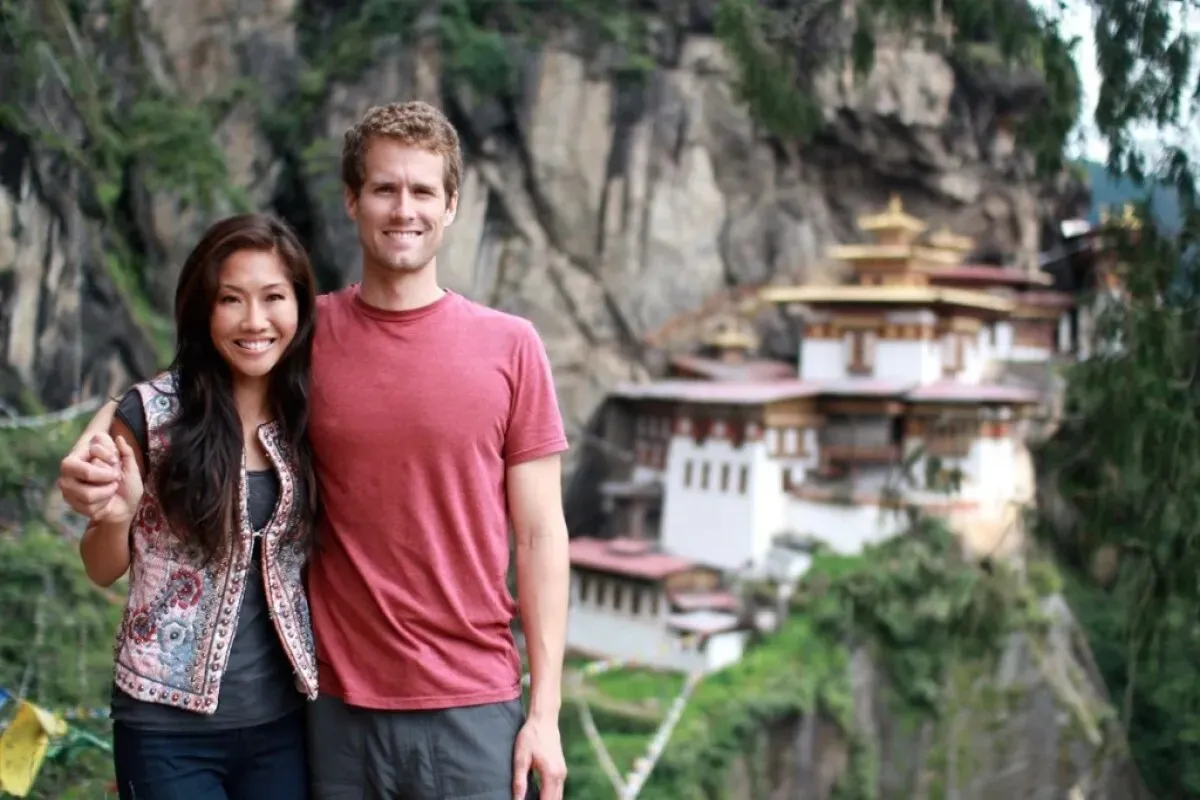
Cost is where Bhutan surprises a lot of families, since the country's Sustainable Development Fee, a mandatory government charge of $100 per adult per night, actually scales down significantly for children. Kids under 6 are exempt from the fee entirely, and children aged 6 to 11 pay just half the adult rate, meaning a family with younger children pays considerably less than the headline adult figure might suggest. On top of the fee itself, the day-to-day activities built into most family itineraries lean toward archery, farmhouse visits, gentle nature walks, and a traditional hot stone bath, all genuinely engaging for children without requiring serious physical endurance. The Tiger's Nest hike, Bhutan's most iconic outing, is manageable for reasonably fit children around age 8 and up, and ponies can even be arranged in advance to carry a tired child partway up the trail.
What Bhutan doesn't offer is independence or spontaneity. You won't be wandering off on your own itinerary or making last-minute changes without your guide's involvement, and the pace of travel, given winding mountain roads between valleys, rewards a relaxed schedule with plenty of rest built in rather than an ambitious multi-stop itinerary packed into a short trip.
Japan: Independent, Efficient, and Endlessly Varied
Japan offers close to the opposite travel style. There's no guide requirement here, families are free to move entirely at their own pace, aided enormously by one of the most efficient and family-friendly public transportation systems in the world. Japan's train network in particular makes independent family travel remarkably manageable even with young children, and safety consistently ranks among the highest in the world, giving parents real freedom to let older kids explore a train platform or a shopping arcade without the same level of vigilance needed in many other countries.
The range of activities in Japan is genuinely enormous, spanning traditional culture, temples, shrines, tea ceremonies, alongside thoroughly modern attractions like Tokyo Disneyland, robot-themed arcades, and some of the best amusement parks in Asia. This variety means Japan can flex to suit very different family preferences within a single trip, a culturally rich day in Kyoto followed by a theme-park day in Osaka, in a way that's harder to replicate in either Bhutan or New Zealand. Costs in Japan vary enormously depending on choices made, a family can genuinely travel on a modest budget using trains and casual dining, or spend heavily on premium ryokans and bullet train upgrades, giving considerably more control over the final price than Bhutan's structured package model.
The trade-off is that Japan requires more planning work from parents themselves. Without a guide handling logistics, families need to research train routes, book accommodations, and navigate menus and signage that, while increasingly English-friendly in major cities, can still present a real language barrier once you venture beyond Tokyo and Kyoto.
New Zealand: Outdoor Adventure With an English-Speaking Advantage
New Zealand's appeal for families centers almost entirely on outdoor adventure and dramatic natural scenery, glowworm caves, glacier walks, wildlife encounters, and adrenaline activities like ziplining and jet boating that tend to appeal strongly to older kids and teenagers specifically. Being an English-speaking country removes a layer of friction that exists in both Bhutan and Japan, and like Japan, there's no mandatory guide requirement, giving families full flexibility to build their own itinerary and rent a car to explore independently.
New Zealand's safety record is excellent, and its tourism infrastructure is well set up for families, with plenty of accommodations, campgrounds, and activity operators specifically experienced in hosting kids across a wide age range. What New Zealand doesn't offer in the same way as Bhutan or Japan is a deep, immersive cultural experience as the trip's central focus. Māori culture is genuinely rich and worth engaging with directly, but for most visiting families, New Zealand's itinerary skews more heavily toward nature and adventure activities than toward the kind of sustained cultural immersion Bhutan builds every day around.
The most significant practical downside for many families, particularly those based in North America, is distance. New Zealand sits at the far end of a long-haul flight from most of the U.S. and Canada, generally requiring well over twelve hours in the air even on the more direct routings, which is worth factoring in heavily when traveling with younger children who may struggle with an especially long flight.
Comparing the Three Side by Side
A few core differences tend to matter most when families are actually deciding between these three destinations:
Independence versus guided structure: Japan and New Zealand both allow fully independent travel; Bhutan requires a licensed guide and private vehicle throughout the trip.
Cost predictability: Bhutan's package-based model, with its clearly tiered child discounts on the Sustainable Development Fee, gives families a fairly predictable total cost upfront. Japan and New Zealand both offer far more budget flexibility, but that flexibility means the final cost depends heavily on choices made along the way.
Primary focus: Bhutan centers on cultural immersion, monasteries, farmhouse life, and living Buddhist tradition. Japan blends deep cultural heritage with thoroughly modern entertainment. New Zealand centers primarily on outdoor adventure and natural scenery.
Best age range: Bhutan's slower pace and cultural focus tends to suit families with school-age children and up, especially given the physical demands of its signature hikes. Japan's variety makes it flexible across nearly any age group, from toddlers to teenagers. New Zealand's adventure activities tend to resonate most strongly with older children and teens who can participate directly in the more physical activities on offer.
Language and logistics: English is the primary language in New Zealand, removing a barrier entirely. Japan presents a moderate language consideration outside major cities, softened somewhat by widespread English signage in tourist areas. Bhutan removes this concern entirely for English-speaking families, since a fluent English-speaking guide is part of every tour by default.
Which Destination Actually Fits Your Family?
There's no single right answer here, and the honest response depends heavily on what your family actually wants out of the trip. A family looking for a slower, more reflective experience centered on culture, tradition, and genuine connection with local life, without having to manage logistics themselves, tends to find Bhutan a remarkably good fit, particularly given how meaningfully the cost structure favors families with younger children. A family that wants maximum flexibility, a mix of traditional and modern attractions, and the ability to adjust plans on the fly will likely find Japan the more natural choice. A family built around outdoor adventure and physical activity, with teenagers eager for genuine adrenaline experiences, is probably better served by New Zealand, provided the long flight is something you're prepared to manage.
For families leaning toward Bhutan specifically, it's worth looking at how a tailored family itinerary actually comes together, built around the ages and interests of everyone traveling rather than a fixed template. Depending on what your children enjoy, a route such as a Family Adventure Tour to Eastern Bhutan can offer a different balance of sightseeing, outdoor activities, and time on the road.