
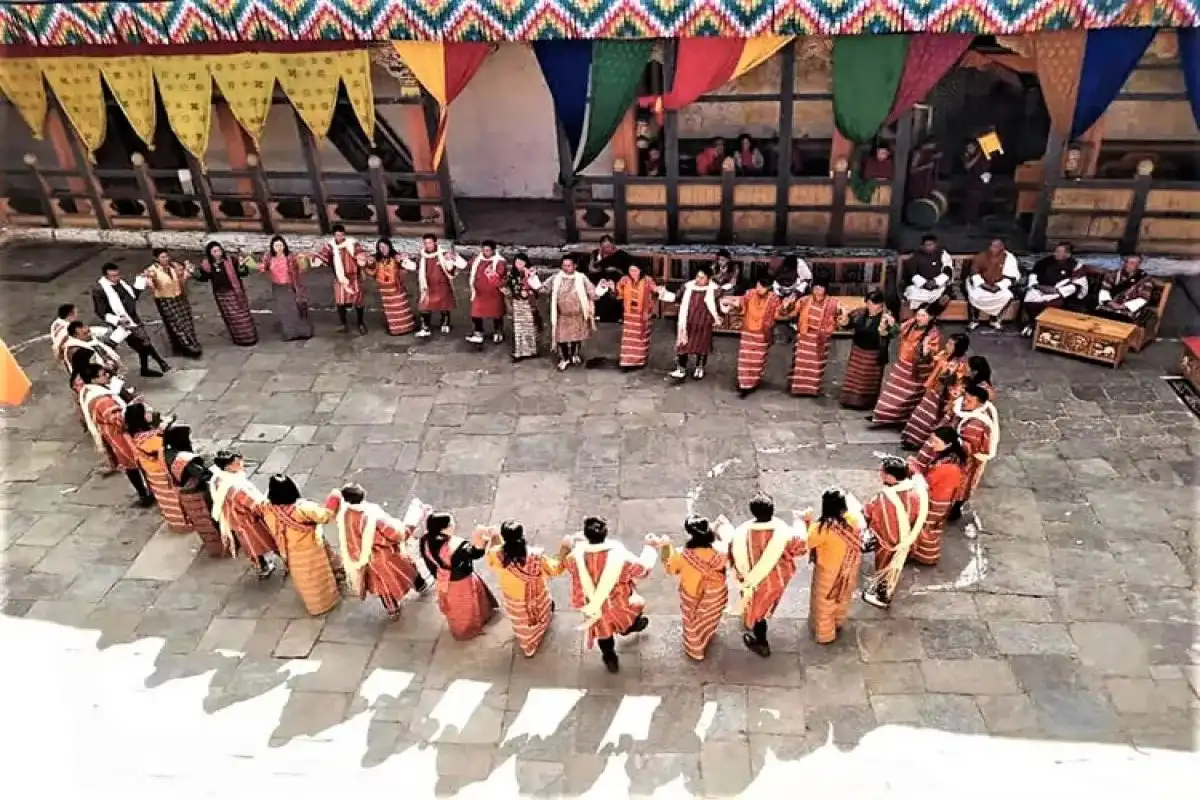
Eastern Bhutan holds a festival most travelers have never heard of. The Lhuentse Festival, also called the Lhuentse Tshechu, takes place inside a remote hilltop fortress. Few foreign visitors make the long journey to attend it. Those who do witness one of the most authentic celebrations in the country. This guide covers everything needed to plan a visit. It explains how to get there, where to stay, and what to expect once you arrive.
Quick Facts About the Lhuentse Festival
- Location: Lhuentse Dzong, northeastern Bhutan
- Region: Kurtoe, ancestral home of the Wangchuck dynasty
- Founded: Roughly three centuries ago by Yongzin Ngagay Wangchuk
- Timing: Usually late November or December, based on the lunar calendar
- Nearest town with hotels: Mongar, about 74 kilometers away
- Distance from Thimphu: Around 460 kilometers by road
- Known for: Masked Cham dances, royal history, and Kishuthara weaving
What Is the Lhuentse Festival?
The Lhuentse Festival is an annual religious celebration held in eastern Bhutan. It takes place in the courtyard of Lhuentse Dzong. Local people call it the Lhuentse Tshechu. Like other tshechus, it honors Guru Rinpoche, the saint who brought Buddhism to Bhutan.
The word tshechu refers to the tenth day of the lunar month. Monks and laymen perform sacred Cham dances across several days. These dances tell stories of protection, purification, and spiritual victory. The Lhuentse Tshechu was established roughly three centuries ago by Yongzin Ngagay Wangchuk. It remains one of the least commercialized festivals in the entire kingdom.
Why Lhuentse Holds a Special Place in Bhutanese History
Lhuentse is not just another district in eastern Bhutan. This region, historically called Kurtoe, is the ancestral home of Bhutanese royalty. Ugyen Wangchuck, the first King of Bhutan, was born in this valley. His family rose from local leaders to rulers of a unified nation.
The ancestral residence, Dungkar Nagtshang, still stands near Lhuentse Dzong. Many Bhutanese travel here specifically to visit this historic estate. Attending the festival means standing in the heart of royal heritage. It offers a deeper connection to Bhutanese identity than most tourist stops.
The region is equally famous for Kishuthara, an intricate silk textile. Skilled weavers in nearby Khoma village still produce it by hand today. Local history traces Lhuentse Dzong itself to the 16th century. The present structure was largely completed in 1654.
Getting There: How to Reach Lhuentse
By Air
Paro International Airport is the main gateway into Bhutan. Most international flights land here from cities across South Asia. From Paro, travelers continue toward Lhuentse entirely by road.
Domestic flights sometimes connect Paro with Bumthang or Yongphulla airport. These routes can shorten the journey, though schedules remain limited and weather dependent. Yongphulla, near Trashigang, sits roughly 130 kilometers from Lhuentse. Even with a domestic flight, a final stretch by road is required.
By Road
The full drive from Thimphu to Lhuentse covers about 460 kilometers. Depending on road conditions, the journey can take 13 to 15 hours. Most travelers break this drive into several days rather than one. A common route passes through Punakha, Trongsa, and Bumthang first.
From Bumthang, the road continues over high passes toward Mongar. Mongar offers the easiest final approach to Lhuentse. From Mongar, it is roughly a 3-hour drive covering 74 kilometers. The road winds through forested hills above the Kuri Chhu valley.
Public buses link Thimphu and Lhuentse a few times each week. Even so, nearly all visitors travel by private vehicle through their operator. Mountain roads here are narrow, so patience matters more than speed. Hiring a driver familiar with eastern Bhutan is strongly recommended.
Where to Stay in and Around Lhuentse
Lodging in Lhuentse Town
Lhuentse itself remains one of the least developed districts in Bhutan. Hotel choices in town are limited but steadily improving each year. A handful of small guesthouses offer basic, clean rooms for visitors.
Do not expect luxury amenities here, even during the busy festival period. What the town lacks in comfort, it makes up for in atmosphere. Staying overnight allows visitors to experience the festival at a relaxed pace.
Village Homestays Nearby
Several nearby villages offer traditional Bhutanese homestays instead of hotels. Khoma, Tangmachu, and Ney are among the most popular choices. These homes feature carved wood interiors and colorful painted details.
Guests typically share home cooked meals with the host family. Dishes often include ema datshi, a spicy chili and cheese stew. Staying in a homestay adds a personal layer to the trip. Visitors in Khoma can also watch Kishuthara weaving up close.
Basing Yourself in Mongar Instead
Many travelers choose to stay in Mongar and visit Lhuentse for the day. Mongar offers a wider range of certified 3-star hotels. Rooms here tend to be more comfortable than those in Lhuentse itself.
This approach works well for visitors with limited time. It does mean an early departure to catch the morning dances. Discuss both options with your tour operator before finalizing an itinerary.
What to Expect at the Festival
The Lhuentse Tshechu unfolds over several days inside the dzong courtyard. Expect a slower, more intimate atmosphere than festivals in western Bhutan. Crowds are smaller, and most attendees are local rather than international.
Villagers arrive from across the district dressed in their finest clothes. Women often wear jewelry made from coral and turquoise. Men wear the traditional gho, tied at the waist with a belt.
Several masked Cham dances anchor each day of the celebration. Guru Tshengye depicts the eight manifestations of Guru Rinpoche. Deygye Bakcham features dancers representing classes of guardian deities. Other dances include Sachhog Zhang Cham and Sha Zam Cham. Each performance blends religious meaning with striking costumes and music. Drums, cymbals, and long horns accompany every movement on stage.
Sacred relics rarely displayed elsewhere appear during the festival as well. Locals believe viewing these relics brings blessings and merit. The festival closes with prayers, offerings, and a strong sense of community. For visitors, it offers a rare, unfiltered look at Bhutanese village life.
When Does the Lhuentse Festival Take Place
The Lhuentse Tshechu follows the Bhutanese lunar calendar every year. Because of this, the festival does not fall on a fixed date. Most years, it takes place in late November or December.
In 2026, tentative dates place the festival from December 17 to 21. Exact scheduling is usually confirmed only months in advance. Always verify current dates with a licensed Bhutan tour operator.
Cold weather is common in Lhuentse during this time of year. Pack warm layers regardless of how mild the forecast looks.
Weather and What to Pack
Late November and December bring cold, clear weather to Lhuentse. Daytime temperatures often stay mild, while mornings and evenings turn sharply cold. Snow is possible at higher elevations along the route.
Pack layered clothing, a warm jacket, and sturdy walking shoes. A scarf or hat helps during early morning festival sessions. Sunscreen and sunglasses are useful, since mountain sunlight can be intense.
Reliable mobile signal is limited once you leave major towns. Download offline maps and inform your operator of any special needs. A flashlight or headlamp helps during early departures before sunrise. Bring a printed copy of your permit and travel documents.
Entry Requirements and Travel Costs
All foreign tourists need a visa arranged through a licensed operator. Independent travel without a Bhutanese tour operator is not permitted. Most visitors also pay a Sustainable Development Fee each night.
As of 2026, this fee is set at 100 US dollars nightly. Citizens of India, Bangladesh, and the Maldives pay reduced rates instead. A separate visa fee of 40 US dollars also applies once.
These costs cover conservation, education, and infrastructure across the country. Because Lhuentse sits far from Paro, plan for a longer trip overall. Most itineraries that include Lhuentse last ten days or more.
Tips for Visiting the Lhuentse Festival
Planning carefully makes a real difference for such a remote destination.
- Book your trip through a licensed Bhutan tour operator early.
- Confirm exact festival dates a few months before departure.
- Pack warm clothing, since Lhuentse gets cold in late autumn.
- Bring cash, since card payments are rare outside major towns.
- Dress modestly when entering the dzong courtyard or temples.
- Ask permission before photographing monks or ritual performances closely.
- Break the long drive into stages to avoid fatigue.
- Carry motion sickness remedies for the winding mountain roads.
- Add extra days for Khoma village and local weaving visits.
- Keep your itinerary flexible, since eastern Bhutan travel can shift.
Nearby Places to Explore While in Lhuentse
A trip to Lhuentse pairs well with several nearby attractions.
Khoma village remains the center of Kishuthara textile production. Visitors can watch weavers work and purchase pieces directly from them. Dungkar Nagtshang, the ancestral home of the royal family, sits close by. Jangchubling Monastery offers quiet valley views away from the festival crowds.
For more adventurous travelers, Singye Dzong lies deep in the mountains. This remote pilgrimage site is linked to Guru Rinpoche himself. Reaching it requires a multi day trek through remote terrain. Most visitors instead focus on sites closer to Lhuentse Dzong itself.
Combining Lhuentse With the Rest of Eastern Bhutan
Since the journey here is long, most itineraries extend beyond Lhuentse alone. Trashigang, the largest town in the east, lies within easy reach. Trashiyangtse offers the Chorten Kora stupa and quiet farming villages. Bumthang, passed en route, holds several of the oldest temples in Bhutan.
Combining these stops turns a single festival into a full regional journey. Many operators build a ten to fourteen day loop around eastern Bhutan. This route rewards travelers with fewer crowds and richer cultural exchange. Few tourists venture this far east, which only adds to the appeal.
Local markets along the way sell handwoven textiles and farm produce. Small roadside eateries serve simple, hearty Bhutanese meals to travelers. Taking time at each stop makes the long drive feel worthwhile. Rushing through eastern Bhutan misses much of what makes it special.
Frequently Asked Questions
How far is Lhuentse from Thimphu?
Lhuentse sits roughly 460 kilometers from Thimphu by road. The drive typically takes between 13 and 15 hours total.
Is there an airport near Lhuentse?
The nearest domestic airport is Yongphulla, near Trashigang. It sits about 130 kilometers away, so road travel is still required.
What is the best base for visiting the festival?
Mongar offers more hotel options than Lhuentse town itself. Many travelers stay there and visit Lhuentse for the festival day.
Do foreign tourists need a special permit for Lhuentse?
All foreign visitors travel through a licensed Bhutan tour operator. The operator arranges any necessary permits alongside the standard visa.
What should visitors wear to the festival?
Modest clothing is expected, especially inside the dzong courtyard. Many Bhutanese wear the traditional gho or kira for the occasion.
Why the Lhuentse Festival Is Worth the Journey
The Lhuentse Festival rewards travelers willing to go off the beaten path. It offers something increasingly rare in global travel today. Here, ritual and daily life still overlap without any staged performance.
Visitors witness Cham dances performed for the community, not for cameras. The surrounding region adds royal history and remarkable textile traditions. Few places in Bhutan combine culture, scenery, and authenticity so completely.
For travelers seeking a deeper side of the kingdom, Lhuentse delivers. The journey is long, but the reward is a memory that lasts.