
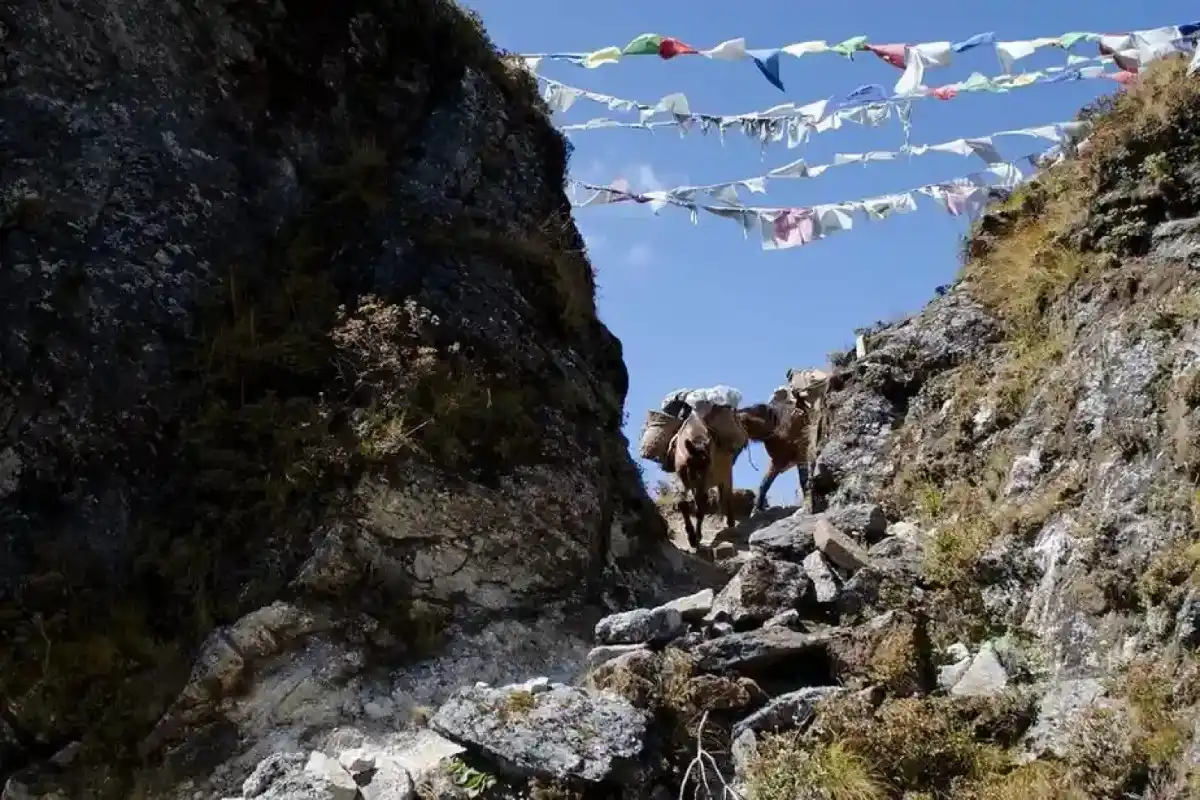
If you want to experience Bhutan beyond the sightseeing the Bumdrak Trek gives you a chance to walk through forests climb into the mountains visit sacred places and spend a night camping at high altitude. The trip is not about reaching a viewpoint. You get to slow down and experience the side of Bhutan while moving between Paro, Thimphu and the mountains above Paro Valley.
The main trekking part takes you from Sang Choekor Buddhist College toward Bumdrak. The trail passes through forest. Includes a steep climb before reaching the campsite. Bumdrak is 3,800 meters high while Orrogs current itinerary lists the maximum altitude of the trip at around 4,000 meters. The trek is rated moderate so it needs a level of fitness but it does not require technical climbing skills.
What makes the experience more interesting is the camping. Instead of going back to a hotel after the climb you stay in a tent near Bumdrak Temple. You can spend the evening in the mountains have tea or coffee eat dinner rest in your tent and wake up surrounded by a different landscape. The next trekking day then takes you down through the forest and toward the Tigers Nest area.
This guide looks at what the Bumdrak Trek's really like including the trail, camping, altitude, difficulty, food, weather, preparation and what you can expect on each day.
Why is the Bumdrak Trek Different From a Bhutan Trip?
A normal Bhutan trip can include monasteries, dzongs, markets, museums and scenic drives. The Bumdrak Trek adds something because you actually spend time walking through the mountains instead of only visiting places by vehicle. You get to see the landscape slowly change as you gain elevation. You spend a night in a mountain campsite rather than staying in a hotel.
The trek also combines nature and culture. Along the way you visit sites and monasteries including Bumdrak Temple. The mountain environment is also a part of the experience. Forest trails, mountain views, prayer flags and quiet surroundings make the journey feel different from a city or cultural tour.
Another important part is the connection with Tigers Nest. The trek does not simply take you to the monastery and finish there. After camping at Bumdrak you descend through the forest. Continue toward the Tigers Nest area as part of the itinerary. This gives travelers the chance to experience both the mountain trail and one of Bhutans known cultural landmarks. Orrog currently offers the Bumdrak experience as a 6-day itinerary combining hiking and sightseeing.
If you want to explore Paro beyond the trekking route, a Cultural Tour of Paro Valley offers another way to experience the valley's monasteries, landmarks, and cultural heritage.
Bumdrak Trek at a Glance
The Bumdrak Trek is a 6-day Bhutan trekking and sightseeing trip that starts with arrival in Paro and includes time in Thimphu before the mountain sections. The trek is rated moderate. Reaches a maximum altitude of around 4,000 meters with Bumdrak itself around 3,800 meters. The main trekking section includes a forest climb from Sang Choekor toward Bumdrak and a descent toward Tigers Nest on the following day. Orrog lists March to May and September to November as the seasons for the trek. Camping equipment such as tents and sleeping bags is provided, while meals and drinking water are also included in the package.
Bumdrak Trek Itinerary: What Each Day Is Really Like
The current Orrog itinerary is planned for six days. The first few days are not about trekking. They give you time to arrive explore Thimphu and Paro and then move gradually into the mountain experience. The main Bumdrak camping section comes later in the trip.
Day 1: Arrival In Paro
You arrive at Paro International Airport. An Orrog representative meets you. Helps you with the arrival process. Then you drive to Thimphu. You check into your hotel. Have some time to rest. Later you visit Tashichho Dzong. Then go back to your hotel.
Day 2: Hike To Tigers Nest Monastery
The second day includes a morning hike to Dodedra Shedra. You drive to Dechencholing. Then start walking uphill. You visit the temple and museum. Then go back to Thimphu for lunch. In the afternoon you visit the Buddha Dordenma statue and Memorial Chorten. You also have time to explore the handicraft market.
Day 3: Trek From Paro Bumdrak Monastery
On the day you drive to Hongtsho and continue to Tashigang Gompa. The hike starts there. You walk through a forest. May see trees and birds. After a hours you reach Lungchutse Gompa, where you can see wide mountain views. Then you descend toward Dochu-la Pass. Visit Druk Wangyel Lhakhang. Later you visit the museum and Paro Dzong.
Day 4: Explore Bumdrak And Surroundings
This is the day when the main Bumdrak Trek really begins. You drive to Sang Choekor Buddhist College, which's the starting point for the trek. The trail starts with a climb through a forest. After a hours you stop for lunch at Chechemhen, where you can see Paro Valley. Then you continue the climb. The trail gets easier for some sections. You still need to keep climbing until you reach the camp. Once you arrive at Bumdrak you can visit Bumdrak Temple. If you still have energy you can walk to a viewpoint where you can see Jomolhari Peak.
Day 5: Descend To Paro
After breakfast at the camp you start the trekking section. You descend through the forest. Follow the route toward several monasteries and temples. After an hour you reach Oselgang Monastery, where you can see Paro Valley. Then you continue through Ogyen Tsemo Temple and toward Zangto Pelri Lhakhang. From there the vehicle takes you onward. You visit Drukgyel Dzong and Kiychu Lhakhang before returning to your hotel in Paro.
Day 6: Departure From Paro
The day is simple. You pack your bags have breakfast and then go to the airport. Your Orrog team takes you to Paro International Airport. Helps you with the departure process.
What is the Trek to Bumdrak Actually Like?
The main climb to Bumdrak is where you will feel the side of the trip. The trail starts from Sang Choekor Buddhist College. Goes upward through forest. According to Orrog this section takes around 6–7 hours. Is considered moderate. The first part is described as a forest climb so you should not expect a flat walking trail.
The good thing is that you are not climbing without anything to look at. The forest provides a setting and as you get higher the views start to open up. The stop at Chechemhen gives you a chance to rest and look over Paro Valley before continuing toward camp.
After hours of walking reaching Bumdrak feels different because you are now in a high mountain environment. The air is cooler. The surroundings are quieter. You may also see monals around the campsite according to Orrogs description. If you still have energy after reaching camp you can walk toward a viewpoint for views of Jomolhari Peak.
The important thing is not to rush. A steady pace is better than trying to finish the climb especially as the altitude increases.
What is Camping at Bumdrak Like?
Camping is one of the reasons the Bumdrak experience feels different from a normal Bhutan tour. After spending hours walking uphill you do not return to a hotel. Instead you spend the night in a tent, at the Bumdrak campsite. Orrog says that tents and sleeping bags are provided so travelers do not need to buy their camping equipment just for this trip.
The campsite is 3,800 meters high so you should be prepared for cold conditions. It is not the kind of place where you should expect the comfort you get from a city hotel. Warm clothes, proper socks, gloves and a good jacket can make the night much easier.
There is also something about the simplicity of the camp. You have finished the part of the days walk so you can slow down and rest. Tea or coffee and snacks are provided in the evening and dinner is included as part of the trek. Drinking water is also provided.
The campsite is basic. That is also part of the experience. You are there to spend time in the mountains than have all the facilities of a hotel. If you are comfortable with a camping night and are prepared for the cold it can become one of the most memorable parts of the trip.
What Are the Food, Water and Toilet Facilities Like?
Food and basic support are important when you are trekking at altitude. Orrogs Bumdrak package includes breakfast, lunch and dinner so you do not have to arrange your meals during the trek. Evening tea or coffee with snacks is also. Drinking water is available throughout the trek.
The facilities at the campsite are more basic than what you would find in a hotel. This is something travelers should understand before choosing a camping trek. You should also carry items that make you comfortable such as wet wipes, personal toiletries and any medicines you normally need.
Than expecting luxury it is better to look at the campsite as part of the mountain experience. You walk, eat, rest and sleep in an environment and then continue the journey the next morning.
What Does a Night at Bumdrak Camp Feel Like?
After walking for most of the day the evening at Bumdrak is mainly about resting. You can have tea or coffee with snacks eat dinner and spend some time around the camp. Since the campsite is at an altitude the temperature can feel cold especially after the sun goes down. Orrog describes Bumdrak as having a high-altitude environment and recommends spring and autumn for the trek.
The night can feel very different from staying in Paro or Thimphu. There are normal city distractions and you are surrounded by mountains and forest. If the weather is clear the mountain setting can be especially enjoyable. It is always better to remember that weather in the mountains can change.
For travelers the best part is simply having the chance to stop after a long hike and realize how far they have walked. You are not trying to finish a sightseeing list. You are just spending the night in the mountains.
Bumdrak Monastery and the Cultural Side of the Trek
The Bumdrak Trek is not a physical activity. The route also gives you a chance to experience Bhutans cultural side. Bumdrak Temple is located near the campsite and travelers can visit it after reaching camp. This makes the mountain stop more meaningful than reaching a high point and taking photographs.
Bhutan has a connection between its landscape, monasteries and Buddhist traditions. During the Bumdrak trip you move between forests, mountain trails and religious sites. The Bumdrak Trek brings together Bhutan's natural landscapes and spiritual heritage. For a deeper look at the country's historic landmarks and cultural traditions, a Bhutan Heritage Tour can complement the trekking experience.
The experience at Bumdrak is best enjoyed respectfully. The monasteries and temples are places of worship so travelers should follow rules listen to their guide and dress appropriately when required.
How Difficult Is the Bumdrak Trek?
The Bumdrak Trek difficulty is generally rated as moderate by Orrog. You do not need mountaineering skills but you do need a reasonable level of stamina. The main trekking section involves a climb through forest and several hours of walking. The trail can include forest paths, ridges and rocky areas comfortable hiking shoes are important.
Altitude is another reason the trek can feel harder. Bumdrak is 3,800 meters and the itinerary gives a maximum altitude of around 4,000 meters. At this height some people may feel more tired than they normally would at elevations.
The trek can therefore be manageable for a fit traveler but it should not be treated as an easy sightseeing walk. You need to be ready for walking several hours on your feet and a cold night at altitude.
Orrog recommends doing exercise for two to three months before the trek to build stamina. That does not mean you need to become an athlete. Regular walking and gradually increasing your activity can make a difference.
Can Beginners Do the Bumdrak Trek?
Yes, beginners can consider the Bumdrak Trek if they are reasonably fit and prepare properly. You do not necessarily need multi-day trekking experience but you should be comfortable walking for several hours and going uphill.
Someone who regularly walks, hikes uses stairs. Does other physical activity will usually have a better starting point than someone who rarely exercises. It is also useful to practice walking before the trip because the climb from Sang Choekor to Bumdrak is one of the more demanding parts of the itinerary.
Beginners should also understand that altitude can make the trek feel different from a hike. Even if you are physically strong you may still feel tired at elevations. Walking slowly taking breaks and following the guides advice are more useful than trying to prove how quickly you can reach camp.
Bumdrak Trek Altitude: How High Do You Camp?
Altitude is one of the important things to understand before booking the trek. Orrog describes Bumdrak as being 3,800 meters high and lists the maximum altitude of the itinerary as 4,000 meters. This is high enough that travelers should take altitude seriously and prepare for air.
You may notice that walking feels harder as you climb. You might need breaks than you normally take and you may feel tired even when walking at a slow pace. This does not automatically mean something is wrong. You should pay attention to how your body feels.
Do not rush to reach the campsite. Drink water take breaks and follow your guides instructions. If you develop worrying symptoms or feel seriously unwell tell your guide immediately so the situation can be assessed.
Being fit is helpful. Fitness alone does not completely prevent altitude-related problems. Preparation and awareness are both important.
How Should You Prepare for the Bumdrak Trek?
You do not need a training program for the Bumdrak Trek but you should start preparing before your trip. Orrog recommends exercise for two to three months before the trek, which gives you enough time to gradually improve your stamina.
Start with walking and slowly increase the distance. If you have access to hills or stairs include them in your practice because the Bumdrak trail includes sections. Simple exercises such as squats, lunges and calf raises can also help your legs become stronger.
It is also an idea to practice with the shoes and backpack you plan to use during the trip. New hiking shoes can cause problems if you wear them for the time on a long mountain walk. Try them during your training walks so you know they are comfortable.
You do not need to walk fast as possible during preparation. The main goal is to become comfortable staying on your feet for hours and walking on different types of terrain.
What Should You Pack for Bumdrak Camping?
Packing properly can make the camping night more comfortable. Good hiking shoes should be one of your priorities because the trail includes a steep forest climb and uneven mountain ground. You should also carry layers, a waterproof jacket, warm socks, gloves and a hat because the campsite is at high altitude.
Other useful items include sunglasses, sunscreen, a water bottle, a small daypack, a headlamp, personal medicines and a power bank. Wet wipes can also be useful because camping facilities are more basic than a hotel.
You do not need to carry your tent and sleeping bag if you are traveling with Orrogs current package because the company states that tents and sleeping bags are provided. Meals and drinking water are also included.
Try not to make your backpack unnecessarily heavy. Take the things you actually need and keep the items you will use during the day to reach.
What Is the Best Time for the Bumdrak Trek?
The Bumdrak Trek time is generally during spring and autumn. Orrog lists March to May and September to November as the seasons for the trek. These periods are commonly preferred because they can offer suitable conditions for mountain walking and views.
Spring can be a time to visit because flowers start appearing and the landscape becomes more colorful. Autumn is also attractive for trekking because the weather can be comfortable and mountain views can be good.
However mountain weather is not something you can completely control. Orrog notes that the area has a altitude Himalayan environment, with rain possible in spring and snow in winter. So when you travel in a recommended season you should still pack for changing conditions.
If your main goal is trekking and mountain scenery it is better to plan around the recommended seasons rather than choosing a date without considering the weather.
What Is It Like to Reach Tigers Nest After the Bumdrak Trek?
One of the parts of the Bumdrak experience is that Tigers Nest is included in the wider journey. Of only coming to Bhutan for a single visit to Taktsang you spend time hiking through the mountains and camping before continuing toward the famous monastery area.
After breakfast at Bumdrak Camp the route descends through a forest. You pass Oselgang Monastery, Ogyen Tsemo Temple and Zangto Pelri Lhakhang before continuing toward the road. The itinerary then includes visits before returning to Paro.
For travelers who want to spend more time around Tigers Nest itself Orrog has a separate Trekking to Taktsang Monastery itinerary that focuses specifically on the famous monastery.
The main difference with Bumdrak is that you get the mountain camping experience as part of a Bhutan journey. You are not visiting a famous site, for a few hours. You are spending days walking, exploring and staying in different environments.
Is the Bumdrak Trek Worth It?
The Bumdrak Trek can be worth it if you want to see a side of Bhutan and do not mind giving up some normal hotel comfort for a night in the mountains. The trek is relatively short compared with some Himalayan routes but it still gives you a proper mountain experience.
It is especially suitable for travelers who enjoy walking want to experience camping and're interested in Bhutanese culture. The combination of forests, monasteries, mountain views and the Bumdrak campsite gives the trip variety than a sightseeing-only itinerary.
At the time it is not the right choice for everyone. If you dislike steep walking, cold nights, basic camping facilities or high-altitude environments the experience may feel uncomfortable. You also should not choose the trek without preparing
For someone who's ready for those conditions though the experience can be rewarding. You get to see Bhutan at a pace and spend time in places that you would not experience from a vehicle.
Frequently Asked Questions About the Bumdrak Trek
How difficult is the Bumdrak Trek?
The Bumdrak Trek is rated moderate by Orrog. The main physical challenge is the forest climb from Sang Choekor to Bumdrak, which takes around 6–7 hours. The altitude also makes the walk more demanding. You do not need climbing skills but a reasonable level of stamina is important.
How high is the Bumdrak campsite?
Bumdrak is 3,800 meters high. Orrogs current itinerary lists the altitude of the trip as around 4,000 meters. Because of this elevation travelers should prepare for conditions and the possibility that walking may feel harder than it does at lower altitudes.
Can beginners do the Bumdrak Trek?
Beginners can do the trek if they are reasonably fit and prepare properly. Previous trekking experience is not the thing that matters. Being comfortable with walks, uphill sections and camping is more important. Orrog recommends exercise for two to three months before the trek.
Do you camp during the Bumdrak Trek?
Yes. Camping at Bumdrak is a part of the experience. After trekking from Sang Choekor toward Bumdrak travelers stay overnight in tents near the Bumdrak area. Orrog provides tents and sleeping bags as part of the package.
What is the best time for the Bumdrak Trek?
Orrog lists March to May and September to November as the seasons for the Bumdrak Trek. Spring and autumn can provide trekking conditions but mountain weather can still change so travelers should pack appropriate clothing for cold and wet conditions.
Is Tigers Nest included in the Bumdrak Trek?
Tigers Nest is included in the Orrog Bumdrak Trek experience and the itinerary includes a Tigers Nest visit as part of the trip. However the detailed Day 5 itinerary currently describes the descent through monasteries and onward cultural visits so travelers should confirm the exact schedule with Orrog when booking.
Is there water at the Bumdrak campsite?
The current Orrog information states that drinking water is provided, along with tea or coffee and snacks. Travelers should not expect hotel-style shower facilities at a high-altitude campsite. It is better to prepare for camping conditions and carry wet wipes and personal toiletries.
What should I pack for the Bumdrak Trek?
You should carry hiking shoes, warm layers, a waterproof jacket gloves, a hat sunglasses, sunscreen, a water bottle, a daypack, a headlamp and personal medicines. Orrog provides tents and sleeping bags so you do not need to purchase those for the current package.
How many days is the Bumdrak Trek?
Orrog currently offers the Bumdrak Trek as a 6-day itinerary. The trip includes arrival in Paro, time in Thimphu, hiking and cultural visits the trek to Bumdrak, the descent from Bumdrak and the final departure from Bhutan.
Do I need trekking experience?
Previous trekking experience is helpful but not essential. The important thing is having enough stamina for several hours of walking and being prepared for uphill trails and high altitude. Regular walking and exercise before the trip can make the trek easier to manage.
Final Thoughts: What Is the Bumdrak Trek Really Like?
The Bumdrak Trek is more than a walk to a mountain campsite. It gives you a chance to experience Bhutan through a mixture of trekking, camping, monasteries, forests and mountain scenery. The memorable part for many travelers may be the change in atmosphere after leaving the road and walking upward through the forest toward Bumdrak.
The climb is not effortless especially because the trail becomes steep and the campsite is 3,800 meters. You do not need to be an expert trekker. If you prepare properly walk at a pace and understand what high-altitude camping is, like the trek can be manageable.
The camping night is also something to think about before booking. You will not have all the comfort of a hotel and the weather can be cold. That simple experience is also what makes the journey different. You finish a day of walking, sit down with a warm drink have dinner and spend the night surrounded by the mountains.
For travelers who want to see Bhutan beyond the sightseeing route, the Bumdrak Trek offers a good mix of adventure and culture. It is a chance to slow down, walk through the forest and experience the mountainside of Bhutan before continuing toward the Tigers Nest area.