
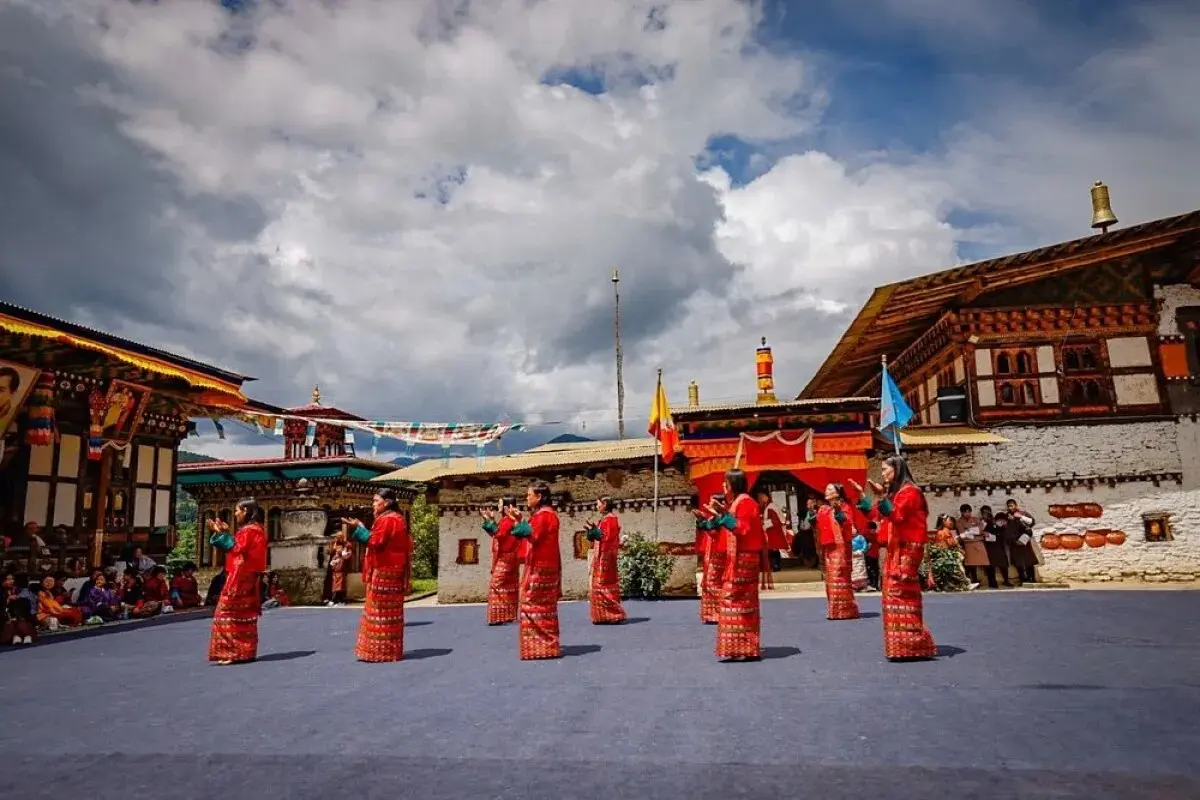
Paro Valley offers far more than the famous Tiger's Nest hike. Ancient dzongs, cliffside temples, iron bridges, and mountain passes all wait nearby. This guide reveals the top 10 things to do in Paro Valley beyond Tiger's Nest.
At a Glance: 10 Top Paro Activities
- Rinpung Dzong (Paro Dzong)
- National Museum of Bhutan (Ta Dzong)
- Kyichu Lhakhang
- Drukgyel Dzong Ruins
- Chele La Pass
- Dzongdrakha Monastery
- Tachog Lhakhang Iron Bridge
- Paro Town and Weekend Market
- Traditional Farmhouse Visit and Hot Stone Bath
- Paro Chhu River and Nyamai Zam Bridge
1. Explore Rinpung Dzong
Rinpung Dzong dominates Paro town from its hillside perch. Builders raised this fortress monastery in 1644 during Bhutan's unification. Its name means "fortress on a heap of jewels." A five story central tower, the Utse, anchors the complex. Monks and government officials still work inside its courtyards today. The dzong hosts the colorful Paro Tshechu festival every spring.
2. Tour the National Museum of Bhutan
Above Rinpung Dzong stands Ta Dzong, a round stone watchtower. Builders completed it in 1649 to guard the valley below. Workers converted the tower into a national museum in 1968. A 2011 earthquake damaged the structure and closed it for years. Restoration finished in 2020, and the museum reopened to visitors. Inside, you can view thangka paintings, ancient weapons, and royal artifacts.
3. Visit Kyichu Lhakhang
Kyichu Lhakhang ranks among Bhutan's oldest surviving temples. Tibetan king Songtsen Gampo built it in the 7th century. Legend says the temple pins down a demoness across the Himalayas. Two ancient orange trees grow in the courtyard year round. Pilgrims spin prayer wheels along the temple's outer walls daily. The peaceful atmosphere offers a quiet break from busier sites.
4. Walk Through Drukgyel Dzong Ruins
Drukgyel Dzong once guarded the northern entrance to Paro Valley. Builders raised it in 1649 to celebrate a victory over Tibetan forces. A fire destroyed most of the fortress in 1951. Stone walls and archways still rise dramatically against the sky. On clear days, Mount Jomolhari appears directly behind the ruins. Restoration work continues to stabilize the historic structure.
5. Drive Up to Chele La Pass
Chele La Pass separates Paro Valley from neighboring Haa Valley. The road climbs to roughly 3,800 meters above sea level. It ranks as the highest motorable pass in Bhutan. The drive also provides a natural route into Haa Valley, where quieter villages and traditional temples offer a different side of western Bhutan. Prayer flags stretch across the ridge in every direction. Yak herds sometimes graze near the parking area at the top. On clear mornings, you can see Mount Jomolhari's snowy peak.
6. Hike to Dzongdrakha Monastery
Dzongdrakha Monastery clings to a cliff much like Tiger's Nest. Locals sometimes call it the valley's "mini Tiger's Nest." Monks founded the site as a meditation retreat centuries ago. The short hike attracts far fewer crowds than the famous trail. Prayer flags and mountain views reward you along the way. This makes an excellent choice for a quieter cultural hike.
7. Cross Tachog Lhakhang Iron Bridge
Tibetan master Thangtong Gyalpo built iron chain bridges across the Himalayas. He constructed this one over the Paro River in the early 1400s. Original iron links still support parts of the crossing today. The bridge leads to a small temple on the far bank. Local legend credits Thangtong Gyalpo with inventing the iron chain link. Crossing the swaying bridge makes for a memorable photo stop.
8. Browse Paro Town and the Weekend Market
Paro's single main street holds colorful shops and small cafes. Traditional wooden buildings line the road without a single traffic light. Local vendors set up a lively market on weekends. You can find handwoven textiles, wooden crafts, and fresh produce. Try momos or ema datshi at a small local restaurant. Wandering the town gives you a feel for everyday Bhutanese life.
9. Experience a Traditional Farmhouse and Hot Stone Bath
Many families near Paro welcome visitors into their traditional farmhouses. You can watch or help prepare classic Bhutanese dishes like ema datshi. Hosts often heat river stones and drop them into an outdoor tub. Local herbs release their scent as the stones warm the water. A soak in this hot stone bath eases sore muscles after hiking. The visit also offers real insight into rural Bhutanese life.
10. Relax by the Paro Chhu River
The Paro Chhu River flows gently through the heart of the valley. A traditional cantilever bridge, Nyamai Zam, crosses the water near the dzong. Locals and visitors gather along the banks in the evenings. Calm sections of the river suit short kayaking or rafting trips. Willow trees and paddy fields frame the water on both sides. A riverside walk offers a peaceful end to a busy day.
Frequently Asked Questions
How many days do I need to explore Paro Valley?
Most travelers explore Paro's main sites comfortably in two to three days.
Is Chele La Pass open year round?
Snow sometimes closes the pass in winter, so check conditions first.
Can I visit these sites without a guide?
Licensed guides accompany most tourists, and many sites require one.
What should I wear when visiting Paro's dzongs?
Wear modest, collared clothing that covers your shoulders and knees.
Paro Valley rewards travelers who look past Tiger's Nest alone. Fortresses, temples, bridges, and mountain passes fill the valley floor. Many of these highlights can be combined into a Cultural Tour of Paro Valley, allowing more of the valley's history and landscapes to fit into one visit. Each stop adds a different layer to Bhutan's story. Give yourself extra time, and Paro will surprise you daily.