
Thimphu is small enough to explore on foot, but it is also built into a valley with steep hillsides. The downtown core, home to Clock Tower Square, Norzin Lam, and the Memorial Chorten, is genuinely walkable. A few standout sites, like Buddha Dordenma and the Takin Preserve, sit up on hills a short taxi ride away. This itinerary walks you through the compact center and adds quick taxi hops only where the terrain makes that the sensible choice.
You will have a licensed guide with you throughout Bhutan, since this is required for most visitors. This itinerary still works well as a walking-focused plan, since your guide can lead you through the same route on foot.
Getting Your Bearings
Thimphu sits at around 2,320 meters, noticeably higher than Punakha but similar to Paro. Give yourself a slow first hour to adjust before tackling any uphill walking. The city center runs along Norzin Lam, the main street, with Clock Tower Square as the natural starting point for almost any walk.
Day 1: Downtown Thimphu and the Riverside
Morning: Clock Tower Square and Norzin Lam
Start your day at Clock Tower Square, the heart of Thimphu. The four-faced clock tower is covered in traditional Bhutanese carving and painted dragons. A short walk away sits Thimphu's famous traffic intersection, where a white-gloved police officer directs cars by hand from a small painted booth. Thimphu remains the only capital city in the world without a single traffic light, and this intersection is the reason why.
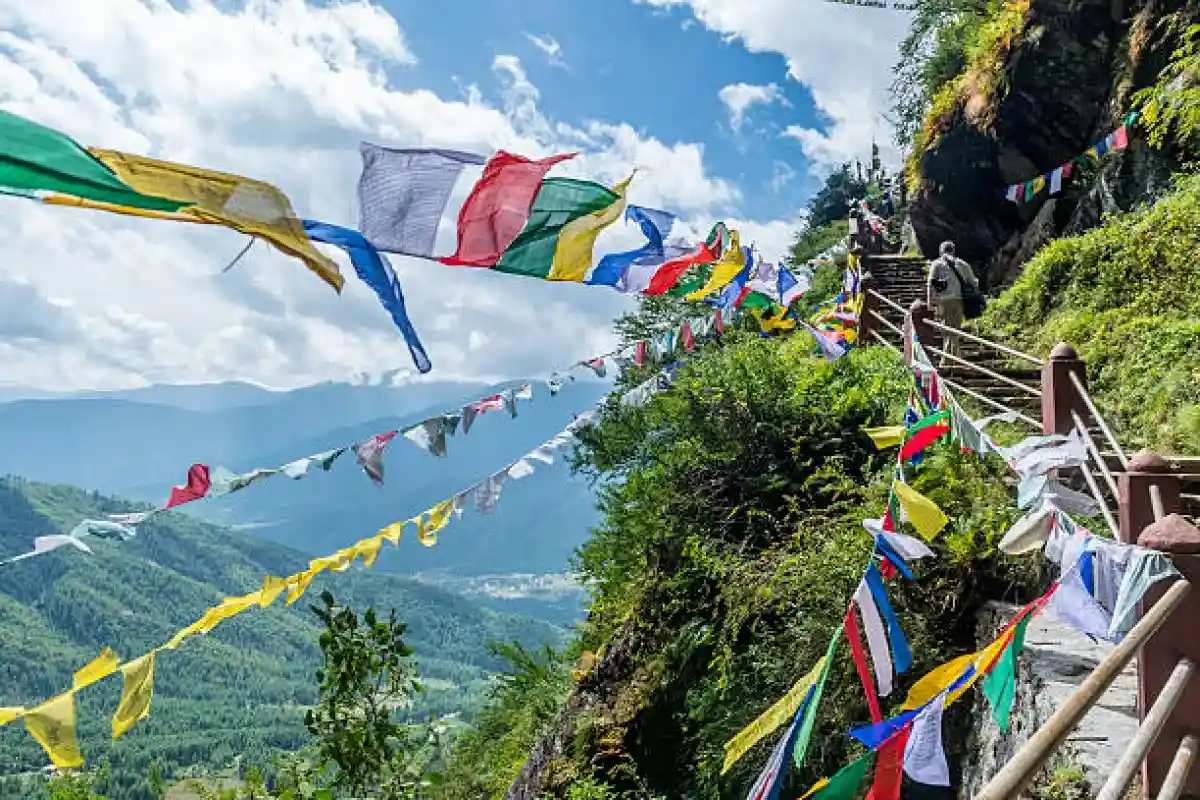
From the square, walk south along Norzin Lam. This is Thimphu's main shopping street, lined with small shops selling textiles, prayer flags, and household goods. Stop into Zangto Pelri Lhakhang, a small temple just off the square, for a quieter first look at Bhutanese religious architecture before the day gets busy.
Late Morning: National Memorial Chorten
From downtown, walk roughly 15 to 20 minutes to the National Memorial Chorten. This whitewashed monument, built in memory of Bhutan's third king, is one of the most active religious sites in the city. Elderly locals circle the chorten clockwise throughout the day, spinning large prayer wheels as they walk. Join the circuit for a lap or two, and take a moment to sit in the surrounding park before moving on.
Midday: Centenary Farmers Market
Continue walking toward the Wang Chhu River, about 20 to 25 minutes further along Norzin Lam, to reach the Centenary Farmers Market. The market runs busiest from Friday through Sunday, when farmers travel in from villages across the country to sell produce, cheese, and dried chilies. Even on a quieter weekday, the covered stalls are worth a walk through. Grab lunch here or at one of the small eateries nearby, and try momos if you have not already.
Afternoon: Tashichho Dzong
Tashichho Dzong sits about 2.5 kilometers north of the market, along the river. Walking there takes 30 to 40 minutes and follows a pleasant riverside path, though a short taxi ride covers the same distance in under 10 minutes if you would rather save your energy. The dzong houses the throne room of the King of Bhutan and the central monastic body, and its whitewashed walls and gold roofs are one of the most photographed sights in the city.
Note that visiting hours for tourists are limited, generally after 5:30pm on weekdays and more open hours on weekends. Confirm the current schedule with your guide before you plan your visit around it.
Evening: Back to Clock Tower Square
Head back toward Clock Tower Square for dinner. The streets around the square fill with locals in the early evening, and it is a good spot to sit outside with a coffee or a beer and watch the city wind down. If your visit coincides with the annual festival, the Thimphu Tsechu Festival Tour offers a chance to experience the city's traditional masked dances, music, and religious celebrations.
Day 2: Hilltop Views and Local Culture
Early Morning: Buddha Dordenma
Start day two with a short taxi ride up to Buddha Dordenma, the 51.5 meter bronze and gold statue overlooking the Thimphu valley from Kuenselphodrang Nature Park. Mornings here are quiet and the light is good for photos. Once you arrive, the area around the statue is entirely walkable, with paths circling the base and several viewpoints looking out over the city below.
Mid-Morning: Motithang Takin Preserve
From Buddha Dordenma, take a short taxi to the Motithang Takin Preserve, home to Bhutan's unusual national animal. The preserve is closed on Mondays, so check the day before you go. Once inside, a short walking trail loops past the enclosures, making this a light, easy stop after the morning's uphill start.
Late Morning: Changangkha Lhakhang
A short taxi ride brings you close to Changangkha Lhakhang, one of Thimphu's oldest temples, dating back to the 12th century. From the drop-off point, a brief uphill walk leads to the temple itself. Local families bring newborns here for a traditional blessing, so you will often see the courtyard full of quiet activity. The temple also offers one of the better valley views in the city.
Midday: Lunch and a Slow Walk Back
Head back down into town for lunch. If you are up for it, walk rather than taxi. It is a gentle downhill route back toward the center, and a good chance to see residential Thimphu rather than only its landmarks.
Afternoon: Folk Heritage Museum and Textile Museum
These two museums sit close together within walking distance of downtown. The Folk Heritage Museum recreates a traditional Bhutanese farmhouse, giving a hands-on sense of rural daily life. The Textile Museum next door focuses on Bhutan's weaving traditions, with detailed examples of the intricate patterns found across the country.
Late Afternoon: Free Time on Norzin Lam
Spend your remaining afternoon wandering Norzin Lam at a slower pace. This is the best window for souvenir shopping, since shops selling handwoven textiles, incense, and prayer flags line much of the street.
Evening: Final Dinner
Close out your 48 hours with dinner near Clock Tower Square. If your trip continues on to Paro or Punakha next, this is a good time to ask your guide about road conditions and timing for the following day.
Practical Tips for Walking Thimphu
Wear comfortable, broken-in walking shoes. Several stretches involve gentle uphill walking
Dress modestly for temple visits, with shoulders and knees covered, and remove shoes and hats before entering
Carry a light layer, since mornings and evenings run cooler than midday even outside winter
Bottled water is easy to find along Norzin Lam, so there is no need to carry a large supply
Taxis are inexpensive and widely available, useful for the uphill stretches to Buddha Dordenma, the Takin Preserve, and Changangkha Lhakhang
FAQs
Is Thimphu a walkable city?
The downtown core is very walkable, including Clock Tower Square, Norzin Lam, the Memorial Chorten, and the Centenary Farmers Market. A few hillside sites are better reached by a short taxi ride.
Do I need a guide to walk around Thimphu?
Most visitors to Bhutan travel with a licensed guide throughout their trip. Your guide can walk this same route with you rather than driving between every stop.
What should I wear to visit temples and dzongs in Thimphu?
Cover your shoulders and knees, and remove your shoes and any hats before entering. Modest, comfortable clothing works best for a day of walking between sites.
Is 48 hours enough time in Thimphu?
Two days covers the main downtown sites and the hilltop highlights comfortably. Travelers with more time often add a day trip to Dochula Pass or a hike near Tango or Cheri Monastery.
Is the altitude in Thimphu a concern?
Thimphu sits around 2,320 meters. Most travelers adjust within a day, but pace your first few hours slowly, especially on uphill walks.
How do I get between the hillside attractions?
A short taxi ride is the practical option for Buddha Dordenma, the Takin Preserve, and Changangkha Lhakhang. Each is a matter of minutes from downtown by car.
Thimphu rewards travelers willing to walk its streets rather than only pass through them. Two days on foot is enough to see the landmarks and experience daily life in Bhutan's capital, while a Thimphu tour can make it easier to explore the city's highlights at a comfortable pace.