
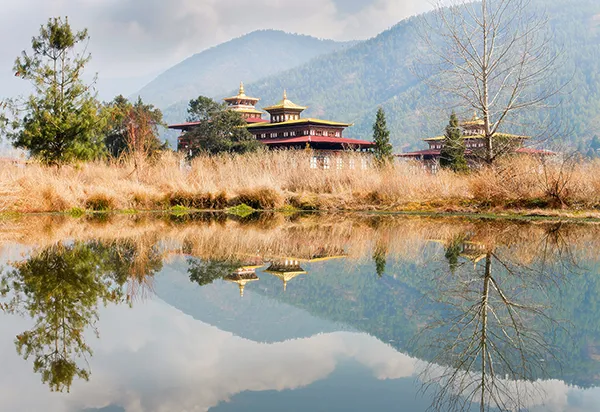
Punakha does not follow the same weather rules as the rest of Bhutan. While Paro and Thimphu sit above 2,200 meters and turn cold fast in winter, Punakha sits at just over 1,200 meters. That lower elevation makes it noticeably warmer year round. Knowing this difference is the key to picking the right month for your trip.
Why Punakha Feels Warmer Than the Rest of Bhutan
Temperature in Bhutan drops by roughly 5 degrees Celsius for every 1,000 meters of elevation gained. Punakha sits about 1,000 meters lower than Paro and Thimphu, so it consistently runs milder, even in the depths of winter.
This warmth is not just a travel perk. It shaped Bhutanese history. Punakha Dzong has long served as the winter home for the country's central monastic body, since the cold in Thimphu becomes too harsh for the monks to comfortably stay through the season. Locals still call it the Winter Palace of Bhutan for this reason.
Best Time to Visit Punakha at a Glance
The two strongest windows to visit are March through May and October through November.
March to May brings warming temperatures, blooming jacaranda trees, and manageable rainfall
October and November bring clear skies, dry air, and the best visibility of the year
June through August is monsoon season, with heavy rain and high humidity
December through February is cold and dry, best for festival timing and winter light
Punakha Weather Month by Month
| Month | Avg High | Rainfall | Highlights |
| January | 5.8°C / 42°F | Very low | Coldest month, dry air, clear skies |
| February | Around 7°C / 45°F | Very low | Cold nights, Punakha festival season begins |
| March | 9.6°C / 49°F | Low, rising | Spring arrives, jacaranda buds appear |
| April | 12°C / 54°F | Moderate | Sunniest month of the year |
| May | 14.3°C / 58°F | Moderate to high | Jacaranda in full bloom, rhododendrons flower |
| June | 16.7°C / 62°F | High | Monsoon begins, longest daylight hours |
| July | 16.9°C / 62°F | Very high | Wettest month of the year |
| August | 17.8°C / 64°F | High | Warmest month, monsoon continues |
| September | 15.9°C / 61°F | Moderate, falling | Rain eases, valley at its greenest |
| October | 13°C / 55°F | Low | Clear skies, ideal for photography |
| November | 10.2°C / 50°F | Very low | Dry, cool, golden light, rice harvest |
| December | 7.6°C / 46°F | Very low | Driest month, cold returns |
January
January is Punakha at its coldest, though still far milder than Paro or Thimphu. Days stay dry and clear, with almost no rainfall. Mornings and evenings call for warm layers, but daytime sun makes sightseeing comfortable.
February
February holds onto winter chill, especially at night. This is also when the Punakha Drubchen and Tshechu festivals usually take place, drawing visitors who want to see masked dances inside the dzong courtyard. In 2027, the Punakha Tshechu is scheduled for February 16 to 18.
March
March marks the real shift into spring. Temperatures climb steadily, and the first jacaranda buds start to appear around Punakha Dzong. Rain is still light, making this one of the more comfortable months to walk the valley.
April
April brings the sunniest days of the year and a comfortable, moderate climate. Jacaranda trees are usually in bloom by now, framing the whitewashed dzong walls in lilac. Rainfall increases slightly but rarely disrupts a full day of sightseeing.
May
May is warm, green, and vivid. Jacaranda blossoms peak, rhododendrons join them, and the valley looks its most photogenic. Rain becomes more frequent as the month goes on, signaling the approach of the monsoon season.
June
June opens the monsoon season. Humidity climbs and afternoon showers become common, though mornings often stay clear. This is also when Punakha gets its longest daylight hours of the year.
July
July is the wettest month in Punakha. Rain falls on more days than not, and humidity peaks. The valley turns intensely green, and rice paddies fill with water, but travelers should expect flexible plans and rain gear.
August
August is technically the warmest month by average temperature, though the monsoon keeps humidity high. Rain begins to ease slightly compared to July, but showers remain frequent.
September
September is the transition out of monsoon. Rain tapers off through the month, and the valley stays lush and green from the summer downpours. Trails and roads are typically clear by the later half of the month.
October
October is one of the best months to visit. Skies clear, humidity drops, and visibility reaches its best point of the year. This is a strong month for photography and outdoor exploration around the dzong and rice terraces.
November
November stays dry and cool, with some of the clearest air of the year. Rice harvest is often underway in the surrounding fields, adding gold tones to the valley. Nights start to turn cold again as winter approaches.
December
December closes the year as the driest month, with barely any rainfall. Cold returns, especially at night, but daytime skies typically stay clear and blue. This is when the monastic body traditionally relocates to Punakha for winter.
Which Season Fits Your Trip
Festival and culture focused travelers should target February, when the Punakha Drubchen and Tshechu bring masked dances and a major thongdrel unveiling to the dzong courtyard. Exact dates shift each year based on the Bhutanese lunar calendar, so confirm before booking. If you want to build your trip around local heritage, our curated cultural tours let you select the exact dzongs, temples, and seasonal festivals you want to experience.
Photographers and nature lovers get the best results from March through May, when jacaranda and rhododendron blooms line the dzong and river.
Hikers and sightseers who want dry trails and clear mountain views should aim for October and November, widely considered the most reliable weather window of the year.
Budget conscious and crowd averse travelers can consider the monsoon months of June through August. Rates often drop and tourist numbers thin out, though rain will shape your daily plans.
Punakha Tshechu Timing Tips
The Punakha Tshechu is one of the most significant festivals in western Bhutan, alongside the Thimphu and Paro Tshechus. Dates are set by the lunar calendar, so they shift year to year rather than falling on a fixed date. If a specific festival date matters to your trip, confirm the exact dates with a licensed operator before booking flights, since Bhutan requires most international visitors to travel through one.
What to Pack by Season
December to February: warm layers, a proper jacket, and something for cold mornings and evenings
March to May: light layers for the day, a thin jacket for evenings, and rain protection for late May
June to August: waterproof jacket, quick dry clothing, and sturdy footwear for wet trails
September to November: light layers, a light jacket for evenings, and sun protection for clear days
FAQs
What is the best month to visit Punakha?
October and November offer the most reliable weather, with clear skies and low rainfall. March through May is a close second, with milder temperatures and blooming jacaranda trees.
Is Punakha warmer than Paro or Thimphu?
Yes. Punakha sits about 1,000 meters lower in elevation, which keeps it noticeably milder throughout the year, especially in winter.
When does it rain the most in Punakha?
July is the wettest month, followed closely by August and June. The monsoon season runs roughly June through August.
When is the Punakha Tshechu festival?
The festival date shifts yearly based on the Bhutanese lunar calendar, typically falling in February or early March. In 2027, it is scheduled for February 16 to 18.
Can I visit Punakha during monsoon season?
Yes, though expect frequent rain and higher humidity from June through August. The valley is at its greenest during this period, and crowds are thinner.
Does it snow in Punakha?
Light snow is possible from November through March, mainly in January and February, though it rarely settles for long given the lower elevation.
Punakha rewards travelers who time their visit well. Whether you come for the jacaranda bloom, the winter festivals, or the clear autumn skies, matching your dates to the valley's weather patterns makes the difference between a good trip and a great one. Whether you come for the jacaranda bloom, the winter festivals, or the clear autumn skies, choosing a Punakha Valley tour that matches the season can make the difference between a good trip and a great one.