
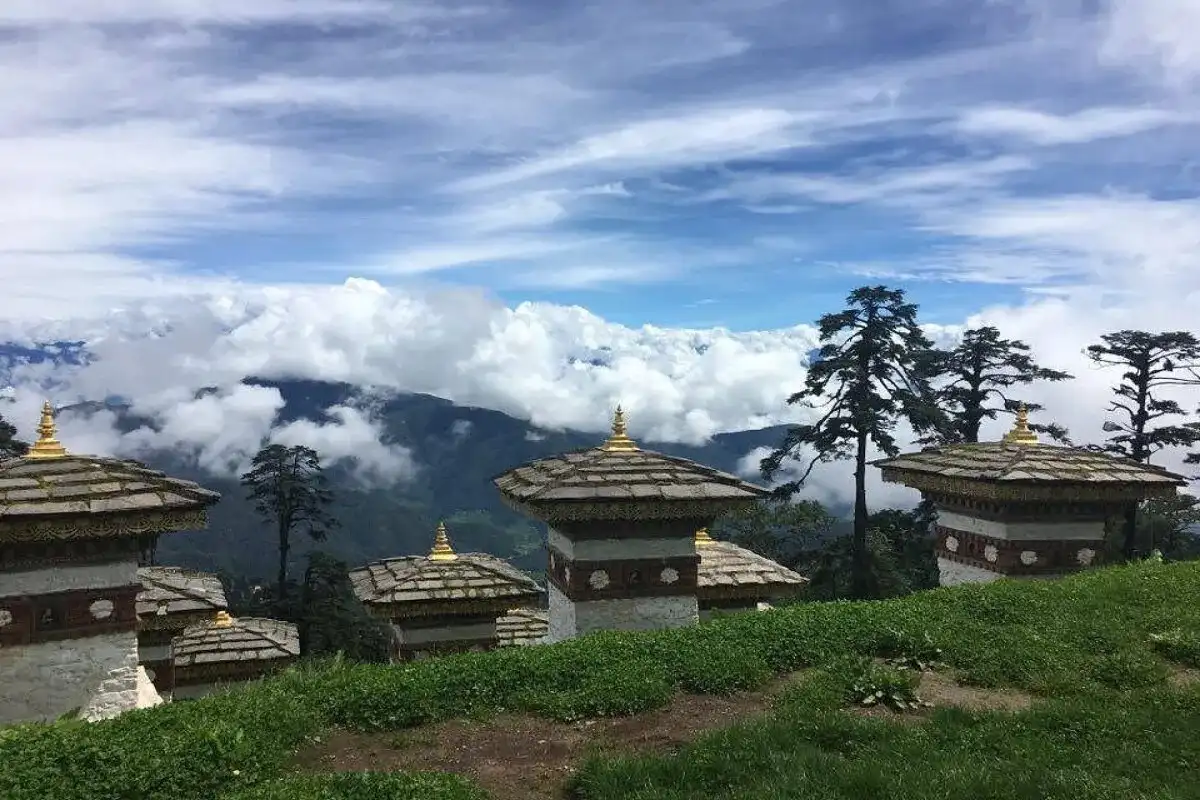
Bhutan hides a living gallery inside its valleys and hillsides. Painted temples, carved altars, and woven textiles fill everyday life here. These works come from Zorig Chusum, Bhutan's 13 traditional arts and crafts. Bhutanese artisans have practiced these skills for centuries, mostly unchanged. This guide breaks down each of the 13 arts in detail. You will also learn their history and where to see them today.
What Is Zorig Chusum?
Zorig Chusum translates to the thirteen traditional arts and crafts of Bhutan. The word zo refers to skilled craftsmanship and the ability to make things. Rig points to the knowledge or science behind each craft. Chusum simply means thirteen in Dzongkha, Bhutan's national language.
Together, the term covers every traditional craft practiced in the kingdom. These crafts range from architecture and painting to weaving and papermaking. Each one carries deep religious meaning rooted in Buddhist practice. Bhutanese artisans do not separate art from function or spirituality. A carved altar or a woven scarf serves a devotional purpose too. This is what makes Zorig Chusum different from decorative art elsewhere.
The History and Origins of Bhutan's 13 Traditional Arts
Bhutanese tradition credits the saint Terton Pema Lingpa with introducing several crafts. He lived and worked in Bhutan during the fifteenth century. Formal classification of the arts came later, during the seventeenth century.
Zhabdrung Ngawang Namgyal had already unified Bhutan under one system by then. His administration blended religious law with everyday governance and civic life. The fourth Druk Desi, Gyalse Tenzin Rabgye, organized the arts formally within this system. He grouped every recognized skilled craft into thirteen defined categories.
Gyalse Tenzin Rabgye was also a master metal caster in his own right. He is remembered for casting a thousand Buddha statues in bronze. One of these statues still sits inside Punakha Dzong today. This history explains why Zorig Chusum feels inseparable from religion. Every craft, from carving to weaving, once served temples and monasteries directly.
The Bhutanese government later stepped in to formally protect these skills. It established the National Institute for Zorig Chusum in Thimphu in 1971. A second campus opened in Trashiyangtse, in eastern Bhutan, in 1997. Training at either school typically takes between four and six years. Students specialize in one craft and practice it closely under a master.
The 13 Traditional Arts of Bhutan Explained
Each of the thirteen arts has its own tools, materials, and purpose. Here is a closer look at every craft within Zorig Chusum.
1. Shingzo: Carpentry and Woodwork
Shingzo covers all carpentry and structural woodwork across Bhutan. It shapes the dzongs, temples, palaces, and bridges seen throughout the country. Traditional builders join wooden beams without using a single nail or screw. Master carpenters carry the titles Zo Chen and Zo Wo. They also carve elaborate wooden window frames known as rabsel. Bhutan's cantilever bridges come from this same carpentry tradition. Shingzo remains one of the most visible arts in the kingdom.
2. Dozo: Masonry and Stonework
Dozo is the traditional craft of building with stone. Masons use it to construct chortens, walls, and courtyards. Chorten Kora in Trashiyangtse shows this skill at its finest. Chendebji Chorten, in central Bhutan, offers another striking example. Stone masons often work alongside carpenters on the same structure. Together, their work forms the backbone of Bhutanese architecture.
3. Parzo: Carving
Parzo refers to carving in wood, stone, and slate. Craftsmen use it to make printing blocks for sacred texts. Ritual masks worn during religious festivals also come from this art. Carved slate images of deities decorate shrines across the country. Altars and furniture often feature detailed Parzo work as well. The craft demands patience and years of steady practice.
4. Lhazo: Painting
Lhazo is often considered the most prominent of the thirteen arts. It includes thangka paintings, temple murals, and religious wall motifs. Painters follow strict proportions drawn directly from Buddhist scripture. Every deity, color, and gesture carries specific symbolic meaning. Lhazo artists also create thongdrels, enormous religious banners made for festivals. These banners are unveiled publicly to bless the gathered crowd. Training in Lhazo can take many years to fully master.
5. Jinzo: Sculpture
Jinzo is the traditional art of clay sculpture. Craftsmen, known as jimzops, shape statues of Buddha and other deities. Guru Rinpoche and Zhabdrung Rinpoche are common subjects for this work. Clay sculpting has historically been practiced mostly by men. The tall statues inside Paro Taktsang show this craft clearly. Pottery, a related skill, is more commonly practiced by women.
6. Lugzo: Bronze and Metal Casting
Lugzo covers the casting of bronze and other metals. Craftsmen produce statues, ritual bells, cups, and ceremonial vessels. Historically, this craft also produced weapons and armor pieces. Gyalse Tenzin Rabgye himself was a skilled practitioner of Lugzo. He is credited with casting a thousand Buddha figures in bronze. One of these still stands as the central statue inside Punakha Dzong.
7. Garzo: Blacksmithing
Garzo is the craft of shaping iron through forging. Blacksmiths produce tools, knives, swords, and farming equipment. Tradition credits the saint Thangtong Gyalpo with introducing this skill to Bhutan. He was a fifteenth century Tibetan engineer, healer, and religious master. He is also known for building iron chain suspension bridges across the region. One surviving bridge still crosses the Paro River today, near Tachog Lhakhang.
8. Shagzo: Wood Turning
Shagzo is the specialized craft of turning wood on a lathe. It is practiced mainly in Trashiyangtse, in eastern Bhutan. Craftsmen, called shagzopas, produce wooden bowls known as dapa. They also make cups, containers, and traditional tea kettles. Prized pieces often come from dza, a rare type of wooden burl. Shagzo items remain popular souvenirs among visitors to Bhutan.
9. Troeko: Gold and Silver Smithing
Troeko covers gold and silver smithing, sometimes called ornament making. Craftsmen shape jewelry, ceremonial swords, and religious ritual objects. Silver bowls and ceremonial items also come from this craft. Troeko pieces often carry intricate, symbolic engraving across their surface. These objects hold both decorative value and deep ceremonial importance.
10. Tshemzo: Tailoring, Embroidery, and Appliqué
Tshemzo includes tailoring, embroidery, and appliqué work in one category. It produces the gho and kira, Bhutan's national dress for men and women. Embroidery techniques likely arrived from Tibet and China many centuries ago. Historically, men handled most embroidery work for religious garments and banners. Appliqué artists also create the large thongdrel banners used at festivals. Today, both men and women train in this craft equally.
11. Thagzo: Weaving
Thagzo is Bhutan's celebrated tradition of hand weaving. Women, especially in eastern Bhutan, dominate this particular art form. Lhuntse and Kurtoe are especially known for their skilled weavers. A single kishuthara textile can take several months to finish. Patterns often carry symbolic meaning tied to specific regions. Woven textiles remain central to Bhutanese identity and everyday dress.
12. Shozo: Paper Making
Shozo, also called Dezo, is Bhutan's traditional papermaking craft. Papermakers use the bark of the Daphne plant as their base. The resulting paper, called desho, naturally resists insects and decay. Monks historically used this paper for sacred manuscripts and scriptures. Desho paper is still used today for printing prayer flags.
13. Tshazo: Bamboo and Cane Work
Tshazo covers weaving and construction using bamboo and cane. Craftsmen make baskets, mats, and household storage containers from these materials. Bangchung, a woven bamboo container, is one of the most common products. Archery equipment, tied to Bhutan's national sport, also comes from this tradition. Central and eastern Bhutan remain the main centers of this craft. Tshazo items are both practical and often beautifully decorated.
Where to Experience Zorig Chusum in Bhutan
Visitors can see these arts firsthand at two national institutes. The main campus sits in Thimphu, Bhutan's capital city. Students there train in all thirteen arts over several years. Visitors can often watch classes and browse student work in the shop.
A second institute operates in Trashiyangtse, in eastern Bhutan. The Folk Heritage Museum in Thimphu also displays traditional Bhutanese crafts. The National Textile Museum focuses specifically on Bhutan's weaving traditions. Craft markets across the country sell authentic Zorig Chusum pieces directly. Buying from local artisans helps support these living traditions long term.
Zorig Chusum in Bhutan Today
Zorig Chusum is not frozen in the past. These crafts still shape temples, homes, and daily religious life. The Bhutanese government continues funding training and preservation programs. Tourism has also created new demand for authentic handmade work.
Cultural preservation stands as one pillar of Bhutan's Gross National Happiness policy. Supporting Zorig Chusum fits directly within that national philosophy. King Jigme Khesar Namgyel Wangchuk has spoken about skill and character together. He has said that skill should benefit society only when paired with good character. He warned that skill without goodness can turn harmful, much like handing a weapon to a child.
Younger Bhutanese now train alongside masters to learn these thirteen skills. Each finished piece carries forward centuries of religious and cultural meaning. For visitors, these crafts offer a direct window into Bhutanese life. Seeing them firsthand remains one of the richest ways to understand Bhutan.
Frequently Asked Questions
What does Zorig Chusum mean?
Zorig Chusum translates to the thirteen traditional arts and crafts of Bhutan. The term describes every officially recognized skilled craft in the kingdom.
How many traditional arts does Bhutan have?
Bhutan officially recognizes thirteen traditional arts and crafts. These are collectively known as Zorig Chusum.
Where can I learn Zorig Chusum in Bhutan?
Two national institutes teach these crafts, located in Thimphu and Trashiyangtse. Training programs typically last between four and six years.
Are these traditional crafts still practiced today?
Yes, all thirteen arts remain active across Bhutan today. They still serve religious, ceremonial, and everyday practical functions.
What is the most well known Zorig Chusum art?
Lhazo, or painting, is often considered the most prominent art. It includes thangkas, temple murals, and large festival banners.