
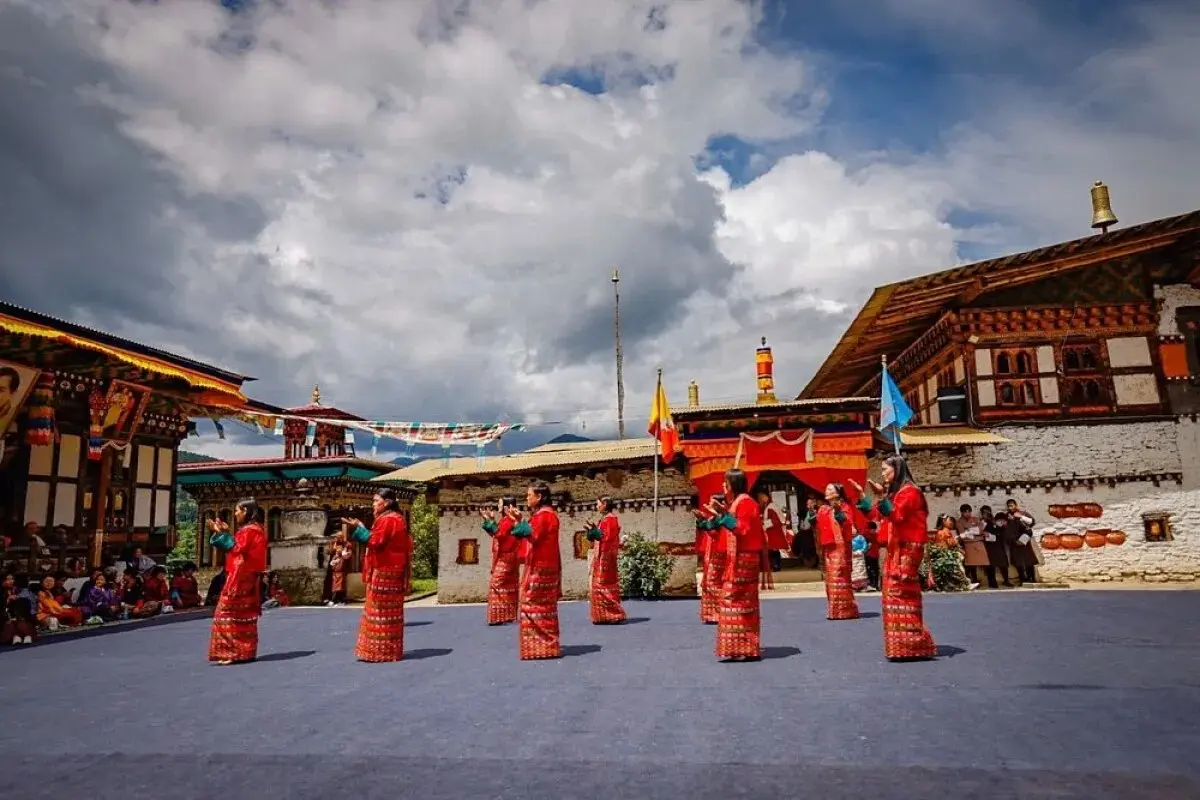
Five days is the most common trip length for first-time visitors to Bhutan. It covers the western loop of Paro, Thimphu, and Punakha comfortably. This guide walks through what each day actually looks like on the ground. It also covers costs, guides, driving times, and altitude, honestly and in detail. This is not a trip you can piece together at the last minute. By the end, you will know exactly what to expect before you book.
How a 5-Day Western Bhutan Trip Actually Works
Bhutan does not run like a typical Southeast Asian backpacking trip. Every visitor needs a pre-approved visa before arrival, arranged through a licensed operator. A Sustainable Development Fee, or SDF, applies to almost every traveler. As of 2026, the SDF sits at USD 100 per person per night. This reduced rate is expected to remain in place through August 2027. Children aged 6 to 11 pay half price, and those under 6 pay nothing. Indian nationals pay a separate, lower daily rate in Indian rupees instead. On top of the SDF, there is a one-time USD 40 visa processing fee. A typical mid-range 5-day package often totals between 1,500 and 2,500 US dollars per person, not including international flights.
Two airlines currently fly into Bhutan, Drukair and Bhutan Airlines. Both operate limited routes through cities like Kathmandu, Delhi, Bangkok, and Singapore. You can also apply for your own e-visa through Bhutan's official immigration portal. Many travelers still prefer letting a tour operator handle the paperwork instead.
A licensed guide is not required to simply walk around Paro or Thimphu town. You can wander the streets, browse shops, and eat at local restaurants freely. However, a guide is mandatory for entering any dzong, temple, or monastery. A guide is also required for any travel beyond the Paro-Thimphu area. That includes the drive to Punakha, which most 5-day itineraries include. Your guide will also arrange the special permit needed for that route.
Dress modestly when visiting dzongs and temples, covering shoulders and knees. Photography is often restricted inside temple interiors and shrine rooms. Your guide will let you know exactly where cameras are allowed.
Because of these rules, independent budget travel is not realistic here. Most visitors book a package covering guide, driver, vehicle, and hotels together. Expect a realistic daily budget well above what nearby countries typically cost. This is intentional. Bhutan follows a high-value, low-volume tourism policy on purpose.
Day 1: Arrival in Paro
Every international flight into Bhutan lands at Paro, the country's only airport. The approach is dramatic, weaving between forested ridges before a short final descent. Only a small number of pilots are certified for this particular landing. Flights typically operate in daylight hours and can shift due to weather.
Paro sits at roughly 2,200 meters above sea level. Some visitors notice mild breathlessness on arrival, especially after a long flight. Your guide and driver will meet you right at the airport exit. Immigration is quick if your visa clearance was arranged in advance.
Depending on your arrival time, day one is usually kept light. A realistic afternoon includes Rinpung Dzong, Paro's fortress-monastery overlooking the valley. Many itineraries also add Kyichu Lhakhang, one of Bhutan's oldest temples. The National Museum, housed in a round watchtower above town, is another common stop. Paro town itself is small, with a single main street lined with shops. Many visitors browse handicrafts here before or after dinner. Expect an early night, since jet lag and altitude both catch up quickly.
Day 2: Paro to Thimphu
The drive from Paro to Thimphu takes about ninety minutes and covers 65 kilometers. It follows the Paro Chu river valley before climbing gently into the capital. Thimphu itself sits between 2,300 and 2,600 meters, depending on the neighborhood.
Thimphu remains the only capital city in the world without a single traffic light. A white-gloved officer still directs traffic at the main intersection by hand. Most days begin with the Buddha Dordenma, a 51.5-meter gilded bronze statue on a hillside. From there, the National Memorial Chorten is a common stop, where locals walk daily circuits.
Tashichho Dzong, the seat of Bhutan's government, is trickier to time well. On weekdays, tourists can only enter after government offices close around 5 p.m. On weekends, it opens to visitors all day instead, from morning onward. Many guides schedule Thimphu itself around this detail, saving the dzong for late afternoon.
Depending on the day, you might also fit in the weekend market. It runs Friday through Sunday, selling produce, cheese, and local crafts. Other options include the Folk Heritage Museum and the National Institute for Zorig Chusum. There, students train in Bhutan's thirteen traditional arts and crafts. A realistic full day in Thimphu covers four or five stops comfortably, not more.
Day 3: Thimphu to Punakha via Dochula Pass
This is usually the longest single travel day of the trip. The drive to Punakha covers about 77 kilometers and takes roughly three hours. The road climbs steadily out of Thimphu toward Dochula Pass, at 3,140 meters.
Dochula Pass is home to 108 chortens, built to honor fallen Bhutanese soldiers. On a clear day, the pass offers sweeping views of the eastern Himalayas. Clear mornings are common, but clouds often roll in by midday, so expect variability. Along the way, most drivers stop briefly for tea or a bathroom break. Roadside stalls near Dochula Pass sell coffee, snacks, and warm clothing.
After Dochula, the road drops steadily into the Punakha valley below. Punakha sits at only about 1,200 meters, noticeably warmer than Thimphu or Paro. The change in climate and vegetation is one of the trip's most striking moments.
Punakha Dzong sits at the confluence of the Pho Chu and Mo Chu rivers. Built in 1637, it remains the winter residence of Bhutan's chief abbot. Most visitors also cross the nearby suspension bridge, one of the longest in the country. Many itineraries add a short walk to Chimi Lhakhang, a fertility temple. The flat path winds through rice paddies and small farming villages.
Day 4: Return Toward Paro
With only five days total, most itineraries cannot fit a separate Wangdue or Gangtey side trip. Day four typically becomes a scenic but lengthy return drive to Paro. This retraces the route back over Dochula Pass, roughly four to five hours total. Wangdue Phodrang Dzong, visible from the road, was badly damaged by fire in 2012. Restoration work has continued there for years since.
Some operators break up the drive with a farmhouse lunch or a short village stop. A traditional hot stone bath is a popular optional add-on in Punakha or Paro. Realistically, treat this as a slower, photo-friendly day rather than a packed sightseeing one. You will arrive back in Paro by early evening, ready for the final push.
Day 5: Tiger's Nest and Departure
Paro Taktsang, known as Tiger's Nest, is saved for last in almost every itinerary. This timing helps with altitude acclimatization built up over the previous days. It also works logistically, since most flights depart from Paro anyway.
The hike begins at a car park around 2,600 meters above sea level. The monastery itself sits at 3,120 meters, clinging to a sheer cliff face. Net elevation gain is roughly 500 to 600 meters over the route. Round-trip distance runs between 6 and 9 kilometers, depending on the exact path taken.
Bhutan's tourism authority rates the hike as moderately difficult overall. The trail itself is well maintained, with no technical climbing required anywhere. The real challenge is thinner air at altitude, not the terrain itself. Most visitors complete the round trip in four to six hours, including breaks.
A cafeteria sits roughly halfway up, around 2,950 meters, offering tea and lunch. Mules are available for hire up to this halfway point for a fee. Beyond the cafeteria, the trail continues on foot only, with stone steps near the end. Bags, cameras, and phones are not allowed inside the monastery itself. You will leave these with security at the entrance before continuing in. A separate entry fee applies at the monastery gate, payable in local currency. This is usually a small amount, well under ten US dollars.
Starting early, ideally by 7 or 8 a.m., helps you beat both crowds and cloud cover. Afterward, most visitors have a few hours before their departure flight. This is often used for last-minute shopping or a relaxed lunch in Paro town. Many travelers describe this final hike as the most memorable part of the entire trip.
Realistic Things Nobody Tells You in Advance
A few practical details shape how a 5-day trip actually feels day to day. Knowing them in advance helps you set the right expectations early.
Driving takes longer than the map suggests.
Roads between towns are narrow and winding, with constant switchbacks. Distances that look short on paper often take hours by road.
Motion sickness is common on the mountain roads.0
Bring medication if you are prone to it, especially before the Thimphu to Punakha drive.
Power sockets vary across the country.
Bhutan mostly uses Type D and G plugs, running on 230 volts. A universal adapter is worth packing.
Tipping is expected but modest.
A few hundred ngultrum per day for your guide and driver is standard practice.
Cash still matters here.
Bhutan's currency, the ngultrum, is pegged to the Indian rupee. Cards are accepted at larger hotels but not always in smaller towns.
Wifi is inconsistent outside major hotels.
A local SIM card, arranged on arrival, helps with connectivity on the road.
Meals follow a fairly consistent pattern.
Expect rice, ema datshi, a chili and cheese dish, and seasonal vegetables daily. It is hearty and often spicier than visitors expect.
Weather shifts fast, even within one day.
Mornings and evenings stay cold, even in lower valleys like Punakha. Layers matter more than any single heavy jacket.
Five days is genuinely tight.
Many itineraries technically use four full days plus two partial travel days. If your flight lands late or leaves early, expect the schedule to compress further.
Frequently Asked Questions
Is 5 days enough for western Bhutan?
Five days comfortably covers Paro, Thimphu, and Punakha at a reasonable pace. It does not leave room for Bumthang, Gangtey, or eastern Bhutan.
Do I need a guide the entire trip?
Not inside Paro or Thimphu town, where independent walking is allowed. A guide is required for dzongs, temples, and any travel to Punakha.
How much does a 5-day Bhutan trip cost?
Expect the SDF, visa, guide, driver, hotel, and meals to add up quickly. Total costs commonly run several hundred dollars per person, per day.
Is the Tiger's Nest hike difficult?
It is rated moderately difficult, mainly due to altitude rather than terrain. Most fit travelers complete it in four to six hours round trip.
What is the best time for a 5-day western Bhutan trip?
March to May and September to November offer the most reliable weather. Both seasons balance clear mountain views with manageable temperatures.
Can I visit Bhutan on a tight budget?
Budget travel is limited by the mandatory SDF and guide requirements. Most trips land in the mid-range to upscale category by default.