
On June 24, 2012, one of Bhutan's oldest fortresses burned to the ground in a single afternoon. A decade later, it rose again, rebuilt stone by stone using centuries old methods. This is the story of Wangdue Phodrang Dzong, often called the phoenix fortress of Bhutan. It is a story about prophecy, disaster, national grief, and a remarkable act of cultural rebuilding. Few heritage buildings anywhere have lived through quite this arc. This guide walks through its founding, its loss, and its long road back.
A Fortress Born From Prophecy
Wangdue Phodrang Dzong was founded in 1638 by Zhabdrung Ngawang Namgyal, the unifier of Bhutan. It was the third major fortress he built, following Simtokha Dzong and Punakha Dzong. Legend places its origin nearly five centuries earlier, in a prophecy. In the twelfth century, the Tshalpa Kagyu master Zhang Yudrakpa foresaw a sacred building.
He predicted a palace would rise on a ridge shaped like a sleeping elephant. That palace, he said, would stand at the meeting point of two rivers. When Zhabdrung Ngawang Namgyal reached the site centuries later, he recognized the description at once. The ridge sat exactly where the Punatsangchhu and Dangchhu rivers converge. He ordered construction to begin, fulfilling what many Bhutanese still regard as a sacred prediction.
Four Centuries on the Ridge
For nearly four hundred years, the dzong served two purposes at once. Like most Bhutanese dzongs, it functioned as both fortress and monastery. Government administrators and monks shared the same walls and courtyards. Its hilltop position gave defenders clear views over the surrounding valleys. This made it valuable for controlling movement between western and central Bhutan.
The dzong also helped guard against incursions from the south. Its long, narrow footprint hugs the ridge line rather than sitting in a simple block. This gives it one of the most distinctive silhouettes among Bhutan's fortress monasteries. The structure was tested more than once before the 21st century. A major fire damaged it in 1837, and an earthquake struck in 1897. Both times, the dzong was repaired and continued serving its community.
Generations of caretakers, carpenters, and monks kept the fortress alive through each setback. Their quiet work across centuries is easy to overlook today. Nothing, however, prepared the nation for what happened in 2012.
The Fire That Shocked a Nation
On the afternoon of June 24, 2012, disaster struck without warning. An electrical fault, widely reported as a faulty water heater, sparked a fire. Flames spread quickly through the wooden structure, which was largely built from timber. Firefighters and volunteers worked for hours, but the blaze proved unstoppable. By nightfall, most of the four hundred year old dzong lay in ruins.
Only a small number of structures, including one monastery building, survived intact. The nation watched much of the disaster unfold in real time. News of the fire reached international media within hours of the collapse. There was, remarkably, no loss of human life during the fire. The dzong had been undergoing renovation work at the time of the blaze. Many of its most precious relics, known as nangtens, had already been moved. His Holiness the Je Khenpo later performed purification ceremonies for the rescued treasures. Those sacred items were temporarily housed at Tadzongang Drasha nearby.
A Nation Responds
Grief over the fire quickly turned into a coordinated national response. On July 13, 2012, His Majesty the King granted Nu 200 million for reconstruction. Bhutan Broadcasting Service launched a public fundraising campaign soon after, raising over Nu 65 million. Citizens, private companies, and organizations donated further funds through the Ministry of Finance. Those contributions alone added more than Nu 28 million to the effort.
International partners, including the government of India, also offered support. A thirteen member Steering Committee was formed to oversee the massive undertaking. The Minister for Home and Cultural Affairs chaired this committee from the start. Its first meetings convened in November 2013, laying groundwork for construction. Engineers and heritage experts spent months documenting what remained of the site. Their survey shaped the preliminary design later approved by the King himself.
Echoes of Other Dzong Fires
Wangdue Phodrang Dzong is not the only Bhutanese fortress lost to flames. Drukgyel Dzong, in the Paro valley, burned in 1951 under similar circumstances. That fortress stood as a roofless ruin for more than sixty years afterward. Restoration there only began in 2016, decades after the original fire. Most dzongs are built largely from timber, rammed earth, and dry stone. That combination creates striking architecture, but also real vulnerability to fire.
Butter lamps, cooking fires, and old wiring have caused several past disasters. Bhutan has since invested heavily in fire prevention across its heritage sites. Many historic dzongs now include sprinkler systems and improved electrical wiring. Wangdue Phodrang Dzong itself received updated utilities during its own rebuild. This pattern of loss followed by careful rebuilding says something about Bhutan. Dzongs are treated as living monuments, worth restoring no matter the cost.
Rebuilding Stone by Stone
Reconstruction officially began in January 2014, under direct royal command. The project committed to traditional Bhutanese building methods wherever possible. Craftsmen used original design principles, dismantling unstable old walls by hand. Reusable stones were sorted and stacked for use in the new structure. Timber was collected and stored at dedicated yards for traditional carpentry work. The effort drew remarkable public participation beyond professional builders and craftsmen.
Volunteers from the Royal Bhutan Army helped dismantle damaged walls in the courtyards. More than one hundred trained youth volunteers, known as DeSuung, carried stones on site. Private companies also sent staff to help with manual labor during peak phases. The project ultimately rebuilt the three storied Kuenrey, or main assembly hall. It also reconstructed the four storied central tower, known as the Utse. Courtyard structures called Shabkhor were rebuilt in both the first and second courtyards. Engineers added a fifty meter service tunnel connecting both courtyards below ground. This modern addition preserved the traditional look while improving safety and utilities.
Bhutanese dzong architecture traditionally relies on wood joinery rather than nails or bolts. Skilled carpenters shape beams and columns to interlock without metal fasteners. Painters trained in zorig chusum, Bhutan's traditional arts, restored the intricate wall and window motifs. This attention to detail added years to the timeline, but preserved authenticity.
The Golden Pinnacle Moment
One of the most symbolic milestones came on May 29, 2018. That date coincided with the observance of Lord Buddha's Parinirvana. His Majesty the King personally attended the installation of the Sertog. The Sertog, a golden pinnacle, was placed atop the newly rebuilt Utse. For many Bhutanese, this moment marked the dzong's true turning point. The skeleton of the old fortress finally had its crown restored. Construction continued for several more years after this ceremonial milestone.
New Additions to an Old Design
The rebuilt dzong is not simply a copy of what existed before. Reconstruction added fourteen lhakhangs, or chapels, throughout the complex. A new temple, called Kagyu Sethreng, was built into the Kuenrey's upper level. That space had previously served as basic housing for visiting monks from Punakha. The new temple honors past masters of the Drukpa Kagyu lineage and former Je Khenpos. These additions reflect a broader goal behind the project. Planners wanted a dzong that honored history while serving future generations better.
Consecration and Return to Life
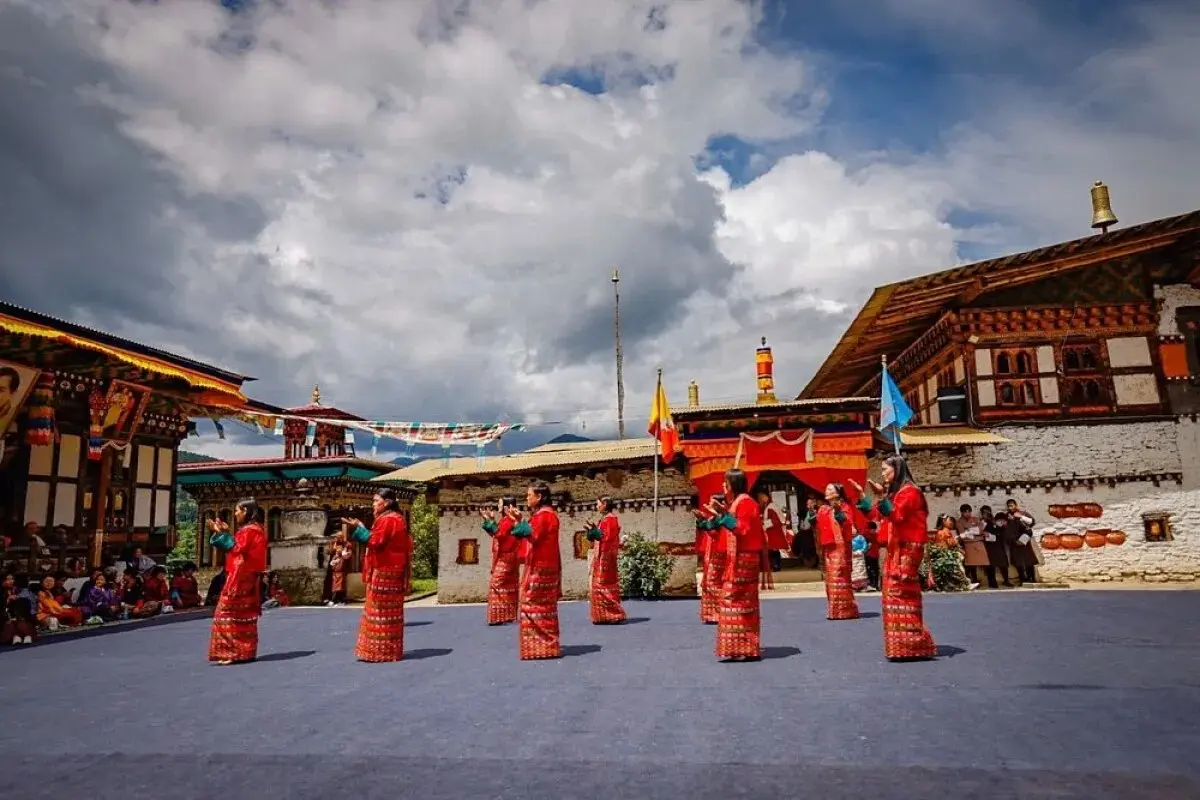
After eight years of careful construction, the dzong reached a major turning point. On November 11, 2022, His Holiness the Je Khenpo led its consecration. Prayers and rituals for the ceremony had begun two days earlier. His Majesty the King, the Fourth Druk Gyalpo, and the Royal Family attended together. Local officials and residents gathered to witness the historic moment as well. In 2023, the annual Wangdue Phodrang Tshechu returned to the dzong. For more than a decade, the festival had been held elsewhere in exile. Sacred masked dances once again filled courtyards that had stood empty for years.
Why They Call It the Phoenix Fortress
The comparison to a phoenix is more than poetic decoration. Like the mythical bird, the dzong rose from near total destruction. Its reconstruction blended centuries old craftsmanship with modern engineering standards. Builders avoided shortcuts, choosing slow traditional methods over faster alternatives. The result stands as a symbol of Bhutanese resilience and cultural continuity. It also reflects a national philosophy that values heritage as living, not static. For Bhutan, rebuilding the dzong was never simply about restoring a building. It was about restoring an unbroken link to centuries of shared history.
The Dzongkhag the Fortress Watches Over
Wangdue Phodrang is also the name of the district surrounding the dzong. This dzongkhag sits along Bhutan's main east west highway, the Lateral Road. For centuries, the dzong controlled traffic and trade passing through this corridor. Traders, pilgrims, and officials all once passed beneath its walls to continue east. That strategic role explains why the site mattered so much beyond religion alone. Today the district remains a key stop between western towns and central Bhutan. Bajo, the modern town below the dzong, has grown into a small trading hub. Many visitors combine a dzong visit with stops in nearby Punakha.
Visiting Wangdue Phodrang Dzong Today
The dzong sits at roughly 1,270 meters above sea level in central Bhutan. It overlooks the confluence of the Punatsangchhu and Dangchhu rivers below. The site lies about a ten minute drive from Bajo town in Wangdue. From Thimphu, visitors typically reach the dzong in around two hours. Those coming from Punakha can arrive in as little as thirty minutes.
Many travelers stop here while crossing between western and central Bhutan by road. The dzong remains an active center for both monks and local government offices. Photography from nearby viewpoints captures its dramatic ridge top setting well. Visitors should dress modestly and follow guidance from their licensed local guide. Early morning light often gives the clearest view of the fortress above the rivers.
FAQs
When did Wangdue Phodrang Dzong burn down?
The fire struck on June 24, 2012, destroying most of the structure.
Who originally built Wangdue Phodrang Dzong?
Zhabdrung Ngawang Namgyal, the unifier of Bhutan, built it in 1638.
How long did the reconstruction take?
Construction ran from January 2014 until its consecration in November 2022.
Why is it called the phoenix fortress?
It rose again from near total destruction, much like the mythical bird.
Wangdue Phodrang Dzong carries a story few buildings can match. It began with a prophecy, endured centuries of history, and survived total destruction. Its return took a decade of labor, funding, and collective national will. Thousands of hands, from monks to soldiers to ordinary volunteers, shaped its walls. Today it stands again on its elephant shaped ridge above two rivers. The phoenix fortress is not just rebuilt. It is renewed, and it continues writing Bhutan's long, unfinished story.