
Trongsa sits at the exact geographic center of Bhutan. Most travelers pass through on the long drive between Punakha and Bumthang. Many stop only for lunch before continuing east. This guide explains why Trongsa deserves more than a quick pause.
We cover the history of Trongsa Dzong and its role in the monarchy. You will also learn about the Ta Dzong museum and its royal relics. We highlight several sites that most itineraries skip entirely. By the end, you will know exactly how to plan a fuller visit.
Quick Facts About Trongsa
- Sits at the geographic center of Bhutan
- Home to the largest dzong in the country
- Trongsa Dzong entry fee is Nu 500 for foreign visitors
- Elevation is about 2200 to 2300 meters
- About 7 to 8 hours from Thimphu by road
- About 2.5 hours from Bumthang by road
- Every king of Bhutan first serves as Trongsa Penlop
- Trongsa Tsechu festival is held each December or January
Is Trongsa Worth Visiting
Yes, Trongsa is worth a proper visit, not just a lunch stop. The dzong here is the largest and arguably most dramatic in Bhutan. Every king of Bhutan has served as Trongsa Penlop before taking the throne. This makes the town central to the story of the monarchy.
Beyond the dzong, Trongsa holds quiet palaces, tea gardens, and weaving villages. These sites rarely appear in standard itineraries built around Paro and Punakha. Travelers who add one overnight here often call it a trip highlight. An overnight stay turns a rushed photo stop into real exploration.
A Brief History of Trongsa Dzong
The story of Trongsa begins in 1543 with a small meditation temple. The lama Ngagi Wangchuck built this first structure on the ridge. His descendant, Zhabdrung Ngawang Namgyal, later expanded the site into a fortress. Chogyal Minjur Tempa completed the dzong in its current form in 1644.
Trongsa Dzong grew into the most powerful stronghold in central Bhutan. Its position controlled the only route between eastern and western regions. Anyone traveling across the country had to pass through its gates. This gave Trongsa enormous political and military importance for centuries.
The dzong also became tied directly to the Wangchuck dynasty. Every future king would first govern as Trongsa Penlop. This tradition began before Bhutan even had a monarchy. It continues today as a symbol of royal legitimacy.
Why Most Tourists Rush Through Trongsa
Most Bhutan itineraries treat Trongsa as a midpoint, not a destination. Standard routes link Paro, Thimphu, Punakha, and Bumthang in a tight loop. Trongsa often becomes a lunch stop squeezed between long drives. Few operators build in a full day for deeper exploration.
This is a real missed opportunity for curious travelers. The dzong alone takes over an hour to see properly. The nearby museum, palaces, and villages add several more hours of interest. Rushing through means missing most of what makes Trongsa distinct.
Trongsa Dzong: What to See Inside
Trongsa Dzong contains twenty five temples spread across several courtyards. The Maitreya temple holds a large clay statue of the future Buddha. Long corridors and steep staircases connect the different levels of the fortress. Painted murals and carved wood details cover many interior walls.
The central tower, called the Utse, rises above the entire complex. From here, administrative offices once managed the whole eastern half of Bhutan. Monks still live and study within parts of the dzong today. Visitors typically enter through the eastern gate near the main road.
As of 2026, foreign visitors pay an entry fee of Nu 500. Children under five enter free, and older children pay half price. Modest dress is required, with shoulders and knees covered. A local guide will usually explain the history as you walk through.
Ta Dzong Museum: The Royal Heritage Collection
Above the dzong stands the Ta Dzong, once a watchtower guarding the valley. Built in 1652, it now houses the Royal Heritage Museum. Eleven galleries trace the history of the Wangchuck dynasty in detail. The collection includes swords, robes, and coronation items used by past kings.
One highlight is the original Raven Crown, worn by the reigning monarch. Another is a jacket said to belong to Ngagi Wangchuck himself. A short multimedia presentation explains the rise of the monarchy. Cameras and phones are usually stored at the entrance before touring the galleries.
The museum sits a short walk or drive from the main dzong. Most visits take about one to two hours to complete. A small cafe on the ground floor serves coffee and light snacks. Wide windows offer sweeping views over the Mangde river valley.
What Most Tourists Miss Beyond the Dzong
Kuenga Rabten Palace lies about 23 kilometers south of Trongsa town. This wooden palace once served as the winter residence of the second king. Faded murals and empty halls give the site a quiet, personal feeling. Very few tour groups include this stop on their route.
Thruepang Palace sits closer to the main town center. It was the birthplace of the third king of Bhutan. The building remains modest compared to grander dzongs elsewhere in the country. Its simple design says as much about royal history as any museum display.
South of town, the Samcholing Green Tea Garden offers a different kind of stop. A local cooperative run by women manages the organic tea terraces. Visitors can walk through the rows and sample fresh brewed tea. Nearby, the village of Yundrochholing is known for backstrap loom weaving.
For hikers, the Mangdue Foot Trail follows the old route into the dzong. This path once served as the only link between eastern and western Bhutan. Walking part of the trail offers views rarely seen from the main road. It also reveals how difficult travel once was across this terrain.
Chendebji Chorten sits about 41 kilometers west of Trongsa town. This white stupa was modeled after the Swayambhunath shrine in Kathmandu. Painted eyes watch from all four sides of the structure. Many travelers stop here for a short break without knowing its full story.
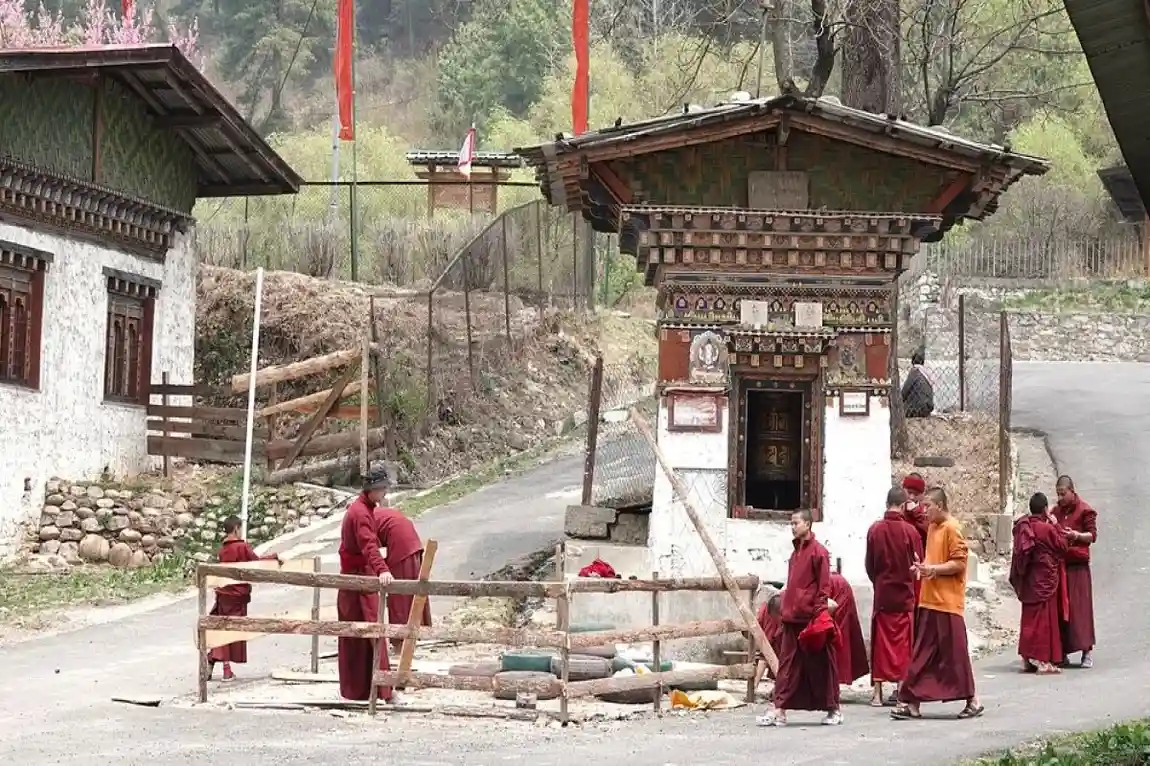
The old town itself rewards a slow walk many tourists never take. A single curving main street holds small shops and wooden stoops. Shopkeepers often sit outside shelling areca nuts in the afternoon sun. Prayer wheels turn quietly under awnings along the route.
Late afternoon is a good time for this short walk through town. Monks can often be heard chanting through open dzong windows nearby. The whole town can be covered on foot in about fifteen minutes. Even so, few visitors linger long enough to notice these small details.
Where to Stay in Trongsa
Trongsa offers a smaller range of hotels compared to Paro or Thimphu. Options run from simple guesthouses to a few comfortable mid range hotels. Most properties sit along the main road with valley or dzong views. Your tour operator will typically book accommodation as part of your package.
Staying overnight, rather than passing through, is the single best way to see more. It allows an early visit to the dzong before day trippers arrive. It also leaves time for the museum and at least one nearby site. Even one extra night noticeably changes the depth of a Trongsa visit.
How to Reach Trongsa
From Thimphu, the drive to Trongsa takes about seven to eight hours. The route crosses the Pele La pass at roughly 3400 meters. Most visitors break this long journey with an overnight stop in Punakha or Wangdue. Roads are paved but narrow, with frequent switchbacks near the pass.
From Bumthang, the return drive is much shorter at about two and a half hours. This makes Trongsa a natural stop for travelers heading toward eastern Bhutan. There is no airport near Trongsa, so road travel is the only option. All visits must be arranged through a licensed Bhutanese tour operator with a guide.
Best Time to Visit Trongsa
Spring, from March through May, brings clear skies and blooming rhododendrons. This is one of the most comfortable seasons for sightseeing and walking. Autumn, from September through November, offers similarly dry and stable weather. Both seasons are ideal for combining the dzong with outdoor stops nearby.
The Trongsa Tsechu festival takes place each December or January. Masked dances fill the dzong courtyard over several days. Traveling during this window adds a strong cultural layer to the visit. Winter mornings can be cold, so warm layers are recommended.
Visitor Tips for Trongsa
Spend at least one night in Trongsa instead of just passing through. This allows time for the dzong, the museum, and one nearby site. Comfortable walking shoes help since much of the town is explored on foot. Altitude here is moderate, but pack a warm layer for evenings.
Ask your guide about adding Kuenga Rabten Palace to your itinerary in advance. This site rarely appears in standard packages unless specifically requested. Photography is generally restricted inside temples and museum galleries. Always check with your guide before taking pictures in any religious space.
Carry small cash for donations at temples and local shops in town. Trongsa remains a working town, not a tourist center, so keep this in mind. Shops close earlier than in Thimphu or Paro. Plan any shopping or errands for the early afternoon hours.
Frequently Asked Questions
Is Trongsa worth visiting beyond a quick lunch stop?
Yes. Trongsa houses Bhutan’s largest fortress, the Ta Dzong Royal Heritage Museum, historic royal palaces, organic tea gardens, and traditional weaving villages. Spending at least one night allows travelers to experience these sites without rushing.
Why is Trongsa historically and politically significant in Bhutan?
Trongsa Dzong historically controlled the main trade and travel pass between eastern and western Bhutan. Politically, it is deeply tied to the monarchy; by tradition, every Crown Prince serves as the Trongsa Penlop (governor) before ascending the throne.
What are the entry fees and rules for visiting Trongsa Dzong?
The entry fee for foreign tourists is Nu 500 (children under five enter free, and older children pay half price). Visitors must dress modestly with shoulders and knees covered, and photography is restricted inside the sacred prayer rooms.
What can visitors see at the Ta Dzong Royal Heritage Museum?
Located in a restored 1652 watchtower above the main dzong, the museum features 11 galleries showcasing royal artifacts, ceremonial robes, ancient weapons, and the original Raven Crown worn by Bhutan’s monarchs.
What hidden attractions near Trongsa do standard itineraries often miss?
Lesser-visited spots include Kuenga Rabten Palace (winter home of the second king), Thruepang Palace (birthplace of the third king), the Samcholing Green Tea Garden, the weaving village of Yundrochholing, and the historic Mangdue Foot Trail.
How do travelers reach Trongsa and how long does the drive take?
Trongsa is accessible only by road. The drive takes roughly 7 to 8 hours from Thimphu (crossing the 3,400-meter Pele La pass) and about 2.5 hours from Bumthang.
When is the best time of year to visit Trongsa?
Spring (March to May) brings clear skies and blooming rhododendrons, while autumn (September to November) offers dry, pleasant weather. Visiting in December or January provides the chance to experience the annual Trongsa Tsechu festival inside the dzong courtyard.