
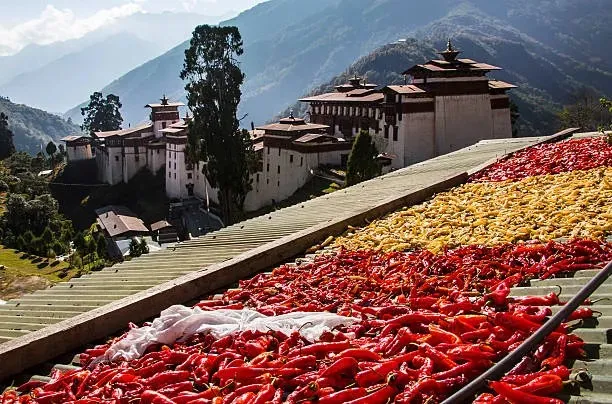
Most Bhutan trips never leave the western corner of the country. Paro, Thimphu, and Punakha absorb the vast majority of visitors every year. Widely cited travel industry estimates put that figure at 80 to 90 percent. Bhutan does not publish an exact east-west breakdown, but the pattern is clear. Eastern Bhutan remains one of the least visited corners of the Himalayas. This is not a criticism of the west, which remains genuinely spectacular. It simply means most visitors never see roughly half the country. This guide explains why that happens, and why it is worth changing.
Why Tourists Skip Eastern Bhutan
The biggest reason is distance. Bhutan's main east-west highway, known as the Lateral Road, stretches about 570 kilometers. It runs from Phuentsholing in the southwest to Trashigang in the far east. The road climbs and drops through several mountain passes along the way. Dochula Pass, Pele La, Yotong La, and Thrumshing La all sit above 3,000 meters. Thrumshing La alone reaches 3,780 meters, one of the highest points on any Bhutanese road.
A direct drive from Thimphu to Trashigang can take around 17 hours. Most travelers simply do not have that much time to spare. Standard Bhutan trips run five to seven days, built around the western loop. Adding eastern Bhutan usually means extending the trip significantly. Many first-time visitors are unwilling or unable to add extra days.
Monsoon season adds another obstacle, roughly between June and August. Landslides regularly block sections of the Lateral Road during heavy rain. Extending a trip east also raises the total cost. More nights mean a higher Sustainable Development Fee bill overall.
Infrastructure plays a role too. Western Bhutan has invested heavily in tourist-ready hotels and attractions. Eastern Bhutan has fewer luxury properties and fewer polished visitor facilities. This does not mean the east lacks comfortable places to stay. It means the experience feels rougher around the edges than Paro or Thimphu.
Flights offer only limited relief. Yongphula Airport, near Trashigang, receives just a handful of flights weekly. Weather in the mountains frequently delays or cancels these connections. Most travelers still end up relying on the long overland route instead. Tour operators also tend to default to the same proven western itinerary. It is easier to sell, easier to plan, and easier to guarantee.
Finally, most travelers simply do not know what eastern Bhutan offers. Marketing photos of Bhutan almost always feature Tiger's Nest and Punakha Dzong. Eastern Bhutan rarely appears in the country's most visible tourism promotion. Search results and guidebooks reinforce the same pattern repeatedly. This creates a feedback loop that keeps the east overlooked.
What Is Actually in Eastern Bhutan
Eastern Bhutan covers six districts, known locally as dzongkhags. These are Trashigang, Trashiyangtse, Mongar, Lhuntse, Pemagatshel, and Samdrup Jongkhar. Together they form a region shaped by remoteness, ethnic diversity, and rugged terrain.
Trashigang
Trashigang is Bhutan's largest district and its easternmost point. It borders the Indian state of Arunachal Pradesh along its eastern edge. The Dangme Chhu, Bhutan's largest river, flows directly through the district. Trashigang town once sat along an important trade route to Tibet. Today it serves as the region's main hub and market town.
The district is also home to Sherubtse College, Bhutan's first accredited college. Nearby Rangjung houses a well-known monastery, Rangjung Ösel Chöling. Radhi, a nearby village, is known for its own weaving tradition. Trashigang also serves as the gateway to Merak and Sakteng, discussed below. Many travelers use the town as a base before continuing further east.
Trashiyangtse
Trashiyangtse split off from Trashigang as its own district in 1992. It is best known for Chorten Kora, a large white stupa built in the 18th century. The structure closely resembles Nepal's famous Boudhanath Stupa. Every spring, an annual festival draws pilgrims from across the region. Some travel from Arunachal Pradesh in India specifically to attend.
Trashiyangtse also hosts a branch of the National Institute for Zorig Chusum. Students there train in wood turning and traditional papermaking. Nearby, Bumdeling Wildlife Sanctuary protects wintering grounds for black-necked cranes. Omba Ney, sometimes called the Taktsang of the east, sits nearby too. It draws far fewer visitors than its famous western counterpart. This makes Trashiyangtse a rare overlap of craft, wildlife, and living religious practice.
Mongar
Mongar sits just past Thrumshing La on the long drive east. It functions as a natural gateway into the eastern region proper. Mongar Dzong, built in the 1930s, overlooks the town from a ridge. The dzong is one of the newer fortresses in the country. Its courtyard offers wide views over the surrounding hills. Most itineraries treat Mongar as a stopover rather than a final destination. Even so, the drive itself, dropping from alpine forest to subtropical valley, is memorable.
Lhuntse
Lhuntse is one of Bhutan's most remote and culturally significant districts. Lhuntse Dzong, built in 1543, holds deep royal importance. It is considered the ancestral home of the Wangchuck dynasty. Dasho Jigme Namgyal, father of Bhutan's first king, was born there in 1825. The dzong sits above the Kuri Chhu river, in a narrow valley. Few foreign visitors make it this far east.
Lhuntse is equally famous for its textiles. The Kurtoe region produces some of Bhutan's finest handwoven fabric. Kishuthara, an intricately patterned silk textile, comes almost exclusively from this area. Weaving here remains a genuine household skill, not a tourist demonstration.
Samdrup Jongkhar
Samdrup Jongkhar sits on Bhutan's southeastern border with Assam, India. It functions mainly as a trade and transit town rather than a sightseeing stop. The town has a busy, commercial feel, distinct from the rest of the region. For travelers, it offers a useful alternate entry or exit point. Instead of retracing the long drive west, some exit toward Assam instead. It is worth a brief stop rather than a long stay.
Merak and Sakteng
Merak and Sakteng are two remote highland villages inside a protected sanctuary. They sit within Sakteng Wildlife Sanctuary, opened to controlled tourism only in 2010. The villages are home to the Brokpa, a semi-nomadic yak-herding people. Brokpa ancestors are believed to have migrated from southern Tibet centuries ago.
Brokpa dress is instantly recognizable, built around a distinctive yak-hair hat. The hat features long twisted tufts designed to drain off rainwater. Many Brokpa families still herd yaks seasonally between high and low pastures. Trekking into the sanctuary once took several days on foot. A new farm road has since shortened the journey considerably. Many Brokpa families still trade butter and cheese for grain. Local legend also ties this region to sightings of the migoi, or yeti.
Pemagatshel and Khaling
Pemagatshel is the least visited district in eastern Bhutan, and rarely appears on itineraries. It centers around Zangto Pelri Lhakhang, a quiet but significant temple. Khaling, between Trashigang and Samdrup Jongkhar, is known for its handloom center. Weavers there produce textiles using traditional techniques passed down for generations. Few tour itineraries include Pemagatshel at all, even among eastern circuits. Visiting requires genuine interest in going off the beaten path.
Why You Shouldn't Skip It
Eastern Bhutan offers something that is genuinely hard to find elsewhere in the country. Because so few tourists visit, daily life continues largely undisturbed. Markets, festivals, and monasteries feel lived-in rather than staged for visitors. Interactions with locals tend to feel more spontaneous and less rehearsed.
The textile tradition alone makes the region worth the extra travel time. Lhuntse and Khaling produce some of the most respected weaving in Bhutan. Serious textile collectors and researchers often consider eastern Bhutan the country's true weaving heartland. Buying directly from weavers here supports artisans rather than intermediaries.
Ethnic and linguistic diversity is another draw. Sharchop, spoken widely in the east, differs from Dzongkha in the west. The Brokpa of Merak and Sakteng maintain a distinct language and dress entirely their own. Few places in the Himalayas pack this much cultural variation into one region.
The landscapes shift dramatically too. Travelers descend from alpine passes above 3,700 meters into warm subtropical valleys. Rice paddies, orange groves, and dense forest replace the pine-covered ridges of the west. Wildlife sanctuaries protect species like the red panda and snow leopard here.
Sacred sites also feel different without heavy crowds. Chorten Kora and Trashigang Dzong rarely see the visitor numbers of Punakha or Paro. Many travelers describe eastern Bhutan as what the west may have felt like decades ago.
Homestays are increasingly common across the region, especially in Lhuntse and Trashiyangtse. Staying with a local family often becomes a trip highlight. Meals, conversation, and daily routines offer a closer look at rural Bhutanese life.
How to Actually Visit Eastern Bhutan
Realistically, plan for at least ten to fourteen days total in Bhutan. This allows time for both the western highlights and the eastern region. Many travelers combine eastern Bhutan with a stop in central Bhutan, particularly Bumthang.
You can reach the east overland along the Lateral Road, in stages. Breaking the drive across several days, with stops in Bumthang and Mongar, helps considerably. Alternatively, fly into Yongphula Airport near Trashigang, though seats are limited. Some travelers exit through Samdrup Jongkhar into Assam instead of flying back. Many operators build a loop that returns via a different route than the outbound one. This avoids repeating the same long drive twice. A farmhouse stay or a traditional hot stone bath rounds out the experience well.
A licensed guide remains mandatory for travel anywhere beyond Paro and Thimphu. Your guide will also arrange the special area permit required for eastern districts. This is routine and typically processed within a day or two.
Timing matters more here than in the west. Thrumshing La can close temporarily during heavy winter snowfall. Monsoon season, from roughly June to August, brings landslide risk along mountain roads. Spring and autumn generally offer the most reliable conditions for the drive east.
Frequently Asked Questions
Why do so few tourists visit eastern Bhutan?
Long driving distances and short standard itineraries keep most visitors in the west. Limited flights and fewer luxury hotels also play a role.
How long does it take to reach eastern Bhutan?
A direct drive from Thimphu to Trashigang takes around 17 hours. Most travelers break this into stages across several days instead.
Is eastern Bhutan safe and comfortable to visit?
Yes, though facilities are simpler than in Paro or Thimphu. Roads can be rough, so patience and flexibility help significantly.
What is eastern Bhutan best known for?
Eastern Bhutan is best known for weaving, particularly kishuthara silk textiles from Lhuntse. It is also home to the Brokpa people of Merak and Sakteng.
Do I need a special permit for eastern Bhutan?
Yes, a special area permit is required, similar to other regions beyond Paro and Thimphu. Your licensed guide typically arranges this on your behalf.
Can eastern Bhutan be combined with central Bhutan?
Yes, most itineraries pair the east with a stop in Bumthang. This makes the long overland journey easier to justify.